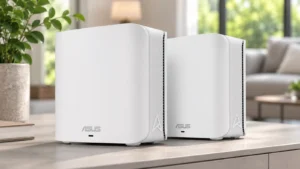
Overall: 4.0/5
Parental controls are extensive and useful, including website and app-category filters, device blocking and schedules, but no daily usage limits.
Pros: multi-gig Ethernet support, range
Cons: dual-band support, 6 GHz performance

Overall: 4.0/5
Parental controls are extensive and useful, including website and app-category filters, device blocking and schedules, but no daily usage limits.
Pros: multi-gig Ethernet support, range
Cons: dual-band support, 6 GHz performance

Overall: 4.5/5
DNS-level parental controls can block adult content across all connected devices, which is useful for family travel. Some acceleration modes can disable certain client-control features, so configuration matters.
Pros: VPN client support, value for money
Cons: 6 GHz performance, USB storage sharing
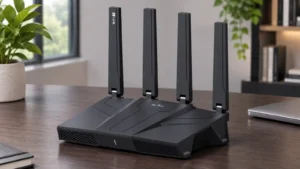
Overall: 4.2/5
Parental controls offer useful scheduling and filtering, but ease of use and the availability of free versus paid Bark features drew mixed reactions.
Pros: configuration flexibility, Overall satisfaction
Cons: Upgrade value, OpenWrt compatibility

Overall: 4.3/5
Parental controls are included and provide granular device scheduling, but content filtering is not foolproof.
Pros: Wi-Fi speed, Ethernet port count
Cons: 10 GbE support, WAN port speed

Overall: 4.8/5
Opinions split sharply: one reviewer found the controls basic and the filtering manual, while others called the family options useful or advanced.
Pros: Wi-Fi 7 support, Wi-Fi speed

Overall: 3.1/5
Parental controls can block a wide variety of traffic, but parents must enter restrictions manually instead of using preset categories.
Pros: size and footprint, latency
Cons: expandability, Ethernet port count
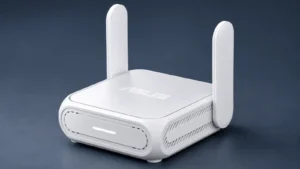
Overall: 3.9/5
Device restrictions and scheduling are useful, but advanced filtering and daily usage limits are limited.
Pros: size and footprint, Overall satisfaction
Cons: range, LAN port speed

Overall: 3.8/5
Parental controls are rudimentary and lack the filtering and scheduling options needed for managing a family network.
Pros: size and footprint, UniFi ecosystem integration
Cons: Wi-Fi standard support, Wi-Fi speed