If you want better 5 GHz performance
Choose ASUS RT-BE58 Go. It scores 5.0 vs 1.5 for 5 GHz performance, with a 3.9 overall score.

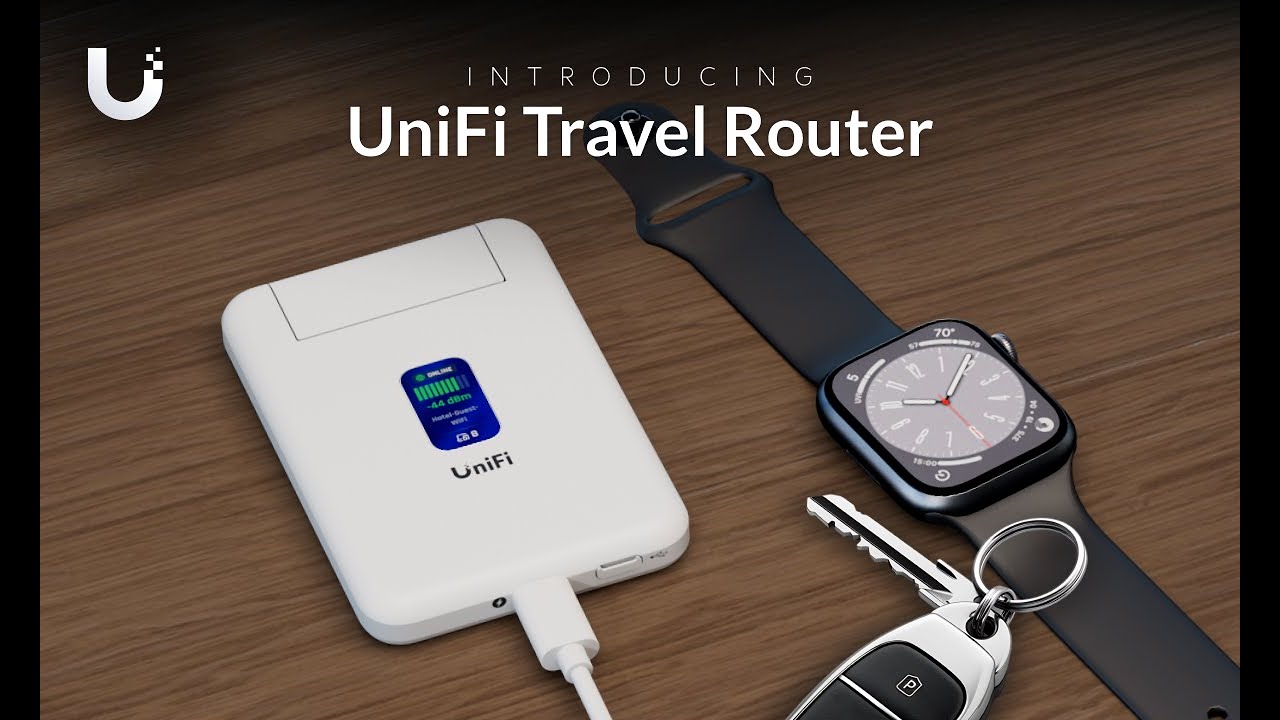
A remarkably small, low-power router that makes bringing your UniFi network on the road easy. Its dated Wi-Fi 5, short range and limited management controls make faster standalone alternatives more attractive for demanding travelers.
Existing UniFi gateway owners who travel with several devices and want familiar Wi-Fi credentials, simple hotel logins and easy access to home or office resources.
Travelers needing fast multi-gigabit connections, advanced local administration or an independent cellular hotspot should consider alternatives.
The UniFi Travel Router is most compelling for travelers who already use a compatible UniFi gateway at home or work. Its pocket-sized chassis, low USB power draw and informative status screen make it unusually easy to carry. Site binding, familiar Wi-Fi credentials and Teleport reduce repeated setup when moving between hotels, and standard VPN clients offer additional flexibility. Firmware improvements have made captive portals and network configuration more practical. The tradeoff is dated Wi-Fi 5 hardware, restricted range, one LAN port and substantially reduced speeds when repeating a wireless uplink. The mobile app is generally simple, but lacks deeper browser-based management and can be unreliable during network selection. Heat and sustained connection stability also divide owners. It is a worthwhile convenience tool for ordinary travel networking, rather than a high-performance replacement for a full-featured router.
Compared with other Routers, this product is above average in Software and driver support, battery portability, size and footprint, near average in VPN client support, setup ease, below average in multi-device performance, mid-range speed, parental controls.
| Attribute | This product | Category average | Difference |
|---|---|---|---|
| multi-device performance | 1.5 | 4.6 | -3.1 |
| mid-range speed | 1.0 | 4.0 | -3.0 |
| parental controls | 1.0 | 3.9 | -2.9 |
| performance under load | 1.5 | 4.3 | -2.8 |
| interface responsiveness | 1.5 | 4.2 | -2.7 |
| usage schedules | 1.0 | 3.7 | -2.7 |
| 5 GHz performance | 1.5 | 4.2 | -2.7 |
| content filtering | 1.0 | 3.7 | -2.7 |
Choose ASUS RT-BE58 Go. It scores 5.0 vs 1.5 for 5 GHz performance, with a 3.9 overall score.
Choose GL.iNet Beryl AX (GL-MT3000). It scores 5.0 vs 1.0 for mid-range speed, with a 4.4 overall score.
Choose TP-Link Roam 6 TL-WR3002X. It scores 4.0 vs 1.0 for long-range speed, with a 3.8 overall score.
Choose GL.iNet Flint 2 (GL-MT6000). It scores 5.0 vs 1.5 for multi-device performance, with a 4.4 overall score.
Compared with Ubiquiti UniFi Travel Router
No, standalone operation is supported. A compatible UniFi gateway is needed for the distinctive Teleport and site-binding experience.
Yes. A single upstream login can connect multiple devices to your familiar private network, though captive portal handling can vary.
Wireless speeds commonly fall in the low hundreds of Mbps, especially when repeating Wi-Fi. Wired connections are faster, but practical throughput remains below gigabit.
Yes. The router draws up to 5 W and can use a suitable USB-C charger or power bank. It has no internal battery.
WireGuard and OpenVPN client support provide alternatives to Teleport. Switching saved profiles may be less convenient depending on firmware.
Its limited range, speed, management controls and single LAN port make a more capable home router preferable.
No. It can use a tethered phone, an Ethernet connection or an existing Wi-Fi network instead.
These are a few of the reviews included in our analysis.





UniFi Travel Router review: the UTR pays off only behind a UniFi gateway. Compare it with the UTR-LR and GL.iNet Beryl AX on Teleport, Wi-Fi...
The UniFi Travel Router (UTR) is a lightweight dual-band Wi-Fi 5 travel router. It can connect to the internet via Ethernet, another Wi-Fi...
I recently snagged one of these, and took it on a road trip!
UniFi's New Travel Router - Pocket-Sized Perfection? The UniFi Travel Router (UTR) is a compact router intended to extend an existing UniFi...
A look at the Ubiquiti UniFi Travel Router. This portable little router allows you to create a hotspot on the move, whilst connecting to your...

Choose the R95 for a busy home that needs fast Wi-Fi 7, strong range, multi-gig ports, and low-lag gaming. Skip it for a small, lightly connected space or if advanced...
Pros: Wi-Fi 7 support, Wi-Fi speed

Best for frequent travel, fast VPNs, dual 2.5GbE and resilient multi-WAN. Skip it if you need full 6GHz/320MHz Wi‑Fi 7, mesh, or desktop-class USB storage and long-range indoor coverage.
Pros: VPN client support, value for money
Cons: 6 GHz performance, USB storage sharing

Exceptional VPN speeds, strong Wi-Fi 6 coverage and extensive OpenWrt controls make the Flint 2 a compelling value. Its advanced setup, missing 6GHz band and firmware-specific caveats matter if you...
Pros: setup ease, configuration flexibility
Cons: Wi-Fi 7 support, USB storage sharing
The Beryl AX packs exceptionally flexible VPN and networking tools into a pocket-sized router. It is a great travel companion, but hotel login issues, limited whole-home range and a single...
Pros: Overall satisfaction, size and footprint
Cons: Captive portal handling, Ethernet port count