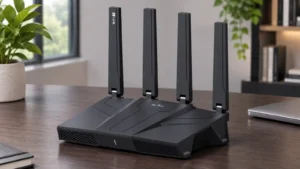
Overall: 4.2/5
The 2.5GbE WAN and LAN ports are well suited to multi-gigabit fiber service; one hands-on test handled a full 2.5Gbps PPPoE line.
Pros: configuration flexibility, Overall satisfaction
Cons: Upgrade value, OpenWrt compatibility

Overall: 4.2/5
The 2.5GbE WAN and LAN ports are well suited to multi-gigabit fiber service; one hands-on test handled a full 2.5Gbps PPPoE line.
Pros: configuration flexibility, Overall satisfaction
Cons: Upgrade value, OpenWrt compatibility

Overall: 4.3/5
The router is especially well matched to internet plans up to 2.5Gbps and several multi-gigabit clients.
Pros: Wi-Fi speed, Ethernet port count
Cons: 10 GbE support, WAN port speed

Overall: 3.8/5
The faster WAN port can accept multi-gigabit internet, although a single wired LAN device remains limited to gigabit speed.
Pros: Internet source flexibility, Overall satisfaction
Cons: battery portability, External power dependence
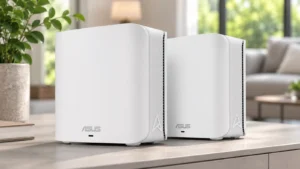
Overall: 4.0/5
Entry-level multi-gigabit connections can benefit from the 2.5G ports, but higher-speed internet plans are better served by premium hardware.
Pros: multi-gig Ethernet support, range
Cons: dual-band support, 6 GHz performance

Overall: 3.9/5
Fast upstream connectivity is possible, but limited LAN speed and wired processing reduce its usefulness for sustained multi-gigabit workloads.
Pros: size and footprint, Overall satisfaction
Cons: range, LAN port speed