Best for Power efficiency
ASUS ROG Strix OLED XG27AQWMG
5.0 attribute score
Highest scored product for this attribute based on supporting review evidence.

Highest scored product for this attribute based on supporting review evidence.
Balances the attribute score, supporting reviews, and overall product strength.
Has the broadest review evidence for this attribute.
Strongest overall product among items with scored evidence for this attribute.
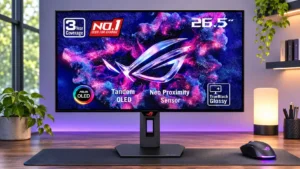
Measured power use is improved over older WOLED panels, particularly for bright white content; gaming gains are more modest.
Pros: overall satisfaction, response time
Cons: reflection handling, VRR flicker
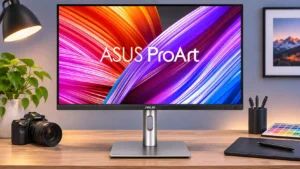
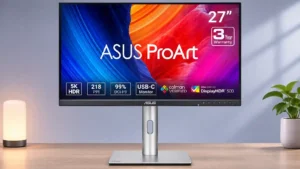
Measured consumption is appropriate for a 27-inch 4K professional display, with especially favorable efficiency at moderate office brightness. The deepest standby-saving mode also disables the USB hub.
Pros: USB-C power delivery, port selection
Cons: HDR performance, refresh rate
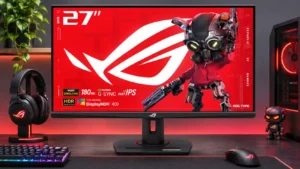
Energy use is typical and reasonably efficient for a 27-inch IPS LCD without costly local dimming.
Pros: value for money, Resolution
Cons: HDR performance, port selection
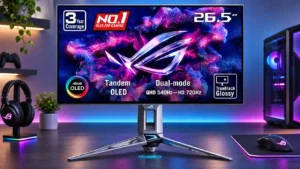
Electricity use compares reasonably with other extreme-refresh OLEDs, though 280Hz Tandem models use less.
Pros: black levels, motion clarity
Cons: value for money, Dual-mode versatility
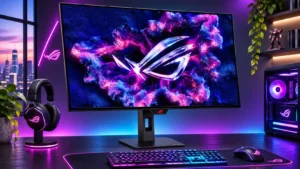
One comparison found WOLED comparatively efficient at displaying white content, which benefits mixed desktop use.
Pros: overall satisfaction, black levels
Cons: reflection handling, Color brightness
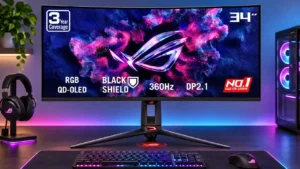
Presence-triggered shutoff and newer panel material help offset consumption, although running at the very highest refresh rate can raise power use.
Pros: color gamut, contrast
Cons: value for money, Resolution
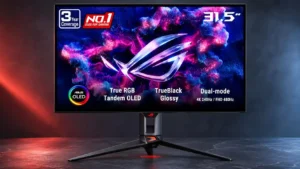
Removing the white subpixel increases power use on white-heavy content versus some previous WOLED monitors, with a smaller difference during gaming.
Pros: black levels, sharpness
Cons: value for money, brightness
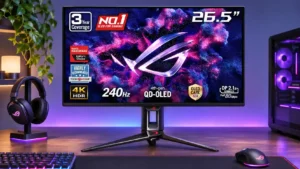
OLED power consumption can exceed a comparable 4K LCD by a wide margin during bright full-screen content, despite modest use in mixed scenes.
Pros: sharpness, overall satisfaction
Cons: value for money, VRR flicker
One test found noticeably higher consumption than comparable 32-inch 4K screens, a drawback for efficiency-conscious use.
Pros: value for money, Resolution
Cons: HDR performance, refresh rate