
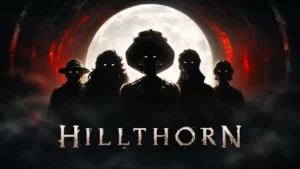
Hillthorn Feature Scores
Overall Scorata score: 4.3/5
Based on 18 analyzed reviews · View source samples
Explore all 56 feature scores for Hillthorn, organized into pros and cons.
Scores by Feature
Summary
56 reviewed features-
Very positive 4.5-5.031 (55%)
-
Positive 3.5-4.414 (25%)
-
Neutral 2.5-3.46 (11%)
-
Negative 1.5-2.45 (9%)
Pros
Sort
-
Clues, characters, places, and actions are handled as cards, turning investigative reasoning into something tactile and easy to parse. Some players find the limited combinations a little too simple, but almost everyone admires the approach.
-
The unusual card-table detective interface and almost wordless narration feel like a genuine change from familiar adventure formulas. It is an especially memorable design concept, even when it introduces tradeoffs.
-
Moody portraits, stark symbols, shifting shadows, and hand-drawn card art give a sparse tabletop striking personality. The noir and folk-horror influences make even simple layouts uneasy.
-
A secluded cult community, oppressive imagery, shadows, and unsettling sound create an unusually potent sense of dread. Even with most of the world represented by cards, the mountain feels threatening.
-
Different routes and endings make the mountain worth investigating more than once. The desire to see alternative outcomes is tempered by needing to repeat old errands after resets.
-
Players can pursue separate leads, force entry, mishandle encounters, and earn very different conclusions. Consequences give the investigation meaningful agency rather than a single fixed solution.
-
The disappearing-person mystery builds curiosity through clues and implications rather than traditional exchanges. Admirers find the restraint evocative; others miss the texture of fully developed scenes and conversations.
-
The urge to chase another lead keeps many players immersed for hours and prompts enthusiastic demo reactions. Repeated collection and tighter time pressure are the main interruptions to that enjoyment.
-
The detective premise is familiar, but expressing nearly everything through a card-table vocabulary gives it a distinctive identity. Even players skeptical of card games find the experiment refreshing.
-
Color coding, clear action symbols, and sorting make the tabletop readable and intuitive for most players. Occasional overlapping cards and hard-to-see clues interrupt an otherwise elegant interface.
-
The game generates real panic and unease using surprisingly little movement, text, or scenery. Its occult village and eerie audiovisual cues provide strong slow-burn dread.
-
Creeping background noises and environmental audio turn card interactions into threatening encounters. Changes in scene and danger are communicated effectively through sound.
-
Combining clues, people, objects, and action cards makes deductions approachable and frequently satisfying. Some combinations are shallow enough to solve through trial and error, and an unclear timed clue can stall the investigation.
-
The small vocabulary of card actions keeps investigation manageable and makes discoveries satisfying. Its simplicity can sometimes encourage trying every combination rather than reasoning deeply.
-
Passwords, learned routes, and routine cards can carry useful progress into a new day and prevent total restarts. These conveniences help considerably, although they do not eliminate item-retrieval chores.
-
The stylized noir imagery and expressive card portraits give the game an immediately memorable look. The restrained illustrations help carry its dark themes.
-
The music moves from relaxed, almost lounge-like tunes to ominous and affecting passages. Its shifts match the investigation and heighten emotional stakes.
-
The unusual card language can look strange or complicated at first, but it quickly becomes understandable for many players. Initial confusion and a few overlooked clues are still possible.
-
Subtle shadow changes and location-specific backgrounds suggest much more of the mountain than the card table directly shows. Their restrained visual cues make the surroundings feel ominous.
-
Color-coded cards and adjustable sizes make the clues easier to separate and identify. The interface generally succeeds despite occasional difficult-to-see visual details.
-
The sample wins excitement for its inventive cards and unsettling setup. A repeated caveat is that the demo ends just as players begin to settle into its mystery.
-
The card interactions are introduced through the same process used to investigate the world, making the learning feel natural. The first few minutes still leave room for confusion or a missed clue.
-
Deciding which leads to pursue before midnight gives planning real stakes. That satisfaction is reduced when a familiar item has to be fetched repeatedly instead of moving to a new deduction.
-
Finding a new clue usually opens another question, creating a strong urge to keep playing. The desire to understand the mountain makes long investigative sessions fly by.
-
Gameplay remained smooth in the reported PC playthrough, without noticeable stutters or frame drops.
-
The digital-board-game layout fits naturally into a handheld screen, and the presentation remains clear and responsive.
-
Loading interruptions were minimal in the reported Switch 2 playthrough, supporting the adventure’s calm but consistent flow.
-
The tested PC playthrough ran smoothly, with no reported frame drops or stuttering.
-
Alternate leads often let players move on instead of getting stuck, rewarding curiosity and self-directed investigation. Retracing familiar routes after midnight is the recurring drag.
-
Adjustable card sizing and visual settings help make the small tabletop text and clues more comfortable to read.
-
Small animated touches, such as characters represented by moving cards, bring a little movement and life to the restrained presentation.
-
Repeated interactions eventually receive routine cards that carry out familiar actions automatically. This noticeably reduces the tedium of replaying certain steps.
-
Direct touch input makes card selection, dragging, and dropping feel snappy on Switch hardware.
-
Even the menus use card investigations, so the control language stays consistent from setup into the mystery. That integration makes the unusual interface easier to learn.
-
The Switch version makes good use of touchscreen input, providing a more immediate way to manipulate the many cards.
-
Goals and routes are often visible early, making the satisfying part finding a clever way to achieve them. Several outcomes emerge from the same mystery rather than a rigid sequence.
-
Several solutions and endings allow players to follow their own deductions instead of moving through a fixed chain. Freedom is limited by the small set of cards available at a given time.
-
Touch input lets players tap and drag cards directly, making the Switch version feel snappier than cursor-only control.
-
The same cards used to inspect clues also let players explore, question people, and act on deductions. That coherence helps the stripped-back world feel interactive.
-
The real upgrade is what the detective learns: discoveries persist even as the physical inventory resets. Some find that clever and rewarding; others think retained knowledge skips too little work.
-
Most puzzles ask for attention and sensible connections, not extreme leaps of logic. A few poorly signposted timing requirements and enforced repeats create spikes in frustration.
-
Visual interactions carry much of their meaning independently of translated dialogue, supporting play across languages. Short labels still matter when images alone are ambiguous.
-
The unusual investigation system and unsettling art are considered worthwhile at the modest launch price, especially for curious mystery fans.
-
Learnable routes and green travel shortcuts reduce some early confusion. However, repeating sequences of directional cards when crossing the forest can become an unnecessary chore.
-
The inventive card mechanics and eerie presentation make the game worth considering, despite an oppressive loop that can detract from enjoyment.
Cons
Sort
-
The repeated collection of keys, items, and route steps is the clearest recurring complaint. Although shortcuts reduce some of the load, a number of players feel the clock turns discovery into errands.
-
The mystery is most compelling when clues keep opening new possibilities. Multiple reviewers find its momentum weakened by rebuilding inventories and repeating familiar routes.
-
The townspeople are visually intriguing and often menacing, but their card-sized descriptions leave limited space for personal development. Several players wish the cast had more conversational depth.
-
Traditional conversations are largely absent, leaving relationships to be inferred from pictures and brief labels. That helps the mystery feel unusual but can disappoint players wanting extensive character exchanges.
-
One crucial time-dependent clue is poorly signposted after it appears to have already served its purpose. That opacity can lead to wasteful repeat attempts.
-
Cult members are compelling at first glance, yet their lives and motives receive little detailed exploration. More conversation would have helped their personalities breathe.
-
The mountain village hints at compelling occult history, but seeing mainly tabletops and changing light makes some of its locations feel under-realized.
-
The board must be kept organized to prevent important cards from disappearing among the clutter. The added housekeeping can make progression less seamless.
-
An ending can arrive in just a few hours, while exploring different paths extends the experience. Some players finish satisfied; others wish there were more stories to tell with these mechanics.
-
Strong mental imagery and suspense draw some players deeply into the town, despite the limited on-screen world. Others find staring down at cards and missing conversational detail makes the setting less tangible.
-
Midnight restarts create urgent decisions and opportunities to act with better knowledge next time. The dividing line is repetition: returning to known locations and retrieving familiar objects can feel like busywork.
Use Cases
Best for
Sort
-
A missing-person case unfolds through branching discoveries, consequential choices, and small deductions that often feel genuinely clever. The detective experience is strongest for players happy to read clues from images rather than long conversations.
-
A quiet tabletop becomes a genuinely ominous place through shadows, strange figures, and eerie audio. This is an especially good match for players who value mood over constant action.
-
Images, symbols, and card combinations carry substantial narrative meaning without spoken dialogue. The unusual storytelling style is a major attraction for fans of visual implication.
-
Touch controls and a compact tabletop layout suit portable play. The card manipulation feels particularly natural on Switch hardware.
-
Remembering discoveries, deciphering clues, and returning with a smarter plan are at the heart of the adventure. Some repeated retrieval tasks make that process less frictionless than it could be.
-
Rather than clicking scenery directly, players investigate and combine cards as a streamlined alternative to classic point-and-click exploration. The familiar puzzle structure makes it a promising fit for adventure fans.
-
Even someone who usually finds card games dull was impressed by how engaging the detective mystery became. Its cards function as an investigative language, not a conventional deck to optimize.
-
The card-based point-and-click challenges emphasize observation, logical pairings, and deciphering clues. Their modest difficulty makes them accessible to escape-room enthusiasts.
-
A Switch 2 assessment praises the game as a particularly natural portable experience, with low loading times and a clean card presentation.
Conditional or not ideal for
Sort
-
Dialogue-rich adventure fansThe pared-back language creates suggestive clues but little room for long exchanges or richly voiced personalities. Anyone who plays detective adventures mainly to interrogate characters may feel underserved.
-
Time-pressure-sensitive playersEach action advances the clock, and midnight wipes much of the physical progress. Players who find deadlines stressful may be especially frustrated by repeated errands.
-
Fast-paced action fansThe investigation favors reading clues, deliberating, and slowly connecting information. Players seeking nonstop action may find the pace too restrained.
-
Relaxed playThe evocative setting invites leisurely discovery, but the strict clock and repeated item collection can make sessions feel too pressured for fully relaxed play.
-
Challenge seekersThe puzzles rarely demand very intricate deduction, since the available card combinations are limited. Players who specifically want difficult logical reconstruction may find the mystery too forgiving.