
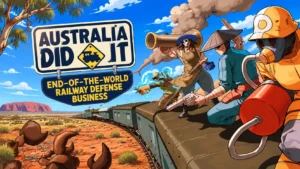
Australia Did It: End-of-the-World Railway Defense Business Feature Scores
Overall Scorata score: 3.9/5
Based on 19 analyzed reviews · View source samples
Explore all 51 feature scores for Australia Did It: End-of-the-World Railway Defense Business, organized into pros and cons.
Scores by Feature
Summary
51 reviewed features-
Very positive 4.5-5.013 (25%)
-
Positive 3.5-4.417 (33%)
-
Neutral 2.5-3.48 (16%)
-
Negative 1.5-2.46 (12%)
-
Very negative below 1.57 (14%)
Pros
Sort
-
Combining equal-level mercenaries into unexpected specialists is the standout hook, with creative abilities and consequential tradeoffs encouraging experimentation across runs.
-
A large web of unit fusions, damage types, and support effects makes discovering potent squad combinations especially rewarding. Choosing the wrong merger can still ruin a carefully planned defense.
-
Each station acts like a small positional puzzle where enemy threats, unit roles, and the rotating belt reward careful thinking rather than brute force.
-
Station battles demand thoughtful positioning, resource management, and adaptation to threats arriving from several directions. Strong synergies are useful only when the squad can be deployed and evacuated effectively.
-
Compact turn-based defenses turn the station into a lively tactical puzzle, with rotating positions and hard choices. A few highly critical assessments fault unreliable controls and opaque rules.
-
The basic mercenaries branch into a wide and imaginative roster of damage dealers, healers, drones, and hazardous specialists whose unusual abilities change tactical choices.
-
A hybrid of tactical defense, unit fusion, and automatic horde combat feels inventive to many players. Others think its bold genre mix needs more refinement to work consistently.
-
The dried-out Atlantic setting and genre-blending combat give this strategy game a distinctive identity, although one critic found the execution much less impressive than the ambition.
-
A dried Atlantic seabed populated by mutants, machinery, and mercenary cargo runs gives the game a memorable, darkly comic backdrop that invites curiosity.
-
Early demo impressions praise the surprisingly substantial strategy, enjoyable challenge, and inventive unit fusion.
-
Many appreciate the vibrant pixel-art monsters, machinery, and ruined landscape, while a dissenting view calls the visuals ugly and muddled.
-
Distinct enemies and attack patterns keep most station encounters lively, though some random combinations can spike difficulty without much warning.
-
Unlocking stronger specialists and temporary effects makes upgrades exciting, but merges can sacrifice earlier card bonuses or produce an unexpectedly poor fit.
-
The alternating station defense, unit fusion, and train travel can be compelling and surprisingly cohesive. Less satisfied players feel the weaker travel segments and occasional rough edges disrupt the rhythm.
-
The wealth of fusion discoveries gives curious strategists reasons to start again, although others lose interest once combinations become familiar or failures yield little progress.
-
Numerous merge paths and varied threats broaden the experience, but some players find repeated station cycles monotonous after extended play.
-
Limited train capacity makes preserving and extracting mercenaries a meaningful tradeoff: the strongest station roster may not all fit aboard.
-
Fusion, tactical defense, and autobattling often make an engrossing combination, though critics who struggle with unstable inputs or disjointed modes find the mechanics much less satisfying.
-
Staying longer at stations can produce more currency and upgrade opportunities, but each extra turn increases the danger of losing the train or its crew.
-
Tense decisions and quick tactical turns can keep the action lively; repetition and passive travel phases cause some runs to drag.
-
Deadpan corporate logistics amid an ecological apocalypse lends the setting a playful contrast that keeps its bleakness from becoming oppressive.
-
The conveyor-belt layout gives the compact battlefields a clever movement twist, making it easier to shift defenders between threatened approaches.
-
Colorful 2.5D characters and environments add spectacle to the otherwise bleak post-apocalyptic setting.
-
Enemies approach from different directions, use different ranges and routes, and force the player to revise established formations.
-
Performance is smooth on one reviewed PC, but crowded scenes and train journeys can push frame rates down on the Steam Deck.
-
The three basic damage categories make the early counter system reasonably straightforward despite the complex fusion paths that follow.
-
The game is playable on Steam Deck OLED and supports controller input, but small text and demanding action can detract from handheld comfort.
-
The world’s mysteries emerge in small pieces rather than dominating the story, but they add enough intrigue to make the next discovery enticing.
-
The conductor’s spoken delivery fits the Australian setting, even though other dialogue is limited.
-
Reports diverge sharply: one PC setup runs smoothly at Ultra settings, while Steam Deck play can struggle during busy horde sequences.
Cons
Sort
-
Critics report lost cursors, sparse feedback, and interactions that fail to convey enough information, undermining otherwise careful tactical play.
-
Several accounts describe frequent technical problems, including softlocks, faulty move reversal, and an unresponsive delivery trigger.
-
The harshest visual criticism targets muddy pixel graphics and unattractive transition sequences, despite praise for the broader artistic direction elsewhere.
-
The basic controls are introduced, but the separate tutorial leaves important interactions unclear; control-specific hiccups can make the learning process more frustrating.
-
An inconsistent move-reversal system and occasional input failures can turn small mistakes into major losses; one account finds undo helpful instead.
-
Some enjoy the demanding survival puzzle, but others criticize random power spikes, sudden failures, and uneven damage between the two combat modes.
-
There is little permanent power growth between runs, so mastery relies largely on learning combinations and improving decisions rather than purchasing lasting upgrades.
-
Although controls can be remapped, missing colorblind settings and interface scaling restrict access for some players.
-
Sparse unit animations and rudimentary action effects fail to give one critic the physical impact expected from the combat.
-
A serious softlock forced one player to restart a run near the end, making long attempts feel less secure.
-
Gunfire and impacts are described as weak and weightless, denying attacks the punch they ought to have.
-
Runs require a real time commitment; the game is not always convenient for someone seeking a quick roguelike attempt.
-
Important rules are not always communicated during normal play, and the optional separate tutorial can leave newcomers confused.
-
One view finds the available playtime reasonable for the price, while a far more negative opinion sees little reason to buy it.
-
The underlying tactical systems win praise, but bugs, awkward interfaces, and rough presentation leave some accounts questioning overall refinement.
-
Helpful compendium notes and readable tactical cues are offset by complaints about missing statistics, small text, difficult damage feedback, and inadequate explanations.
-
Basic recruiting and positioning can click quickly, but understanding merge outcomes, unit interactions, and the tougher battles takes patience. Several critics find the early explanations inadequate.
-
Route selection adds meaningful preparation and station modifiers, though the added risks do not always seem matched by worthwhile rewards.
-
Telegraphed threats make station defense understandable, but the crowded travel battles can obscure projectiles, incoming hits, and what a build is doing wrong.
-
Discovering powerful merges and surviving tight station battles can be exhilarating. A minority find the uneven travel sections and technical frustrations more memorable than the fun.
-
Real-time train journeys divide opinion: some enjoy seeing their builds fire automatically, while others find the rides passive, unclear, or much weaker than the station encounters.
Use Cases
Best for
Sort
-
Players who relish tactical positioning, unit synergies, and making hard decisions under pressure have plenty to enjoy in the station battles.
-
Trying unfamiliar fusions, observing their drawbacks, and adapting later builds is central to the appeal and rewards a willingness to learn from failure.
-
Fans of deliberate, turn-by-turn positioning can enjoy the compact station puzzles even if the real-time train sections change the pace.
-
Optimization-minded players can spend considerable time refining squad synergies and testing whether a strong station team also survives travel.
-
The demanding tactics and punishing mistakes reward persistent players who enjoy mastering complex encounters.
-
Run-based decision-making and combination discovery suit persistent roguelike enthusiasts, but the lack of permanent power growth can disappoint some.
-
Steam Deck owners can enjoy the tactical loop in portable form, although performance fluctuations and small text require some tolerance.
Conditional or not ideal for
Sort
-
Gaming with limited free timeLong attempts and the possibility of losing progress late make the game a less comfortable choice for tightly scheduled play.
-
Short play sessionsAttempts can stretch well past a quick break, making the game a poor match for players wanting to jump in and finish a run quickly.
-
Casual gamersRepetitive failures and limited permanent rewards are likely to frustrate more casual players who want a gentler sense of progress.
-
Relaxed playThe tricky learning curve and rising pressure make this a poor fit for those after a soothing, low-effort strategy game.