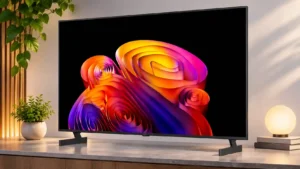
Overall: 4.0/5
Low-frame-rate compensation extends variable refresh operation below the panel’s normal minimum to reduce tearing.
Pros: contrast ratio, black levels
Cons: reflection handling, color accuracy

Overall: 4.0/5
Low-frame-rate compensation extends variable refresh operation below the panel’s normal minimum to reduce tearing.
Pros: contrast ratio, black levels
Cons: reflection handling, color accuracy

Overall: 4.1/5
VRR extends up to 165Hz for PC gaming while fully covering the 120Hz ceiling of current consoles.
Pros: picture quality, gaming performance
Cons: value for money, sound quality
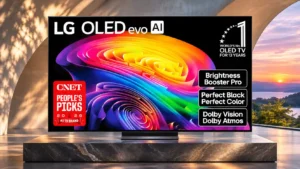
Overall: 4.1/5
Variable refresh remains effective over a broad refresh range, including lower-frame-rate situations with compensation.
Pros: gaming performance, HDR brightness
Cons: reflection handling, glare resistance

Overall: 4.4/5
VRR remains smooth and tear-free up to 4K HDR 165Hz, giving PCs a very wide operating range.
Pros: picture quality, peak brightness
Cons: value for money, sound quality
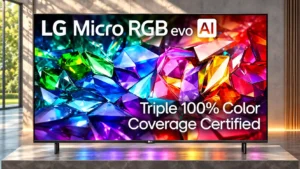
Overall: 4.0/5
The highest refresh and motion-boost modes are promising, but a PC test required disabling the boosted option to stop flickering.
Pros: peak brightness, picture quality
Cons: value for money, viewing angles

Overall: 3.1/5
The limited 48–60Hz operating band does not support low-frame-rate compensation, so tearing reappears once a game drops below the range.
Pros: design and appearance, maximum volume
Cons: picture quality, value for money
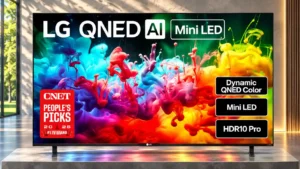
Overall: 3.4/5
The limited VRR range lacks low-frame-rate compensation, so tearing can return below 48fps.
Pros: picture quality, color accuracy
Cons: remote control quality, black levels