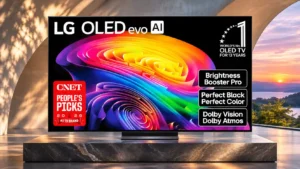
Self-lit pixels create impressively deep blacks and striking depth, making movies and games look dramatic without the washed-out grays of many LCDs.
Pros: gaming performance, HDR brightness
Cons: reflection handling, glare resistance

Self-lit pixels create impressively deep blacks and striking depth, making movies and games look dramatic without the washed-out grays of many LCDs.
Pros: gaming performance, HDR brightness
Cons: reflection handling, glare resistance
Blacks are consistently deep, rich, and precise, even with room lights on. A few tests found mild black crush in the darkest HDR scenes.
Pros: picture quality, peak brightness
Cons: value for money, sound quality
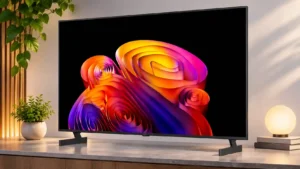
Perfect, inky OLED blacks are a standout strength across dark scenes, helping highlights and shadows feel sharply separated.
Pros: contrast ratio, black levels
Cons: reflection handling, color accuracy
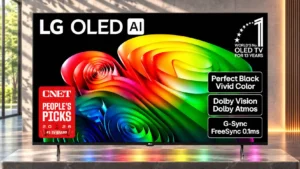
The B6 usually delivers the deep black levels expected from OLED. One detailed test, however, found greyish raised blacks in particular dark scenes.
Pros: value for money, peak brightness
Cons: color accuracy, stand quality
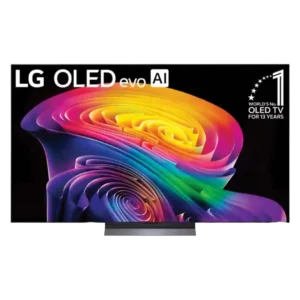
OLED blacks are generally deep and inky, but a few samples showed raised blacks or crushed near-black detail before adjustment. Small setting changes usually restore the expected depth.
Pros: picture quality, gaming performance
Cons: value for money, sound quality
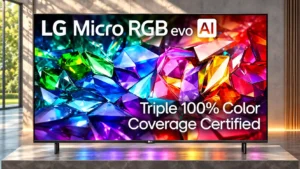
Dark scenes generally have deep, convincing blacks for an LCD, although the result varies by content and does not match OLED precision.
Pros: peak brightness, picture quality
Cons: value for money, viewing angles

The black level can look deep at first glance, but dark scenes frequently appear gray and washed out. This is a weakness for atmospheric films and games.
Pros: design and appearance, maximum volume
Cons: picture quality, value for money
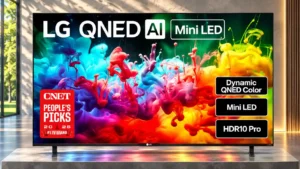
Dark scenes often appear gray or hazy rather than genuinely black, although some viewers perceive deeper blacks in brighter images.
Pros: picture quality, color accuracy
Cons: remote control quality, black levels