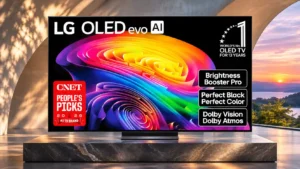
PC users can reach 165Hz with VRR, but some testing found that 120Hz gives a cleaner, more stable image.
Pros: gaming performance, HDR brightness
Cons: reflection handling, glare resistance

PC users can reach 165Hz with VRR, but some testing found that 120Hz gives a cleaner, more stable image.
Pros: gaming performance, HDR brightness
Cons: reflection handling, glare resistance
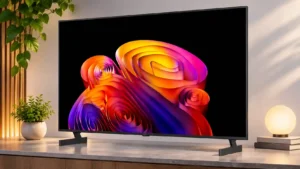
Fast 120Hz play is sharp and fluid, with variable refresh rate helping avoid tears when frame rates fluctuate.
Pros: contrast ratio, black levels
Cons: reflection handling, color accuracy

The move from 144Hz to 165Hz is a useful upgrade for PC players. One test found intermittent flicker and softness at 165Hz, while 120Hz remained more stable.
Pros: picture quality, gaming performance
Cons: value for money, sound quality

PC gaming reaches up to 165Hz, while consoles are exceptionally well served at 120Hz. The maximum 165Hz mode can trade some gradation and chroma quality for speed.
Pros: picture quality, peak brightness
Cons: value for money, sound quality
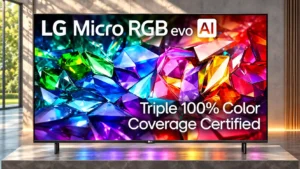
Fast PC modes are enticing on paper, but slow pixel transitions and flickering at the highest settings undermine fluid gameplay.
Pros: peak brightness, picture quality
Cons: value for money, viewing angles

No high-refresh modes are available, even when resolution drops. Buyers expecting 120Hz or above should look elsewhere.
Pros: design and appearance, maximum volume
Cons: picture quality, value for money

A hard 60Hz ceiling rules out the native 4K/120fps experience sought by competitive gamers.
Pros: picture quality, color accuracy
Cons: remote control quality, black levels