Best for Subwoofer performance
Edifier S880DB MKII
4.9 attribute score
Highest scored product for this attribute based on supporting review evidence.

Highest scored product for this attribute based on supporting review evidence.
Balances the attribute score, supporting reviews, and overall product strength.
Has the broadest review evidence for this attribute.
Strongest overall product among items with scored evidence for this attribute.

The dedicated sub output is widely praised and makes it easy to add deeper low-end weight. The speakers have useful bass on their own, but a sub is the better...
Pros: Overall product quality, Overall sound quality
Cons: Remote control usability, Control button responsiveness
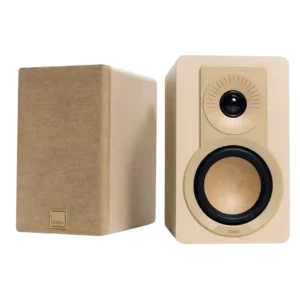
A subwoofer is not mandatory for every listener, especially at a desk, but it is the clearest upgrade for deeper bass or larger rooms. Multiple reviewers found the Kupid scales...
Pros: Bass performance, Value for money
Cons: Amplifier power requirements, Break-in period

A subwoofer is optional rather than mandatory for most music, but adding one can extend the deepest bass and improve cinematic scale. Integration is useful, though one reviewer found the...
Pros: Stereo imaging accuracy, Aesthetic design / Finish options
Cons: Smart features, EQ customization
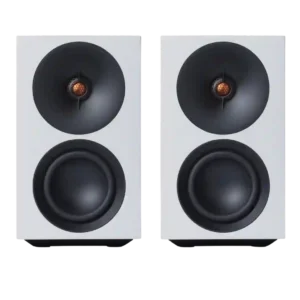
The subwoofer output is a welcome expansion path, though the built-in bass is strong enough that some listeners may not feel an immediate need for one. A sub becomes more...
Pros: Design and aesthetics, Small-room suitability
Cons: Distortion at high volume, On-device controls
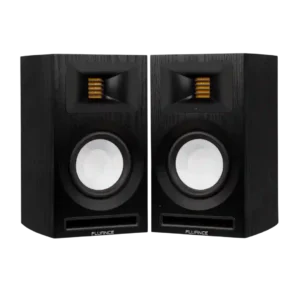
Subwoofer support was considered valuable, both for deeper bass and for relieving the speakers of low-frequency strain.
Pros: Detail retrieval, Value for money
Cons: optical, Smart features
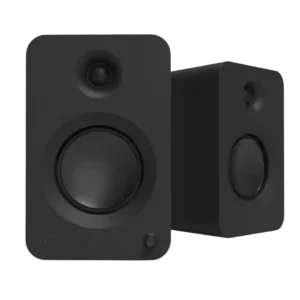
Subwoofer integration was repeatedly praised; reviewers said a sub added authority, dynamics, cleaner mids, or better bass control.
Pros: Wired input, Frequency response balance
Cons: Distortion at high volume
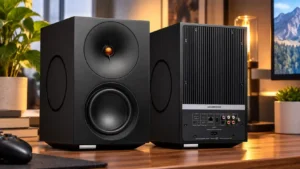
Subwoofer integration offers useful level, phase, and bass-management controls. One test needed unusually high subwoofer gain to compensate for low output from the speakers.
Pros: Design and aesthetics, Overall sound quality
Cons: Placement footprint, Midrange performance
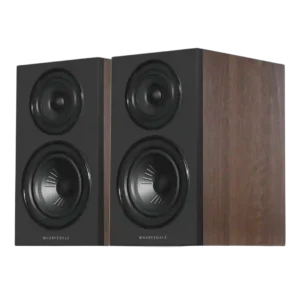
The bass is substantial enough that one reviewer never felt a need for a subwoofer at normal levels. Deep-bass listeners may still want one for extension below roughly 60Hz.
Pros: Design and aesthetics, Music performance
Cons: Low-volume performance
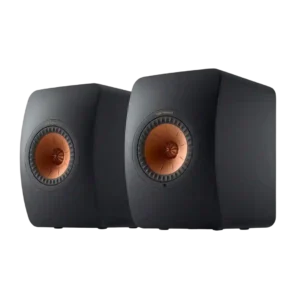
Subwoofer evidence is context-dependent: some reviewers say the speakers do not need one for music, while movie or bass-focused setups benefit from adding one.
Pros: Frequency response balance, Stereo imaging accuracy
Cons: Price, HDMI ARC
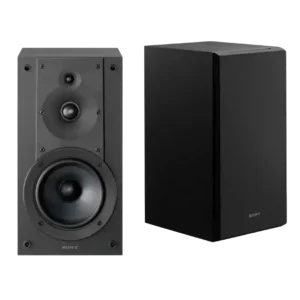
Subwoofer support was treated as beneficial or necessary because the small speaker does not deliver deep bass on its own.
Pros: Frequency response balance, Cabinet construction / bracing
Cons: Dynamic headroom
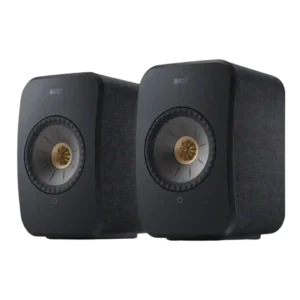
Bass was repeatedly called impressive for the size, but reviewers also agreed deep bass, EDM, movies, and large rooms benefit from adding a subwoofer.
Pros: Detail retrieval, Subwoofer
Cons: Distortion at high volume, Remote control usability
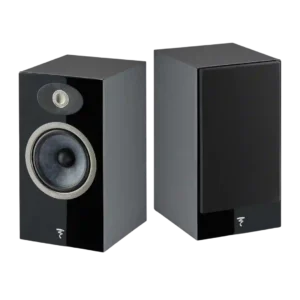
Bass is respectable for a bookshelf speaker, but reviewers repeatedly recommend a subwoofer for deep bass, home theater impact, larger rooms, or bass-heavy music.
Pros: Stereo imaging accuracy, Detail retrieval
Cons: Subwoofer, Low-volume performance
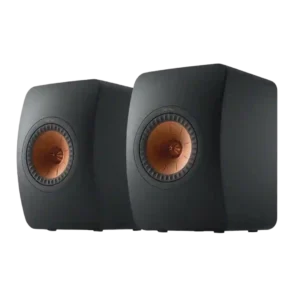
Bass was widely considered impressive for the cabinet size, but reviewers repeatedly noted limits in deep bass, movie rumble, and the likely benefit of a subwoofer for full-range use.
Pros: Frequency response balance, Stereo imaging accuracy
Cons: Subwoofer