If you want better Low-volume performance
Choose KEF LS50 Meta Passive Bookshelf Speakers. It scores 5.0 vs 3.1 for Low-volume performance, with a 4.1 overall score.

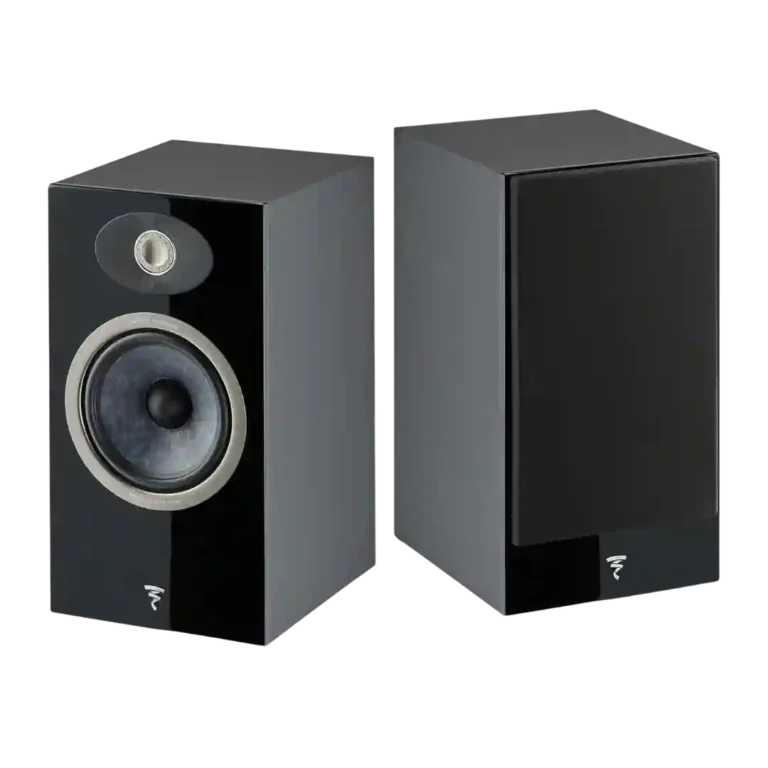
Choose the Focal Theva No.1 for clear, spacious, dynamic bookshelf sound that is easy to drive. Skip it if you need deep bass without a subwoofer, premium cabinetry, or strong low-volume performance.
Best for listeners who want a compact passive bookshelf speaker with clear vocals, strong imaging, easy amplifier matching, and lively dynamics in a stereo or home theater setup. It is especially compelling for users who can place it on stands with some rear-wall clearance.
Not for buyers who need full-range bass from two small speakers, want a very premium cabinet finish, or often listen quietly and expect the same tonal fullness. It is also less ideal for tight bookshelf placement against a wall.
Across reviews, the Focal Theva No.1 comes across as a capable entry into Focal’s bookshelf line: clear, balanced, spacious, and surprisingly dynamic for its size. Reviewers repeatedly praise its imaging, vocal/dialogue clarity, wide listening coverage, and easy amplifier load, with several noting that it can play loud without obvious strain. The main tradeoff is that its compact cabinet and rear port ask for some placement care and a subwoofer for deep bass or movie impact. Finish quality draws mixed reactions, ranging from elegant and tasteful to merely OK or a little cheap, and low-volume listening is not universally strong. Overall, the evidence points to a refined, lively small speaker that performs above its size, but not one that replaces full-range speakers or more premium cabinets.
Compared with other Bookshelf Speakers, this product is above average in Loudness / maximum volume, near average in Cohesive presentation, Tonal balance, below average in Wired audio connectivity, Low-volume performance, Cabinet construction / bracing.
| Attribute | This product | Category average | Difference |
|---|---|---|---|
| Wired audio connectivity | 2.0 | 4.4 | -2.4 |
| Low-volume performance | 3.1 | 4.2 | -1.1 |
| Cabinet construction / bracing | 3.6 | 4.5 | -0.9 |
| Subwoofer performance | 3.3 | 4.1 | -0.8 |
| Design and aesthetics | 3.9 | 4.5 | -0.6 |
| Loudness / maximum volume | 4.6 | 4.1 | +0.5 |
| Detail retrieval | 4.2 | 4.6 | -0.4 |
| Amplifier power requirements | 4.2 | 4.5 | -0.4 |
Choose KEF LS50 Meta Passive Bookshelf Speakers. It scores 5.0 vs 3.1 for Low-volume performance, with a 4.1 overall score.
Choose Sony SS-CS5M2 Bookshelf Speakers. It scores 4.7 vs 4.2 for Value for money, with a 3.8 overall score.
Choose Fluance Ri71 Reference Powered Bookshelf Speakers. It scores 4.3 vs 3.3 for Subwoofer performance, with a 4.1 overall score.
Choose Wharfedale Diamond 12.1i. It scores 5.0 vs 2.0 for Wired audio connectivity, with a 4.7 overall score.
Products reviewers directly compared with this model, grouped into quick takeaways.
They do not always need one for acoustic or moderate music listening, but reviewers repeatedly recommend a subwoofer for deep bass, movies, large spaces, and bass-heavy genres.
Yes. Multiple reviewers describe the load as benign or amplifier-friendly, although better amplification can still improve articulation and dynamics.
Imaging is one of the strongest points. Reviewers praised focused center imaging, layered placement, wide/deep staging, and broad listening coverage.
Yes, especially with a subwoofer. Reviewers praised dialogue clarity, action-movie dynamics, and their usefulness in surround systems.
The recurring caveats are limited deep bass, mixed finish quality, some treble exposure with poor recordings, and less convincing low-volume balance in some reviews.
They are not unusually fussy, but the rear port benefits from space behind the speaker. Reviewers also note that toe-in can affect treble balance.
These are a few of the reviews included in our analysis.

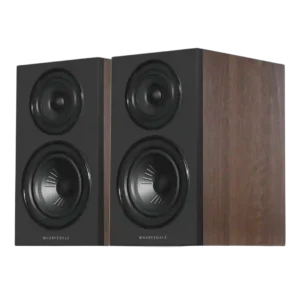
Choose the Diamond 12.1i for balanced, punchy hi-fi sound, strong bass and premium build at a budget price. Skip it if you mostly listen very quietly, need shallow-shelf placement, or...
Pros: Design and aesthetics, Music performance
Cons: Low-volume performance
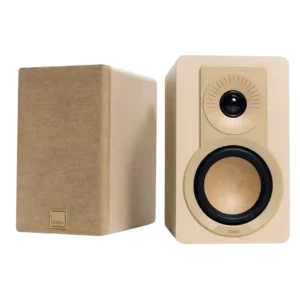
Choose the Kupid for lively, detailed sound in a desk or small-room system where compact size matters. Skip it if you need deep bass, huge-room output, or want to pair...
Pros: Bass performance, Value for money
Cons: Amplifier power requirements, Break-in period

Choose these if you want detailed, room-filling sound, excellent connectivity, and premium styling in a compact powered pair. Skip them if you need effortless remote control, native streaming services, HDMI...
Pros: Overall product quality, Overall sound quality
Cons: Remote control usability, Control button responsiveness

Choose the Coda W if you want big, precise stereo sound, strong bass, HDMI ARC and simple turntable/desktop connectivity without a separates stack. Skip it if built-in Wi-Fi/multi-room streaming, compact...
Pros: Stereo imaging accuracy, Aesthetic design / Finish options
Cons: Smart features, EQ customization