If you want better Physical control responsiveness
Choose KEF Coda W. It scores 5.0 vs 2.5 for Physical control responsiveness, with a 4.4 overall score.

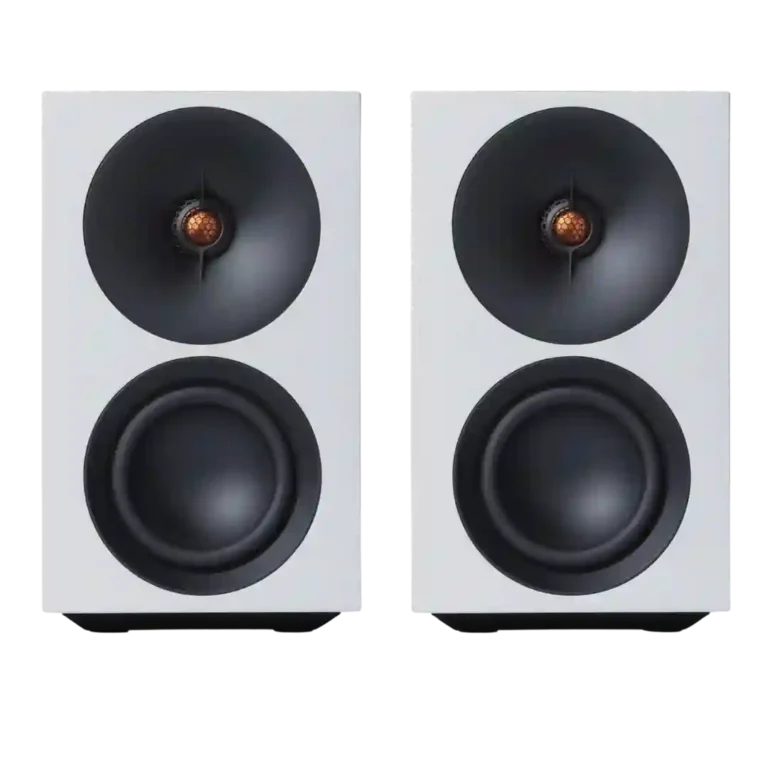
Choose it for compact rooms when you want expansive stereo imaging, polished build, easy setup, and punchy sound without a separate amp. Skip it if you need reference-neutral mids, deep sub-bass, onboard volume controls, or your best sound at maximum volume.
Desktop, office, bedroom and other small-room listeners who want true stereo imaging, easy Bluetooth/USB/optical use, and a polished all-in-one system without a separate amp. It also suits gaming and TV use where HDMI ARC is not essential.
Critical-monitor listeners who want strict neutrality, buyers with very narrow desks, or anyone expecting deep sub-bass and party-level composure from tiny drivers. Remote-averse users and those who require Wi-Fi streaming or HDMI ARC should also look elsewhere.
The L/R S makes its strongest case as a premium desktop or small-room system: it is easy to set up, beautifully built, and repeatedly praised for wide, precise stereo imaging, clean detail and a sound that feels larger than the cabinets. Its tuning favors enjoyment over strict monitoring neutrality. Bass can be punchy and impressively full, though several reviewers hear extra warmth or bloom, while a few also find the midrange slightly veiled or short on drive. It plays loudly for its size, but composure drops near the limit, where the stage can flatten, turn shouty or show bass distortion. The remote-led control scheme is another tradeoff, with very limited onboard adjustment. For music, gaming and small-room TV use, however, the combination of refinement, scale and simplicity is unusually convincing.
Compared with other Bookshelf Speakers, this product is above average in Bluetooth connectivity, Amplifier power requirements, Subwoofer performance, near average in Small-room suitability, Music performance, below average in Auto-off and standby behavior, Included accessories, On-device controls.
| Attribute | This product | Category average | Difference |
|---|---|---|---|
| Auto-off and standby behavior | 2.0 | 3.7 | -1.7 |
| Included accessories | 2.5 | 4.1 | -1.6 |
| On-device controls | 2.0 | 3.4 | -1.4 |
| Distortion at high volume | 2.9 | 4.0 | -1.1 |
| Physical control responsiveness | 2.5 | 3.8 | -1.3 |
| Midrange performance | 3.5 | 4.4 | -0.9 |
| Audio format support | 3.0 | 4.0 | -1.0 |
| Bass performance | 3.8 | 4.4 | -0.6 |
Choose KEF Coda W. It scores 5.0 vs 2.5 for Physical control responsiveness, with a 4.4 overall score.
Choose Edifier S880DB MKII. It scores 4.4 vs 2.0 for On-device controls, with a 4.5 overall score.
Choose Cambridge Audio L/R X. It scores 4.5 vs 2.5 for Cable management, with a 4.2 overall score.
Choose Fluance Ri71 Reference Powered Bookshelf Speakers. It scores 3.8 vs 2.9 for Distortion at high volume, with a 4.1 overall score.
Products reviewers directly compared with this model, grouped into quick takeaways.
No. They are active speakers with built-in amplification, so you can connect a source and use them without a separate amp.
Yes. That is their strongest use case: they sound much larger than their cabinets and can fill offices, bedrooms and other compact rooms, though very narrow desks may feel cramped.
Bass is unusually punchy and full for the size, but the tuning divides opinion. Some find it slightly too warm or forward, while the deepest low bass still benefits from a subwoofer.
They can get surprisingly loud, but the best sound is below the limit. At extreme levels the stage can flatten, become shouty or compressed, and demanding bass may distort.
The tested connection mix includes aptX HD Bluetooth, USB-C audio, optical and RCA line input, plus a subwoofer output. The L/R S does not include Wi-Fi streaming or HDMI ARC.
Yes in smaller spaces. Strong stereo imaging and punchy bass work well for games and TV, and optical is a practical TV connection, but there is no HDMI ARC.
For most everyday control, effectively yes. The speakers have only limited rear controls, with no convenient onboard volume or mute control, so the remote is central to operation.
These are a few of the reviews included in our analysis.





TLDR: The L/R X is the flagship of Cambridge Audio’s new L/R range, an active stereo pair that holds amplification, streaming, source...
The Cambridge Audio L/R S are high-quality bookshelf speakers with a huge range of connectivity types and clean sound.
Experience the soothing, fatigue-free sound of the compact Cambridge Audio L/R S active speakers, blending sleek design with impressive audio...
The Cambridge Audio L/R S in review: Compact active speakers with powerful sound, amazing bass, and easy operation. Ideal for desktop, TV...
Compact, stylish and reasonably priced, the L/R S are a fine contender
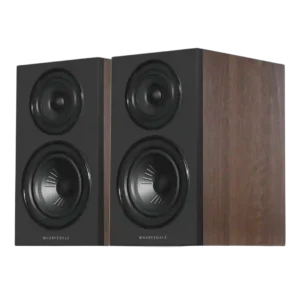
Choose the Diamond 12.1i for balanced, punchy hi-fi sound, strong bass and premium build at a budget price. Skip it if you mostly listen very quietly, need shallow-shelf placement, or...
Pros: Design and aesthetics, Music performance
Cons: Low-volume performance
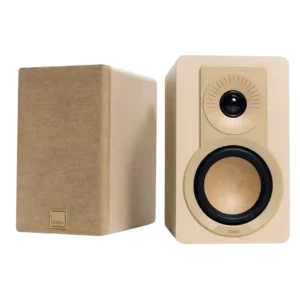
Choose the Kupid for lively, detailed sound in a desk or small-room system where compact size matters. Skip it if you need deep bass, huge-room output, or want to pair...
Pros: Bass performance, Value for money
Cons: Amplifier power requirements, Break-in period

Choose these if you want detailed, room-filling sound, excellent connectivity, and premium styling in a compact powered pair. Skip them if you need effortless remote control, native streaming services, HDMI...
Pros: Overall product quality, Overall sound quality
Cons: Remote control usability, Control button responsiveness

Choose the Coda W if you want big, precise stereo sound, strong bass, HDMI ARC and simple turntable/desktop connectivity without a separates stack. Skip it if built-in Wi-Fi/multi-room streaming, compact...
Pros: Stereo imaging accuracy, Aesthetic design / Finish options
Cons: Smart features, EQ customization