If you want better response time
Choose Roku Pro Series (2026). It scores 5.0 vs 1.5 for response time, with a 4.1 overall score.

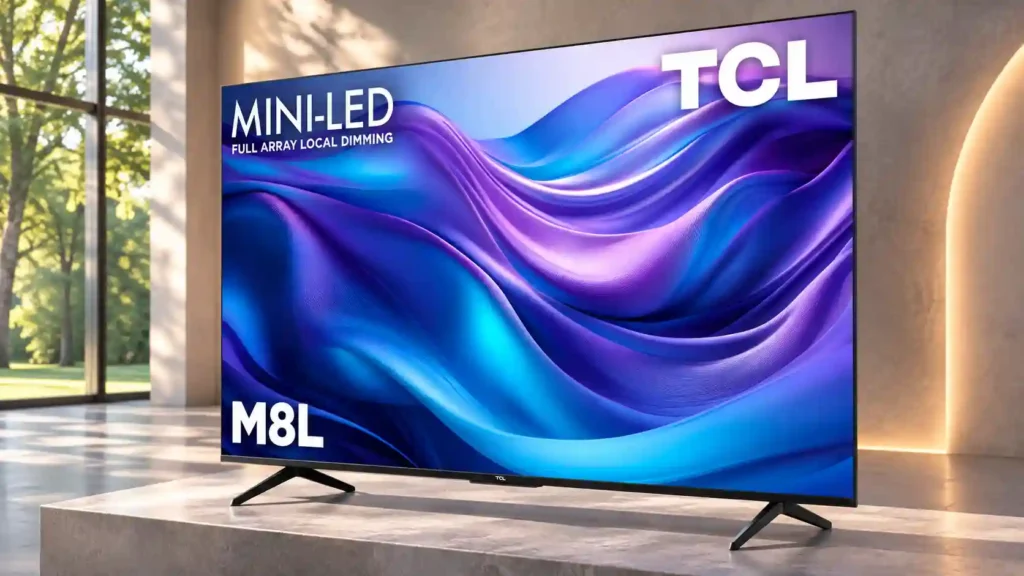
The TCL M8LF brings uncommon gaming features and a convenient big-screen Fire TV experience to an affordable price. Its dim HDR highlights, motion blur, and panel-uniformity problems are important tradeoffs.
Budget-focused movie and casual-game viewers who want a large 4K Fire TV with high-refresh console support, especially in moderately lit or dim rooms.
Bright sunlit rooms, demanding HDR enthusiasts, or competitive fast-action players who prioritize clear motion over gaming-feature specifications.
The TCL M8LF gives budget shoppers a lot of useful hardware: high-refresh 4K support, modern console compatibility, very low input lag, and convenient built-in Fire TV. A large screen, decent dark-scene contrast, accurate out-of-box color, and effective upscaling make everyday viewing appealing. Owners and deal-focused coverage are especially enthusiastic about its punchy picture and price. However, the detailed measurements tell a less flattering story. HDR highlights are dim, broad screen uniformity is weak, local dimming creates visible halos, and slow response times blur fast action even at high refresh rates. That means the gaming feature list is stronger than the actual motion clarity, and sunny rooms are a poor match. For a deeply discounted TV in a controlled-light room, it is a compelling compromise; buyers looking for vivid HDR or crisp motion should compare brighter, better-controlled alternatives.
Compared with other TVs, this product is above average in motion interpolation, judder handling, stutter handling, near average in gaming performance, noise reduction, below average in screen uniformity, response time, blooming control.
| Attribute | This product | Category average | Difference |
|---|---|---|---|
| screen uniformity | 1.5 | 4.0 | -2.5 |
| response time | 1.5 | 3.6 | -2.1 |
| blooming control | 2.0 | 4.0 | -2.0 |
| daytime viewing performance | 2.0 | 4.0 | -2.0 |
| app selection | 2.5 | 4.4 | -1.9 |
| motion handling | 2.0 | 3.9 | -1.9 |
| gradient handling | 2.5 | 4.3 | -1.8 |
| banding control | 2.0 | 3.8 | -1.8 |
Choose Roku Pro Series (2026). It scores 5.0 vs 1.5 for response time, with a 4.1 overall score.
Choose Sony Bravia 9 II. It scores 5.0 vs 1.5 for screen uniformity, with a 4.3 overall score.
Choose Hisense U65QF. It scores 5.0 vs 2.0 for banding control, with a 4.2 overall score.
Choose TCL QM7L. It scores 5.0 vs 2.5 for gradient handling, with a 3.9 overall score.
Products reviewers directly compared with this model, grouped into quick takeaways.
It has very low input lag, high refresh rates, VRR and strong modern-console compatibility. Fast movement can look blurry because pixel response is slow.
Yes. The tested TV is described as fully compatible with 4K/120Hz modes on current PlayStation and Xbox consoles.
Opinions differ: casual viewing calls it punchy and colorful, but detailed testing finds highlights dim and lacking impact.
Moderate ambient light is workable, but direct sunlight and stronger glare are problematic. Dimming the room helps.
Yes, and everyday app access is convenient. The streaming app selection is somewhat limited compared with broader platforms.
The QM6K is described as brighter, with more vivid scenes and stronger dark-scene contrast, making it a better choice for picture quality.
No. They are separate Canadian models with Google TV and different performance characteristics, so M8LF results should not be assumed to apply.
These are a few of the reviews included in our analysis.
The TCL M8LF is a budget TV released in 2026, sitting above the TCL M7LF. TCL markets it as a simple Mini LED model that lacks quantum dot...
Score a gorgeous mini-LED display that’s perfect for streaming, gaming and more, and save over $300 off.
Choose the S90H for bright-room OLED viewing, deep blacks and top-tier gaming without flagship pricing. Skip it if you want Dolby Vision, a glossy screen or the simplest smart-TV software.
Pros: glare resistance, black levels
Cons: Dolby Vision support, color gamut
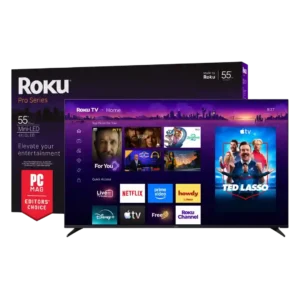
Best for bright Mini-LED picture, excellent built-in audio, easy Roku navigation, and responsive 4K/120 gaming. Skip it if you want ad-free menus, premium motion consistency, or stronger confidence in long-term...
Pros: overall satisfaction, picture quality
Cons: reliability, portability and versatility
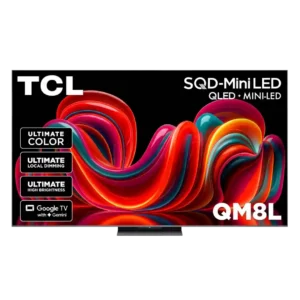
Choose the QM8L for a big, brilliantly bright TV with vivid HDR, deep mini-LED blacks, low input lag, and four HDMI 2.1 ports. Skip it if you need OLED-clean motion,...
Pros: picture quality, value for money
Cons: stand quality, judder handling

Choose the G6 for class-leading bright-room OLED picture, rich color, deep blacks and elite gaming. Skip it if you want strong built-in audio, polished launch firmware, no account sign-in, or...
Pros: picture quality, peak brightness
Cons: value for money, sound quality