
Sonic Pico Park Feature Scores
Overall Scorata score: 4.4/5
Based on 23 analyzed reviews · View source samples
Explore all 40 feature scores for Sonic Pico Park, organized into pros and cons.
Scores by Feature
Summary
40 reviewed features-
Very positive 4.5-5.028 (70%)
-
Positive 3.5-4.47 (18%)
-
Neutral 2.5-3.42 (5%)
-
Negative 1.5-2.42 (5%)
-
Very negative below 1.51 (3%)
Pros
Sort
-
The shared problem-solving is the star: coordinating jumps, switches and character skills creates laughter even when a simple stage falls apart. Small teams work well, but bigger parties bring even more mischief.
-
Mistakes and friendly sabotage regularly produce the biggest laughs. Missing a jump or sending the team into a spring is often funny rather than punishing.
-
Rings, springs, spin dashes, classic sounds and character powers make the crossover feel lovingly Sonic rather than merely reskinned. One dissenting view misses the series' usual speed, and heavy nostalgia is not for everyone.
-
Tails' flight, Knuckles' glide and other specialized movements genuinely matter to certain puzzles. Their presence adds depth beyond a cosmetic Sonic character swap.
-
Short puzzles squeeze clever twists out of teamwork, timing and the need for everyone to finish together. The approachable difficulty is a plus for many, though some trial-and-error solutions and simpler stages divide opinion.
-
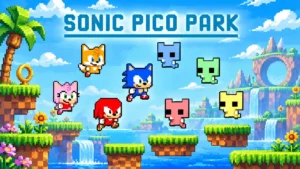
Small, blocky Sonic sprites and bright minimalist stages give the game a cheerful identity. The characters shine, even though repeated plain backgrounds can feel sparse.
-
Running, jumping and spin dashing are easy to understand, whether using Joy-Con or another controller. Reviewers appreciate the responsive, simple inputs that let coordination supply the challenge.
-
Planning moves and calling out timing are essential to getting everyone across the finish line. The conversation can get loud or occasionally frustrating, but making a plan work together is deeply satisfying.
-
This is a charming, highly enjoyable little party puzzler rather than a sprawling Sonic adventure. Its crowd-pleasing co-op and presentation make up for much of its brevity.
-
The approachable controls, colorful presentation and forgiving restarts make this an inviting family game. Children can contribute real solutions rather than simply follow adults.
-
The cast extends well beyond the core Sonic quartet, with recognizable favorites given playful miniature designs. Having different abilities also makes the choice of character matter.
-
Failure seldom causes significant lost progress, with stages resetting nearly instantly. Quick retries encourage playful experimentation instead of turning repeated mistakes into a slog.
-
The basic controls and puzzle rules are understandable almost immediately. Players can focus on collaboration instead of learning a complex system.
-
Challenges adjust for the number of active players instead of simply adding more avatars. That flexibility helps the same idea work with a pair or a much bigger group.
-
Worlds introduce focused ideas such as tethering, springs, ring sharing and synchronized switches. Most find the compact challenges inventive, though some stages are basic and the overall package is small.
-
The roughly $10 asking price is widely considered fair for the amount of laughter and Sonic flavor on offer. Short completion times remain the tradeoff.
-
Sharing rings to absorb hazards adds a clever coordination wrinkle. Hoarding them can doom everyone, making both cooperation and accidental comedy possible.
-
The two-to-eight-player framework and local or online formats give groups ways to join in. Challenges flex for different team sizes, making the core concept unusually adaptable.
-
Signature rings, springs and other classic Sega sound cues deliver a satisfying nostalgic touch. They help the stripped-down visuals retain Sonic's personality.
-
Tiny expressive idle animations help the blocky Sonic cast feel recognizable and individual. Their goofy personalities are a major part of the visual charm.
-
The 60 short stages introduce new gimmicks across their worlds, with Battle and Endless providing alternatives. The variations are welcome, but a few find the overall selection too thin for extended play.
-
The early stages are easy to grasp, but coordinating two to eight people can turn simple actions into entertaining setbacks. Experienced two-player teams may finish quickly, while larger groups face more coordination headaches.
-
Flying and gliding characters provide helpful differences without overwhelming the group puzzles. Cooperative roles feel purposeful rather than cosmetic.
-
Sitting together to solve the full campaign makes for a thoroughly enjoyable shared evening. Short levels and straightforward inputs keep local sessions moving.
-
Short cooperative survival tests put coordination and timing to work, with leaderboards encouraging another attempt. Several find this a particularly entertaining bonus mode.
-
The short stages introduce a mechanic, explore it and move on before it grows stale. Several appreciate the tight design even while wanting more total playtime.
-
The basic Pico Park puzzle flow gets lively additions from dashes, gliding, flight, rings and loops. Reviewers enjoy the faster-feeling, unmistakably Sonic spin on cooperation.
-
Ring-collecting and other competitive variants can be lively, especially with a fuller room. Reactions are split: some love these diversions, while others would only play them briefly.
-
The cooperative action uses familiar jumps and spin dashes, and some appreciate the classic Sonic feel. Others find the methodical pace too slow to capture the blue blur's usual speed.
-
A quick introduction teaches jumping, spin dashing and teamwork through simple early stages. The game gets groups collaborating within minutes.
-
The lightweight pixel-art game was reported to run without performance trouble. Its restrained presentation helps keep the experience smooth.
-
When a puzzle calls for an absent character's skill, a swap doorway keeps the stage solvable. That flexibility makes the cast's distinctive powers practical.
-
New stage mechanics build on earlier ideas to give the brief adventure a satisfying forward rhythm. The growing puzzle vocabulary helps the levels stay fresh.
-
Pinball, Blue Sphere-inspired challenges and other competitive side activities supply extra Sonic nostalgia. The small number of diversions may limit how long they entertain.
-
Cheerful chiptunes evoke classic Sonic and fit the lighthearted mood. Their limited variation becomes noticeable over the short campaign.
Cons
Sort
-
There is no single-player route through these team-based puzzles. Even reviewers who love the cooperative focus wish a solo option existed.
-
Playthrough estimates range from roughly an hour and a half to four or five hours depending on the team. Many enjoy every minute but still wish the main game lasted longer.
-
One reviewer finds that Sonic rarely reaches his signature velocity, even in familiar-looking loops. Careful puzzle timing replaces the breakneck movement of the classic platformers.
-
Changing group size and dipping into Battle or Endless can extend the fun. Some expect the appeal to fade after the puzzle solutions are known and the limited side modes are exhausted.
-
The characters look appealing, but frequently repeated blue backdrops can make the worlds feel less distinct. The minimalist aesthetic comes with some visual monotony.
Use Cases
Best for
Sort
-
Friends can laugh through mishaps, communicate strategies and play in groups of different sizes. A lively gathering makes the intentionally chaotic design feel right at home.
-
Sonic followers get abundant callbacks, familiar moves, character surprises and classic audio cues. The tribute is delightful, although it is a short cooperative diversion rather than a traditional high-speed campaign.
-
A familiar group is ideal for coordinating improbable solutions and laughing at sabotage. Being willing to tease and forgive each other is part of the appeal.
-
Parents and children can work together on simple puzzles and discover solutions as a team. Even mistakes make good shared moments thanks to the forgiving restart system.
-
Sharing a screen and solving puzzles together is consistently entertaining, whether with a partner or a group of friends. Couch play is one of the game's natural strengths.
-
Young players can understand the simple controls and help work through the obstacles. Less intimidating puzzles and quick restarts make it suitable for child-led teamwork.
-
Two people can complete and enjoy the entire cooperative adventure, often at a brisk pace. A few competitive variants and coordination challenges work better with more participants.
-
Newcomers can join without mastering a complicated rule set. Team discussion and shared effort matter far more than individual technical expertise.
-
A large group reacting to unpredictable team failures should make entertaining streams. The yelling, laughter and sudden sabotage are a natural spectator hook.
-
A group of strangers can quickly bond through shared plans and silly failures. Initial uncertainty over who takes the lead may slow progress, but the payoff is social and memorable.
-
Most stages resolve in a matter of minutes and failed attempts restart quickly. That makes it easy to enjoy a few puzzles without committing to a long session.
-
Playing with a partner makes the sillier moments shine, and two-player puzzles remain satisfying. It is particularly welcoming when one half of the pair has less game experience.
-
Straightforward controls and amusing, low-stakes teamwork make it a strong casual pick. It rewards people who want a quick laugh more than a demanding solo challenge.
-
Previous Sonic or Pico Park knowledge is not necessary to join in. The rules are easy to grasp, and familiar series details are a bonus rather than a barrier.
-
Remote play makes it practical to gather friends who cannot meet on the same couch. The benefits are clear, although not every critic could test public matchmaking during the preview period.
-
Ring and sphere battles let friends shift from cooperating to outmaneuvering each other. These side contests are especially enjoyable with a larger party.
-
Portable Switch play suits the simple controls and colorful, uncomplicated presentation. It remains a group game even when taken on the go.
Conditional or not ideal for
-
Single-player campaign fansA companion is mandatory, so anyone seeking a solo campaign will have no way to play. This is an intentionally group-only experience.
-
Challenge seekersPuzzle complexity is modest, especially with a well-coordinated pair. Larger teams make execution harder, but those wanting intricate brainteasers may leave unsatisfied.