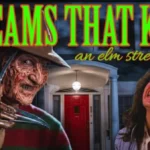
Graphic teen murders, bloody corpse imagery, and sustained threats during sleep make this best suited to older teens. Strong language, sexual material, and alcohol misuse add mature concerns.
Official ratingR
Bottom Line
Freddy's invasion of sleep turns a familiar slasher into an inventive, atmospheric nightmare with unforgettable practical effects. Uneven acting and a divisive final twist are the main reservations.
Horror fans, Halloween-season viewers, and returning fans who appreciate inventive dream imagery and practical effects. Late-night viewing can heighten the atmosphere for those actively seeking a scare.
Young children or viewers sensitive to grisly bodies and decay. Those seeking straightforward storytelling may also struggle with the dream logic and disputed final twist.
Verdict
A Nightmare on Elm Street earns its strongest recommendation through the idea that sleep itself offers no escape. Craven turns familiar bedrooms and classrooms into unstable dream spaces, while Englund gives Freddy a personality and menace that distinguish him from silent masked killers. The ceiling murder, bathtub threat, and blood fountain remain major attractions, supported by expressive lighting and an eerie synth score. Nancy's resourcefulness also gives the film an unusually active heroine. The reservations are substantial but specific: acting quality divides opinion, some effects look dated, and the final twist frustrates many viewers by muddying the rules or undercutting the climax. Horror fans and Halloween-season viewers have plenty to enjoy, especially if they value imaginative atmosphere over tidy explanations or consistently polished performances.
Freddy's personality, cruelty, and access to sleep make him stand apart from silent masked killers. His shadowy original incarnation draws especially strong praise, although a few viewers find him underdeveloped or surprisingly unscary.
The ceiling murder, school nightmare, and bathtub attack remain powerful scare scenes for many. Others feel that familiarity, dated effects, or the playful climax soften the fear considerably.
Making sleep itself dangerous gives the slasher formula an unusually inventive foundation. Later imitations and Freddy's familiarity can blunt the novelty, but the original idea remains a major attraction.
Dreams often begin without clear warning, allowing ordinary spaces to turn subtly threatening. The seamless shifts and nightmare logic are among the film's most consistently praised achievements.
The rotating bedroom, stretching wall, and blood fountain are frequent highlights of the handmade effects. A few rubbery or visibly dated moments remain, but ingenuity is the dominant impression.
special effects quality: 3.5, 19 reviews, low consensus
Many effects remain ingenious and startling, especially the major deaths and wall illusion. Others show their age, with the final mother-through-the-window effect attracting especially sharp criticism.
The final dream twist is the most persistent complaint: many find it abrupt, confusing, or damaging to Nancy's victory. Others love its bizarre last shock or find the ambiguity satisfying.
Some find the teenagers unusually believable for an eighties slasher; others hear flat delivery and see conspicuously awkward reactions. The acting is one of the film's clearest points of disagreement.
The shifting boundary between dreams and reality can be thrillingly disorienting or frustratingly unclear. Freddy's inconsistent effects on the waking world and the final twist generate the most questions.
character development: 3.3, 11 reviews, low consensus
Nancy and Freddy earn praise for having more personality than standard slasher figures. Opinions split over the supporting teenagers and parents, whose thin writing or implausible behavior can limit emotional investment.
The dream world's rules are clear and convincing to some, fluid or contradictory to others. Questions about what crosses into reality and how Freddy can be defeated are the main sticking points.
Dialogue can sound dated, grating, or hokey. One enthusiastic reading finds its slightly unnatural phrasing useful to the film's uncanny dream feeling.
Most horror enthusiasts are urged to experience this inventive, influential slasher. A strongly dissenting response finds the execution too weak to recommend despite the promising premise.
Inventive nightmares and a sustained creepy mood make this a strong Halloween-season choice. Both a first encounter and an October revisit receive explicit recommendations.
Newcomers are encouraged to try an inventive horror landmark with memorable characters and images. Expectations still matter: decades of imitation and an enormous reputation can make a first viewing feel less revelatory.
Sensitive viewers may find the lingering nightmare concept and corpse imagery unsettling enough to prefer daylight or lights on. Actual fright varies, with one first-time viewer finding the premise scarier than the viewing experience.
Children's viewing
2.0
1 review
Children's viewing: 2.0, 1 review
This is a poor choice for young children. A retrospective account specifically describes seeing it when far too young, despite enjoying the experience.
Craven's imaginative premise and command of dreamlike suspense receive sustained praise. His ability to create uncanny images and strong momentum within a modest budget is central to the film's appeal.
Englund's voice, physical mannerisms, and malicious playfulness make Freddy unusually expressive and menacing. His comparatively restrained work here is repeatedly singled out as a defining strength.
Langenkamp's Nancy earns praise for believable youth, vulnerability, and strength. Her work remains divisive, with other responses finding stiff reactions or an uneven transition into the more desperate scenes.
Haitkin's use of light and shadow helps give the film its suspenseful, uncanny atmosphere. The camerawork makes the boiler-room spaces and uncertain reality especially effective.
Charles Bernstein: 4.3, 3 reviews, strong consensus
Bernstein's eerie piano and synth writing fit the material particularly well. The score is admired as an underappreciated horror signature, despite some tones feeling slightly silly.
Compared with other Movies, this product is above average in memorability, villain quality, originality, near average in special effects quality, practical effects quality, below average in message quality, body-horror execution, realism.
Comparison summary
84 compared features
Above average0.4+ pts higher
48(57%)
Same as averagewithin 0.3 pts
17(20%)
Below average0.4+ pts lower
19(23%)
Largest category differences
Attribute
This product
Category average
Difference
message quality
1.0
3.7
-2.7
memorability
5.0
3.2
+1.8
villain quality
4.6
3.0
+1.6
originality
4.8
3.2
+1.6
body-horror execution
2.0
4.0
-2.0
Drug and alcohol portrayal
5.0
3.1
+1.9
runtime
4.7
2.9
+1.8
character screen time
4.0
2.2
+1.8
Consider This Instead
If you want better special effects quality
Choose Coraline. It scores 5.0 vs 3.5 for special effects quality, with a 4.2 overall score.
Better: Overall qualityThe original is judged inferior to The Texas Chain Saw Massacre.
Friday the 13th
Worse: Concept and executionThe film is judged to offer more in concept and execution than the Friday the 13th films.
Worse: Death-scene creativityThe original's deaths are judged more creative and artistic than those in Friday the 13th.
FAQ
Does the original still feel scary?
Many find the school nightmare, bathtub attack, and Freddy's invasion of sleep deeply unsettling. Others feel that familiarity and dated effects reduce the fright even when the suspense still works.
What makes Freddy different from other slasher villains?
He can attack in dreams, where his victims cannot permanently avoid him. His speech, expressions, and enjoyment of torment also give him a distinctive personality.
Do the practical effects hold up?
The rotating bedroom, stretching wall, and blood fountain remain frequent highlights. Some smaller illusions look dated, and the final window effect is a common complaint.
Is Nancy a strong horror heroine?
Her intelligence, survival skills, and willingness to fight back win substantial praise. Her characterization and Langenkamp's performance still divide opinion.
Why is the ending controversial?
Its final dream twist can feel abrupt and can appear to undo the climax. Some viewers instead enjoy the uncertainty and bizarre last shock.
How do the evaluated home-video editions compare?
The Blu-ray assessments praise detail and substantial extras, while disagreeing about some audio weaknesses. The evaluated 4K restoration and Atmos remix receive strong praise, though that does not establish identical results for every release.
Is it suitable for children?
It is best suited to older teens because of graphic murders, bloody corpse imagery, frightening sleep-related threats, strong language, and sexual material. The verified U.S. rating is R.
Sample Expert Reviews We Analyzed
These are a few of the reviews included in our analysis.
Choose this inventive, unsettling documentary for fearless questioning, dark humor, and unpredictable storytelling. Skip it if you want a short, straightforward exposé with definitive answers.
Extraordinary performances and richly observed relationships make this a rewarding, emotionally forceful drama. Its nearly three-hour length and slow opening demand patience and undivided attention.
Best for a hypnotic, bookish mystery with tactile visuals and cerebral chills. Skip it if reading-heavy, attention-demanding storytelling sounds more exhausting than exciting.
Best for an intimate, searching documentary that rewards focused attention and invites discussion. Skip it when devastating grief, addiction footage, and unresolved family tensions would be too much.