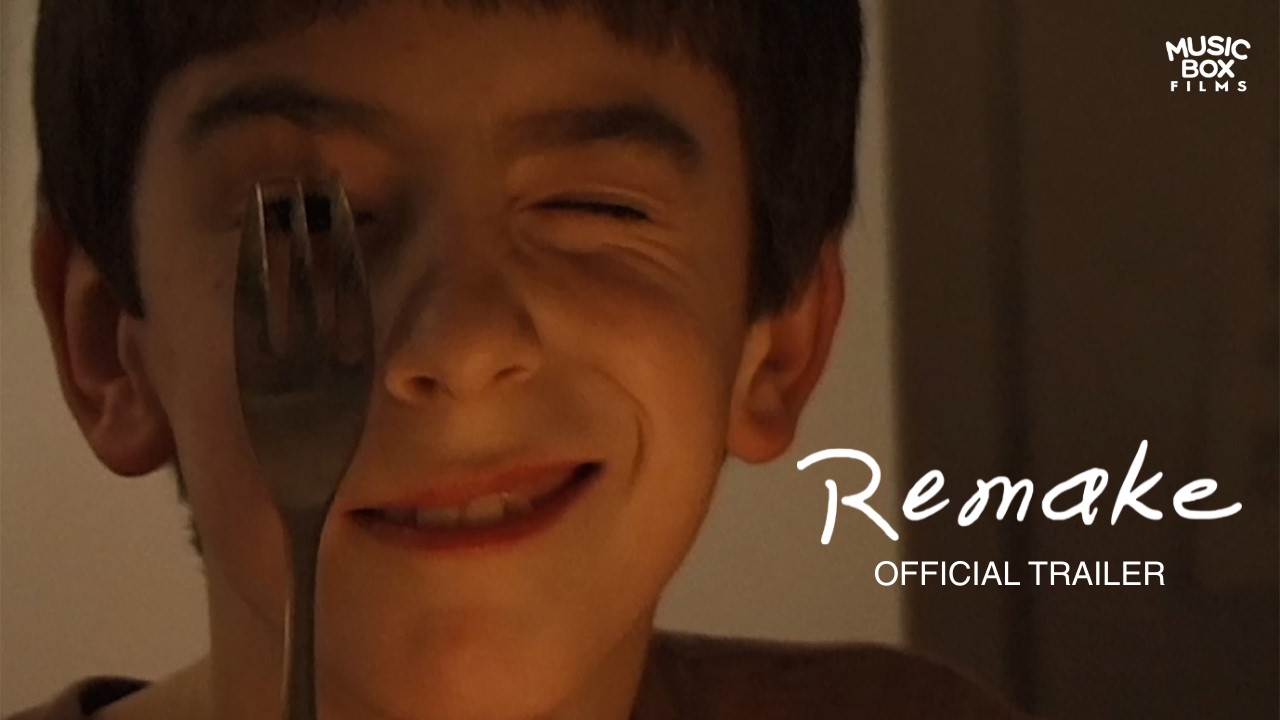
Remake Movie Review

Studio: Music Box Films
Released: July 10, 2026
Updated: 17 hours ago
4.6
Overall review score
191
Review insights
32
Scored features
18
Expert reviews
Content guidance
Scorata recommended age 16+

Disturbing real-life drug use, alcohol abuse, addiction, and a fatal overdose anchor an intense account of bereavement. Family conflict, mental illness, and dangerous skiing under the influence add mature concerns.

Bottom Line

Choose it for an intimate, searching documentary that rewards focused attention and invites discussion. Skip it when devastating grief, addiction footage, and unresolved family tensions would be too much.

Viewers ready to give a personal documentary focused attention and discuss its questions about grief and filming family. Returning McElwee fans gain extra meaning, while newcomers can follow the story without homework.

Not for

Viewers unable to give this intimate documentary close attention or engage with its difficult questions afterward. Its addiction footage, bereavement, and unresolved family tensions make those demands emotionally substantial.

Verdict

Remake turns decades of home movies into a deeply affecting examination of memory, fatherhood, and the limits of filmmaking. McElwee’s self-questioning prevents the portrait from becoming a simple tribute, while Adrian’s own recordings add visual energy and an intimate perspective his father could not capture. Dry humor and the stalled Sherman’s March adaptation provide relief, though critics differ on how well that subplot belongs beside the central tragedy. Occasional repetition and missing family viewpoints are the clearest structural reservations. The film works without prior knowledge of McElwee’s career, but returning viewers gain a richer understanding of what the old images now mean. Its achievement is considerable, and its emotional demands are equally real.

Feature Scorecards

Summary

32 reviewed features
  • Very positive 4.5-5.0
    23 (72%)
  • Positive 3.5-4.4
    8 (25%)
  • Neutral 2.5-3.4
    1 (3%)

Pros highlights

  • 4.9
    18 reviews strong consensus
    emotional impact: 4.9, 18 reviews, strong consensus
    The grief is devastating, but affectionate childhood moments and candid reflections give it depth beyond tragedy. Adrian’s own footage makes the loss especially immediate.
  • 4.9
    16 reviews strong consensus
    theme depth: 4.9, 16 reviews, strong consensus
    Memory, mortality, artistic legacy, and the limits of recording a life intertwine in a searching meditation. Its refusal to settle on easy answers is a widely praised strength.
  • 4.9
    15 reviews strong consensus
    directing quality: 4.9, 15 reviews, strong consensus
    McElwee’s open, self-questioning approach transforms a family archive into ambitious personal cinema. His observational choices and willingness to confront painful material earn exceptional praise.
  • 4.4
    14 reviews strong consensus
    story quality: 4.4, 14 reviews, strong consensus
    Most critics find the family story and stalled adaptation meaningfully intertwined. Others find the remake thread less engaging or better suited to a separate film, and repetition occasionally weakens the storytelling.
  • 4.5
    12 reviews strong consensus
    Biographical coverage: 4.5, 12 reviews, strong consensus
    The portrait preserves Adrian’s wit, ambition, and individuality alongside his addiction. One substantial reservation is the absence of family voices that could broaden the account.
  • 4.7
    11 reviews strong consensus
    archival footage quality: 4.7, 11 reviews, strong consensus
    Home movies and Adrian’s recordings become intimate windows into a life that cannot be recovered. Their contrasts reveal personality, grief, and perspectives his father’s camera missed.

Use Cases

Best for

  • 4.8
    4 reviews strong consensus
    Newcomer viewing: 4.8, 4 reviews, strong consensus
    Prior knowledge of McElwee’s films is unnecessary: excerpts supply context, and the personal story stands on its own. Even a critic entirely new to his work found it deeply moving.
  • 5.0
    2 reviews limited evidence
    Returning fan viewing: 5.0, 2 reviews, limited evidence
    Familiarity with the earlier films makes this return especially rich. It revisits relationships and reframes earlier footage in light of what happened afterward.
  • 5.0
    1 review
    Arthouse viewing: 5.0, 1 review
    This personal essay documentary is strongly recommended as serious, reflective cinema. Its stand-alone power survives without familiarity with the filmmaker’s earlier work.

Cast & Creators

  • Director
    4.9
    18 reviews strong consensus
    Ross McElwee: 4.9, 18 reviews, strong consensus
    McElwee is praised for vulnerable self-examination, expressive construction, and a deeply affecting use of family footage. Reservations concern self-focus and the troubling consequences of making private life public.
  • Cinematographer
    4.7
    8 reviews strong consensus
    Adrian McElwee: 4.7, 8 reviews, strong consensus
    Adrian’s footage adds visual energy, precision, and candid insight into his own world. His interviews and skiing sequences reveal a distinct filmmaking talent that deepens his father’s portrait.
  • Self
    4.8
    3 reviews strong consensus
    Charleen Swansea: 4.8, 3 reviews, strong consensus
    Charleen’s archived presence is vivid, forceful, and insightful. Her blunt delivery provides an engaging counterpoint to McElwee’s self-reflection.
  • Editor
    5.0
    2 reviews limited evidence
    Joe Bini: 5.0, 2 reviews, limited evidence
    Joe Bini is praised as a master editor and a particularly fitting collaborator for the film’s intricate handling of time and perspective.

Compared With Category Average

Compared with other Movies, this product is above average in ending satisfaction, Drug and alcohol portrayal, runtime, near average in creative collaboration, Biographical fairness.

Comparison summary

30 compared features
  • Above average 0.4+ pts higher
    26 (87%)
  • Same as average within 0.3 pts
    4 (13%)

Largest category differences

Attribute This product Category average Difference
ending satisfaction 5.0 3.2 +1.8
Drug and alcohol portrayal 4.6 2.9 +1.7
runtime 4.5 2.8 +1.7
theme depth 4.9 3.6 +1.3
story quality 4.4 3.2 +1.2
emotional impact 4.9 3.8 +1.1
tonal consistency 4.5 3.2 +1.3
originality 4.7 3.3 +1.4

Consider This Instead

If you want better realism

Choose Barbara Forever. It scores 5.0 vs 4.4 for realism, with a 4.6 overall score.

Compare

Compared in Reviews

Products reviewers directly compared with this model, grouped into quick takeaways.

Photographic Memory

  • Compared: Hopeful framing versus a harsher reality The earlier film’s hopeful view of Adrian gives way to the harsher reality confronted here.
  • Compared: Reconsideration of the father-son relationship Remake revisits and questions the earlier portrait of the father-son relationship.

Sherman’s March

  • Similar: Off-kilter humor and personal reflection Remake shares the earlier film’s funny, reflective, endearing character despite its painful subject.
  • Compared: Relative achievement within McElwee’s work The critic considers Remake arguably his strongest film since Sherman’s March.

Blue Heron

  • Similar: Personal filmmaking and the limits of grief repair Both accept that cinema cannot undo loss or repair every past decision.

FAQ

Do I need to see Sherman’s March first?

No. Earlier-film excerpts provide context, although familiarity with McElwee’s work can make Remake richer.

Is this a remake of Sherman’s March?

No. An attempt to adapt that documentary supplies one storyline, alongside McElwee’s examination of his son’s life and death.

What makes Adrian’s footage important?

It brings his own perspective into the portrait, with visually energetic skiing sequences and candid glimpses of addiction and recovery.

Is the film relentlessly sad?

Grief dominates, but dry industry satire, family teasing, and moments of joy provide some relief.

What are the main criticisms?

Some critics identify repetition, uneven detours, and missing family perspectives. Others find the digressions meaningful and the archival structure powerful.

What content should I expect?

Expect disturbing real-life drug use, alcohol abuse, addiction, discussion of a fatal overdose, mental illness, and painful family conflict.

What questions does it raise?

It asks how filming shapes family relationships, what recorded images preserve or distort, and whether cinema can help someone live with grief.

Sample Expert Reviews We Analyzed

These are a few of the reviews included in our analysis.

Top Movies to Consider

#1 You Can See Everything
4.7

Choose this inventive, unsettling documentary for fearless questioning, dark humor, and unpredictable storytelling. Skip it if you want a short, straightforward exposé with definitive answers.

Pros: originality, humor

#2 Chronovisor
4.7

Best for a hypnotic, bookish mystery with tactile visuals and cerebral chills. Skip it if reading-heavy, attention-demanding storytelling sounds more exhausting than exciting.

Pros: Atmosphere, cinematography

Cons: audience appeal

#3 This product Remake
Remake
4.6

Best for an intimate, searching documentary that rewards focused attention and invites discussion. Skip it when devastating grief, addiction footage, and unresolved family tensions would be too much.

Pros: emotional impact, theme depth

#4 Halloween
4.6

Best for patient suspense, an unforgettable score, and an unsettling masked killer. Skip it for very young children or if you want to avoid intense scares; its restrained kills also...

Pros: directing quality, score quality

Cons: message quality
