
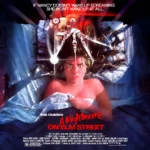
A Nightmare on Elm Street Feature Scores
Explore all 88 feature scores for A Nightmare on Elm Street, organized into pros and cons.
Scores by Feature
Summary
88 reviewed features-
Very positive 4.5-5.040 (45%)
-
Positive 3.5-4.431 (35%)
-
Neutral 2.5-3.47 (8%)
-
Negative 1.5-2.49 (10%)
-
Very negative below 1.51 (1%)
Pros
Sort
-
Making sleep itself dangerous gives the slasher formula an unusually inventive foundation. Later imitations and Freddy's familiarity can blunt the novelty, but the original idea remains a major attraction.
-
Tina's ceiling death and Glen's blood fountain repeatedly stand out as images that linger long after watching. Freddy's appearance and the broader nightmare imagery are similarly difficult to shake.
-
Ordinary bedrooms, classrooms, shadows, and boiler rooms acquire a persistent sense of unease. The atmosphere often unsettles even viewers who find Freddy himself less frightening.
-
Dreams often begin without clear warning, allowing ordinary spaces to turn subtly threatening. The seamless shifts and nightmare logic are among the film's most consistently praised achievements.
-
Freddy's personality, cruelty, and access to sleep make him stand apart from silent masked killers. His shadowy original incarnation draws especially strong praise, although a few viewers find him underdeveloped or surprisingly unscary.
-
Craven earns strong praise for building suspense, blurring dreams with reality, and making a modest budget feel inventive. His control of mood and visual storytelling is a central reason the film still works.
-
The rotating bedroom, stretching wall, and blood fountain are frequent highlights of the handmade effects. A few rubbery or visibly dated moments remain, but ingenuity is the dominant impression.
-
Freddy's debut is repeatedly celebrated as a landmark that reshaped slashers and became a major pop-culture presence. Its influence extends beyond the sequels to the imagery and conventions of later horror.
-
Nancy's intelligence, courage, and refusal to remain a helpless victim make her a standout heroine for many. A minority admire her tactics without finding her personality especially engaging.
-
Thoughtful framing, expressive shadows, blue night lighting, and striking camera illusions are major strengths. The camerawork helps ordinary settings feel like unstable dream spaces.
-
A sleep-stalking killer turns a familiar teen slasher into a striking psychological nightmare. Most find the story imaginative and involving, though dissenters see contrivances and underused ideas beneath the premise.
-
The film remains a lively, inventive horror ride even for viewers who are not especially frightened. Elaborate deaths, dark playfulness, and memorable imagery sustain its entertainment appeal.
-
Nancy's survival skills, backup plans, and improvised traps give her an active role in fighting Freddy. Her willingness to solve the problem is repeatedly admired as a strength of the final act.
-
Uncertain waking states and the inevitability of sleep create sustained suspense. Escalation and the shift away from the apparent initial heroine keep many viewers tense even when jump scares do not land.
-
The burned face, striped sweater, fedora, and homemade glove create an immediately recognizable killer. Most find the combination sinister and expressive, though one critic sees an oddly makeshift outfit.
-
The eerie piano, synth themes, and nursery rhyme give Freddy a distinctive musical identity. Most admire the chilling atmosphere, with occasional reservations about intrusive scoring or silly synth tones.
-
The ceiling murder, school nightmare, and bathtub attack remain powerful scare scenes for many. Others feel that familiarity, dated effects, or the playful climax soften the fear considerably.
-
The production often looks remarkably ambitious for its small budget. A few responses still see the financial limits in dated effects, but resourceful filmmaking generally wins admiration.
-
The focused progression and escalating nightmares usually keep the film moving with little wasted time. One criticism is that an early confrontation with Freddy interrupts the otherwise methodical build-up.
-
Several responses approve of the bloodshed as imaginative, purposeful, or well balanced with quieter suspense. One finds occasional over-the-top attacks less menacing, so the strongest approval is for how the gore works rather than simply how much appears.
-
The recognizable theme and jump-rope song are repeatedly praised as defining parts of the film's identity. Their sound helps tie the eighties atmosphere directly to Freddy's threat.
-
The original's largely serious, sadistic Freddy is frequently preferred to his later comic persona. Limited jokes help preserve the sense of a dangerous antagonist.
-
Nancy's intelligence and proactive resistance are repeatedly praised as a strong alternative to a helpless horror heroine. One satirical criticism singles out sexist sexual dialogue involving Tina.
-
Repeat viewings reveal details and preserve the appeal of the major deaths and effects. For some fans it is an annual return that grows more rewarding with familiarity.
-
Dreams, vulnerability, adolescent agency, and troubled parents give the horror more to discuss than its body count. Some find those ideas intelligent and substantial; others see familiar morality or heavy-handed treatment.
-
The dirty red-and-green sweater, hat, and glove form a strongly expressive costume. The unsettling color combination and immediately recognizable silhouette are particular strengths.
-
Mundane homes and classrooms help dreams feel uncannily close to reality. The hot, rusted boiler-room labyrinth is a particularly effective and distinctive setting.
-
The ceiling-death choreography and burning-Freddy sequences draw particular admiration. Their physical staging gives the film memorable spectacle alongside its psychological threat.
-
The dark, delirious look captures a particularly evocative strain of eighties horror. Dreamlike imagery and a strong overall feel remain appealing despite individual dated elements.
-
Many enjoy the combination of serious horror, psychological ideas, and twisted humor. Others find the trap-house climax so slapstick that it reduces the film's power to frighten.
-
Starting with Tina makes her early death a powerful misdirection. It unsettles assumptions about who is safe and helps keep the rest of the story unpredictable.
-
The roughly ninety-minute length is generally treated as an advantage. Its focused runtime delivers the premise without much unnecessary material.
-
Nancy's lead performance can feel vulnerable, tough, and authentically young. Less convinced viewers find her reactions stiff or uneven, especially before the exhaustion takes hold.
-
Keeping Freddy fragmented, distant, and in shadow usually strengthens his mystery. Some would prefer greater exposure, while another criticism argues that even the original reveals him too early.
-
Nancy's final confrontation and the trap-filled house receive strong praise. Her proactive preparation gives the last stretch a satisfying burst of physical action.
-
The making-of documentary is praised for unusually comprehensive access to the production. Interviews, outtakes, and effects breakdowns give it particular value.
-
The film combines a recognizable slasher structure with supernatural dream attacks. That combination gives its murders and suspense more freedom than an ordinary pursuit by a human killer.
-
Strong shadows and dreamy blue light give the night scenes an unsettling texture. The lighting is especially effective at preserving Freddy's mystery.
-
Early encounters with Freddy carry strong affectionate memories and capture the appeal of eighties horror. One skeptical response argues that those childhood associations explain much of the film's lasting affection.
-
Craven's screenplay gains much of its strength from the premise, visual storytelling, and psychological ideas. Contrived exposition, familiar moral rules, and parents who refuse obvious warnings are the recurring writing complaints.
-
Freddy assembling his glove is widely admired as an economical, sinister introduction. A smaller number find the opening presentation creaky or visually awkward.
-
Dark jokes and exaggerated dream imagery add considerable fun for receptive viewers. The booby-trap climax can also provoke unintended laughter that weakens the menace.
-
Freddy's expressive prosthetics are usually considered iconic or especially impressive, with the restoration revealing more detail. A dissenting critic finds the original makeup cheap enough to need concealment in shadow.
-
The disc supplements offer substantial documentaries, commentaries, and outtakes. Their depth is a strength, although recycled material gives previous owners fewer new discoveries.
-
Supporting performances range from dependable and believable to merely serviceable. Nancy's mother is particularly divisive, with both strong admiration and sharp criticism of her exposition scenes.
-
The evaluated Blu-ray transfers offer strong detail, deep blacks, and a clear improvement over earlier presentations. Some oversaturated colors, minor noise, and occasional artifacts keep the picture from being flawless.
-
Nancy and Glen's chemistry provides welcome warmth. The original Nancy-Freddy dynamic is also praised for giving the central conflict energy and helping the story work.
-
The supplements explain how ambitious effects and other creative choices were achieved on limited resources. They provide engaging production insight rather than merely repeating the film's story.
-
Freddy's brief appearances usually make his threat feel more potent. One response wants more of him and finds the limited dialogue and screen time disappointing.
-
Many effects remain ingenious and startling, especially the major deaths and wall illusion. Others show their age, with the final mother-through-the-window effect attracting especially sharp criticism.
-
The evaluated 4K restoration is described as the best the film has looked. Improved daylight detail and more vivid dark boiler-room textures are particular benefits.
-
Marge's alcoholism is treated as an unresolved human problem rather than something a supernatural victory can instantly cure. That refusal of an easy resolution earns particular praise.
-
Editing works with blocking and camerawork to produce scares through basic film craft. Its execution is praised as consistently exemplary.
-
The horror gains force from the idea that children inherit the consequences of adult wrongdoing. Evocations of abuse and generational trauma make the dream attacks feel more substantial than routine slasher danger.
-
Freddy's unknown identity and motives give the original a compelling mystery. That uncertainty is a major reason this incarnation remains effective.
-
The narrative structure supports a consistently enjoyable experience. Its organization is praised even alongside a separate concern about an early confrontation disrupting the slow build.
-
The Evil Dead appearance is appreciated as a playful exchange between horror filmmakers. It adds a small, affectionate reference for attentive genre viewers.
-
The evaluated Atmos remix gives familiar knife sounds, sudden appearances, and the score added presence. It is considered an enjoyable improvement even though an upgrade was not essential.
-
Lin Shaye's brief appearance is a welcome surprise for a viewer who recognizes her. The pleasure comes from the casting recognition rather than a detailed assessment of the small performance.
-
Recognizing Lin Shaye in a brief classroom appearance is an enjoyable surprise. The appreciation centers on seeing her in the film rather than on an extended role.
-
Evocations of abuse contribute to the film's disturbing force. They give the nightmare imagery an emotional foundation beyond its supernatural mechanics.
-
The film invites a troubling reading about men dismissing women's warnings and violating familiar boundaries. That everyday vulnerability adds a social dimension to Freddy's supernatural threat.
-
Dysfunctional parent-child relationships add substance to the horror. The teenagers' need to cope without dependable adult support makes their struggle more meaningful.
-
The friends' shared laughter during Glen's awkward phone-call prank adds a sweet moment of connection. It helps them feel like young people with a real bond.
-
A lighthearted moment among the friends helps establish why their danger matters. Their believable warmth gives the later horror greater stakes.
-
Nancy and Glen have appealing chemistry. Their relationship provides a welcome warmer element within the surrounding nightmare threat.
-
Implied sexual menace is judged more unsettling than spelling everything out. Keeping that threat in subtext adds an extra disturbing layer to Freddy.
-
The dream imagery gives the slasher premise a psychological dimension. Freudian readings connect bodily threats and adolescent anxiety to the film's recurring nightmares.
-
The Blu-ray mix can offer clear music, wide imaging, and useful surround ambience. Responses diverge over dialogue and effects fidelity, with one hearing strained voices and scratchy loud sounds.
-
Dialogue is well prioritized and easy to hear in one Blu-ray assessment. Another finds the voices hollow and noticeably inferior to the music's clarity.
-
Freddy's echoing voice adds an uncanny dream texture, while scraping blades produce an effective sensory jolt. The abrasive screeching can also be unpleasant enough to test a viewer's tolerance.
Cons
Sort
-
The shifting boundary between dreams and reality can be thrillingly disorienting or frustratingly unclear. Freddy's inconsistent effects on the waking world and the final twist generate the most questions.
-
The final dream twist is the most persistent complaint: many find it abrupt, confusing, or damaging to Nancy's victory. Others love its bizarre last shock or find the ambiguity satisfying.
-
Dialogue can sound dated, grating, or hokey. One enthusiastic reading finds its slightly unnatural phrasing useful to the film's uncanny dream feeling.
-
A strongly negative response finds the film unsure of what point it wants to make. Its shifting rules and resolution weaken the intended message for that viewer.
-
The grotesque body imagery is striking but unwelcome to some viewers. Maggots, green slime, and bloody bodily distortions can make the experience unpleasant even when the practical craft is admired.
-
Viewers sensitive to gore or bodily decay may find parts of the film unpleasant. The blood, maggots, and slime prompt discomfort even among people who otherwise enjoy its effects and entertainment.
-
One retrospective explicitly recognizes that childhood exposure came too early. Enjoyment of the film does not erase its potential to be inappropriate for young viewers.
-
The Focus Points contain worthwhile outtakes, but repeatedly operating the remote interrupts pacing and tension. The lack of an easier way to access that material makes the extras less comfortable to explore.
-
One satirical response finds the conspicuous Nike placement awkward in a violent death scene. The visible branding distracts rather than adding to the moment.
-
One response finds the impossible physical effects of Freddy's attacks distracting. Viewers who need coherent real-world physics may struggle with the dream-driven action.
-
One response finds the loud, prolonged sex scene implausible for its teenage setting. The criticism concerns how that presentation works in the scene rather than treating greater explicitness as a virtue.
-
The dream world's rules are clear and convincing to some, fluid or contradictory to others. Questions about what crosses into reality and how Freddy can be defeated are the main sticking points.
-
The trap-house climax has enjoyable slapstick energy. That same silliness can make Freddy feel less threatening and weaken the fear.
-
The film can leave viewers shaken, exhilarated, or closely connected to the teenagers' panic. Flat acting and insufficient reactions to friends' deaths can also weaken that emotional connection.
-
Most regard the film as an outstanding example of horror's range, combining scares, atmosphere, humor, and ideas. Strong dissenters find its dated execution or inconsistent rules too damaging to overlook.
-
Nancy and Freddy earn praise for having more personality than standard slasher figures. Opinions split over the supporting teenagers and parents, whose thin writing or implausible behavior can limit emotional investment.
-
Some find the teenagers unusually believable for an eighties slasher; others hear flat delivery and see conspicuously awkward reactions. The acting is one of the film's clearest points of disagreement.
Use Cases
Best for
Sort
-
Most horror enthusiasts are urged to experience this inventive, influential slasher. A strongly dissenting response finds the execution too weak to recommend despite the promising premise.
-
Inventive nightmares and a sustained creepy mood make this a strong Halloween-season choice. Both a first encounter and an October revisit receive explicit recommendations.
-
Newcomers are encouraged to try an inventive horror landmark with memorable characters and images. Expectations still matter: decades of imitation and an enormous reputation can make a first viewing feel less revelatory.
-
Longtime fans have reasons to return, from rediscovering the original's menace to revisiting its psychological themes. The evaluated 4K edition also receives a clear recommendation for an existing collection.
-
A theatrical first encounter can deliver an exhilarating, immersive experience. A separate recommendation encourages catching the film on a big screen when the opportunity arises.
-
The film is recommended as a teachable example of film form. Its inventive handling of limitations makes it especially useful for examining how fundamental craft creates horror.
-
This is a rewarding return to a period when its slasher ideas felt fresh. The eerie mood and familiar imagery carry particular appeal for classic-horror nostalgia.
-
Dreams, psychological control, family dysfunction, and the boundary between imagination and reality provide substantial discussion material. The film offers more to unpack than its memorable kills.
-
The original is recommended as a gateway for viewers curious about horror. Its imaginative dream set pieces show what the genre can do beyond generic slasher kills.
-
The film is specifically recommended for viewers who want gore paired with thought-provoking ideas. Its psychological premise offers substance alongside grisly spectacle.
-
A dark basement in the early hours is enthusiastically suggested for viewers seeking maximum fear. The film's atmosphere and sleep-related threat make late-night home viewing especially potent.
-
A tongue-in-cheek sensibility makes the film more fun for viewers receptive to its camp. Those expecting entirely straight-faced, conventional deaths may find that same playfulness distracting.
-
Cheerfully crass black humor gives the horror an enjoyable extra charge. It suits viewers receptive to macabre jokes alongside the threatening premise.
Conditional or not ideal for
Sort
-
Scare-sensitive viewingSensitive viewers may find the lingering nightmare concept and corpse imagery unsettling enough to prefer daylight or lights on. Actual fright varies, with one first-time viewer finding the premise scarier than the viewing experience.
-
Children's viewingThis is a poor choice for young children. A retrospective account specifically describes seeing it when far too young, despite enjoying the experience.
-
Straightforward-story viewingViewers expecting straightforward storytelling and normal death scenes may find the tongue-in-cheek approach frustrating. Its dreamlike presentation asks for comfort with a less literal horror experience.
-
Adult viewingAdult viewers may find the film suspenseful without finding it especially frightening. That makes its suitability depend partly on whether the goal is tense atmosphere or strong scares.
Cast & Creators
-
Director, WriterCraven's imaginative premise and command of dreamlike suspense receive sustained praise. His ability to create uncanny images and strong momentum within a modest budget is central to the film's appeal.
-
Freddy KruegerEnglund's voice, physical mannerisms, and malicious playfulness make Freddy unusually expressive and menacing. His comparatively restrained work here is repeatedly singled out as a defining strength.
-
NancyLangenkamp's Nancy earns praise for believable youth, vulnerability, and strength. Her work remains divisive, with other responses finding stiff reactions or an uneven transition into the more desperate scenes.
-
CinematographerHaitkin's use of light and shadow helps give the film its suspenseful, uncanny atmosphere. The camerawork makes the boiler-room spaces and uncertain reality especially effective.
-
ActorSaxon is generally convincing and dependable as Nancy's dismissive father. One response finds him functional rather than especially memorable.
-
ComposerBernstein's eerie piano and synth writing fit the material particularly well. The score is admired as an underappreciated horror signature, despite some tones feeling slightly silly.
-
RodGarcia gives Rod a convincing mix of tough-guy behavior and genuine fear. His account of the nightmare encounter is singled out as a particularly strong scene.
-
Special effects artistDoyle's stretching-wall effect is admired as a remarkably memorable illusion achieved through a simple practical method. Careful staging makes it feel eerily plausible.
-
GlennDepp gives Glen an appealing youthful warmth for several viewers. Others find this early performance wooden, immature, or serviceable rather than distinctive.
-
TinaWyss is praised for solid supporting work and believable teenage reactions. Her performance helps the frightened friends feel authentic rather than disposable.
-
MargeBlakley's wounded, distant mother inspires sharply different reactions. One response praises the humanity of the portrayal, while others find her exposition awkward or dramatically deflating.
-
ProducerShaye's intervention in the ending receives strong criticism for replacing a satisfying resolution with a contradictory sequel hook. The complaint concerns the effect on this film's conclusion.