If you want better wall-mounting support
Choose GL.iNet Flint 3 (GL-BE9300). It scores 4.7 vs 2.0 for wall-mounting support, with a 4.2 overall score.

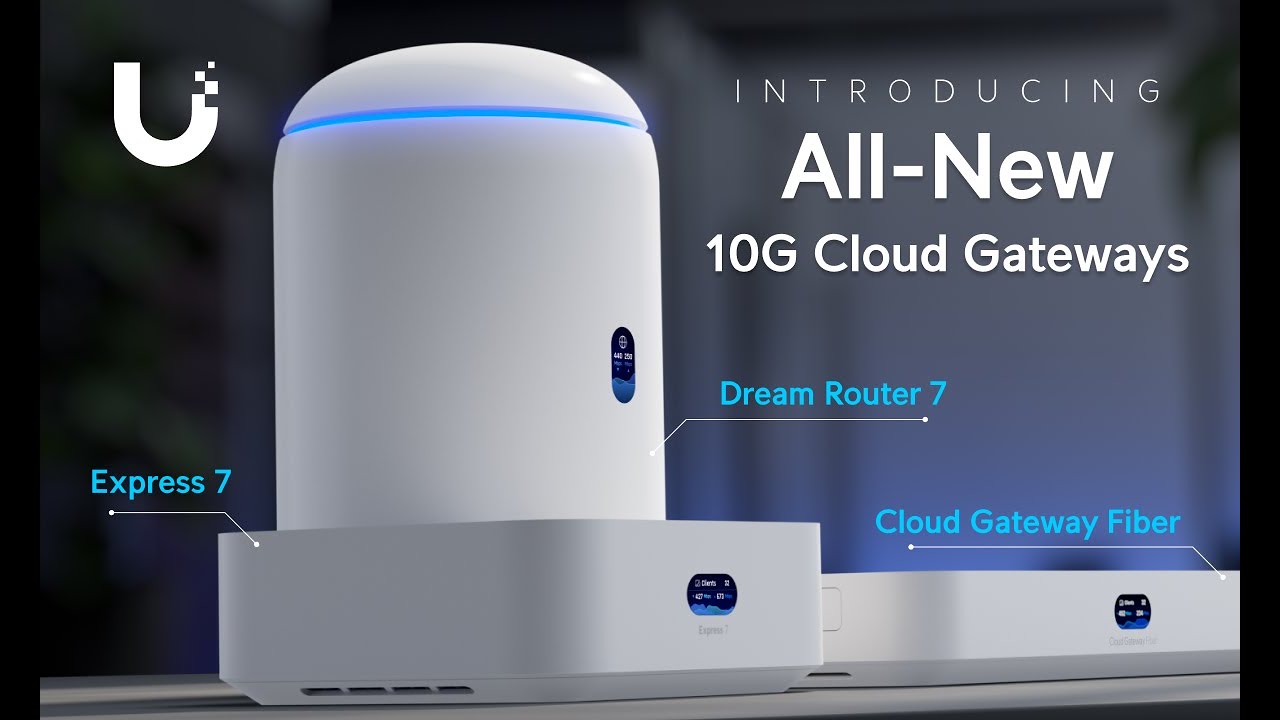
The Dream Router 7 combines fast Wi-Fi 7 with unusually comprehensive network management in a compact gateway. Its single 10GbE port, limited PoE output and coverage constraints mean bigger deployments may require additional equipment.
Advanced home networking users, UniFi owners and small offices that want integrated management, security and expandable multi-gig networking.
Buyers requiring full 5–10Gbps inspected routing, large camera deployments or a simple plug-and-play router with minimal configuration should consider other options.
The UniFi Dream Router 7 is an excellent starting point for a managed home or small-office network. Its combination of fast Wi-Fi 7, 2.5GbE switching, a configurable SFP+ connection and integrated UniFi applications offers substantial value at the cited $279 price. VLANs, traffic monitoring, firewall controls and optional camera recording make it more versatile than a typical consumer router. Basic setup is often straightforward, but advanced settings take learning. Performance is particularly convincing on gigabit and roughly 2Gbps connections, even with intrusion prevention enabled. The 10GbE port does not deliver a full 10Gbps routed network, and the single low-power PoE output and limited camera storage restrict larger installations. Additional access points may be necessary in large homes. Software has improved substantially since launch, though some early connectivity complaints and fan noise deserve consideration.
Compared with other Routers, this product is above average in Software and driver support, Processor performance, Port forwarding, near average in download performance, wireless performance, below average in wall-mounting support, encrypted DNS support, cellular connectivity.
| Attribute | This product | Category average | Difference |
|---|---|---|---|
| Software and driver support | 5.0 | 3.0 | +2.1 |
| Processor performance | 5.0 | 3.0 | +2.0 |
| Port forwarding | 4.5 | 2.6 | +1.9 |
| wall-mounting support | 2.0 | 3.8 | -1.8 |
| Wireless signal strength | 4.0 | 2.3 | +1.7 |
| encrypted DNS support | 2.5 | 4.2 | -1.7 |
| cellular connectivity | 2.0 | 3.5 | -1.5 |
| content filtering | 5.0 | 3.5 | +1.5 |
Choose GL.iNet Flint 3 (GL-BE9300). It scores 4.7 vs 2.0 for wall-mounting support, with a 4.2 overall score.
Choose ASUS ZenWiFi BT10. It scores 5.0 vs 2.3 for 10 GbE support, with a 4.0 overall score.
Choose TP-Link Archer BE230. It scores 4.5 vs 2.0 for advertised speed accuracy, with a 4.1 overall score.
Choose GL.iNet Flint 2 (GL-MT6000). It scores 5.0 vs 2.0 for cellular connectivity, with a 4.4 overall score.
Compared with Ubiquiti UniFi Dream Router 7
Yes, particularly for roughly 1–2.5Gbps service. Full threat inspection is limited to around 2.3Gbps, and the single 10GbE SFP+ port does not make every connection 10Gbps.
It can cover a typical small or medium home well, but larger homes and thick walls may require compatible UniFi access points.
Basic setup is usually quick through the app or web interface. Advanced VLANs, firewall rules and VPN settings have a steeper learning curve.
Yes. UniFi Protect and the included 64GB surveillance-grade microSD card support a small camera setup; longer retention and larger systems need additional storage or recording hardware.
Core UniFi functions and local management are available without a mandatory subscription. Additional threat protection services may cost extra.
It has one 15.4W PoE output. Higher-power or multiple devices require a suitable PoE injector or switch.
These are a few of the reviews included in our analysis.





The UDR7 is a desktop 10G cloud gateway with built-in Wi-Fi 7, a PoE switch and microSD storage for UniFi apps. Scan lists it at £279.98, and...
Ubiquiti Dream Router 7 blends WiFi 7, 10GbE, PoE, UniFi apps, and robust security into a compact all-in-one gateway for home and SMB use.
Tri-band Wi-Fi 7, 2.5 GbE ports, an SFP+ WAN and UniFi's polished app, with a learning curve and few ports.
Ubiquiti Dream Router 7 review: learn what its WiFi 7, 10G SFP+, 2.5GbE ports, UniFi apps, Protect storage, IDS/IPS, and PoE limits mean.
UniFi Dream Router 7 Review When it comes to the hardware in your network environment, UniFi has always been one of those companies where you...

Choose the R95 for a busy home that needs fast Wi-Fi 7, strong range, multi-gig ports, and low-lag gaming. Skip it for a small, lightly connected space or if advanced...
Pros: Wi-Fi 7 support, Wi-Fi speed

Best for frequent travel, fast VPNs, dual 2.5GbE and resilient multi-WAN. Skip it if you need full 6GHz/320MHz Wi‑Fi 7, mesh, or desktop-class USB storage and long-range indoor coverage.
Pros: VPN client support, value for money
Cons: 6 GHz performance, USB storage sharing

Exceptional VPN speeds, strong Wi-Fi 6 coverage and extensive OpenWrt controls make the Flint 2 a compelling value. Its advanced setup, missing 6GHz band and firmware-specific caveats matter if you...
Pros: setup ease, configuration flexibility
Cons: Wi-Fi 7 support, USB storage sharing
The Beryl AX packs exceptionally flexible VPN and networking tools into a pocket-sized router. It is a great travel companion, but hotel login issues, limited whole-home range and a single...
Pros: Overall satisfaction, size and footprint
Cons: Captive portal handling, Ethernet port count