
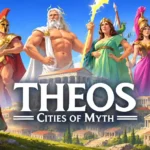
Theos: Cities of Myth Feature Scores
Explore all 43 feature scores for Theos: Cities of Myth, organized into pros and cons.
Scores by Feature
Summary
43 reviewed features-
Very positive 4.5-5.011 (26%)
-
Positive 3.5-4.414 (33%)
-
Neutral 2.5-3.47 (16%)
-
Negative 1.5-2.48 (19%)
-
Very negative below 1.53 (7%)
Pros
Sort
-
Starting from a few homes and building a functioning polis is consistently satisfying. Each expansion creates new supply-chain and service problems worth resolving.
-
Its warm, vivid picture-book take on ancient Greece, with marble temples and busy streets, is one of the most consistently praised qualities. The stylisation may not appeal to players who prefer realism.
-
The seven Olympian patrons offer distinct blessings and priorities that meaningfully shape development. Gods and sanctuaries give familiar economic systems a strong mythological identity.
-
Menus, building tools and service-path indicators are much clearer than in the older games that inspired Theos. A few broader management views still leave troubleshooting to the player.
-
Food, labour, industry, storage and markets form engaging, interconnected systems. Finding and fixing shortages provides much of the satisfaction, particularly as a city expands.
-
Bustling markets, winding roads and imposing sanctuaries create a welcoming mythological city. Watching everyday activity amid monumental buildings is rewarding in its own right.
-
Markets, workshops, mines and inhabitants give the streets plenty of visual movement and personality. Several critics enjoyed simply zooming in to observe the activity.
-
Everyday Greek civic life, famous historical figures and imposing Olympian monuments coexist naturally, creating a distinctive mythological setting.
-
The expanding economy rewards anticipation, efficient layout and solving interdependent supply problems. One critic, however, found the broader city-management systems too shallow and inflexible.
-
Cleaner construction and better management controls make it easier to develop neighbourhoods without struggling against older city-builder interface conventions.
-
Gradual Adventure unlocks and dedicated lessons make the foundational systems welcoming. More troubleshooting guidance, especially for fires and missing services, would help.
-
Theos is a charming and capable revival of classic Greek city building, with rewarding logistics and delightful scenery. Rough combat, repetitive patrol management and restrictive options keep it from feeling essential for everyone.
-
Directly drawing worker patrols is a valuable improvement over old unpredictable walkers. As a settlement grows, checking and redrawing those routes can become repetitive work.
-
Small worker movements, lively citizens and amusing building animations make settlements more engaging to watch. The overall animation technology is functional rather than cutting-edge.
-
Bright, charming visuals make growing settlements rewarding to watch. The deliberately stylised look may feel too lightweight to players wanting detailed realism.
-
Different patrons provide fresh building priorities, and one player repeatedly restarted after disasters. Still, familiar mechanics can feel less compelling after long sessions.
-
Classic roads, housing, services and industrial chains form a strong city-building foundation, with modernised controls that generally make expansion pleasant.
-
Trade partners and colonies provide access to scarce resources and make the world feel larger than the home settlement. They add another useful layer to economic planning.
-
Free-form city growth is an attractive alternative to Adventure goals. Yet preset maps, restricted god choices and missing custom seeds curb the freedom some players expect.
-
Straightforward menus and relatively accessible management rules make city construction easier to grasp than some deeper simulations.
-
Clearer explanations of service coverage mean city-wide problems usually feel traceable to planning decisions rather than opaque rules.
-
Visible routes, patrol markers and service feedback make logistical paths easier to understand and diagnose.
-
Quirky worker gestures and little visual gags give the city a playful personality without disrupting the traditional management gameplay.
-
Pause and speed controls help players handle competing civic demands without rushing every decision.
-
Myth-inspired hero quests add a pleasant storybook flourish to the city-management routine.
Cons
Sort
-
Battles are the most consistent weakness: critics describe limited tactics, repetitive clashes and clumsy unit control. City management is significantly more rewarding.
-
Military orders do not always register or behave precisely enough, making troop movement frustrating and combat unsatisfying.
-
Overlapping units and confusing engagements make it hard to read what is happening in military encounters.
-
Battle hits can register unclearly, weakening the already unconvincing military encounters.
-
Generic ambient noises fail to convey the bustle visible on screen, leaving the audio much flatter than the attractive city visuals.
-
Well-finished city-building controls contrast with military systems needing refinement and other rough edges that diminish the overall package.
-
Some Adventure objectives rely on prolonged waiting and repetitive production rather than clever challenges, making progress feel laborious.
-
The lively visuals and generic background audio do not always align, leaving settlements quieter and less believable than they appear.
-
The game includes several interface languages, including German, but the absence of Croatian is a drawback for players who need it.
-
Some Adventure objectives feel built around waiting for resources to accumulate instead of varied, demanding tasks.
-
Its familiar Zeus, Pharaoh and Caesar mechanics can feel overly predictable to experienced city-builder players.
-
Basic resource production can run smoothly without constant input, but automatic service patrols can miss homes. Repeated manual fixes become especially wearing in larger cities.
-
A measured introduction helps beginners but may seem slow to veterans. Certain objectives drag, and the nostalgic formula can wear thin during longer play.
-
Regional relationships add some welcome complexity to trade and expansion, but diplomacy also draws criticism for being thin and functional.
-
Modern route controls and meaningful divine patrons refresh the familiar formula. Critics disagree on how far that goes, with some finding the game much too cautious.
-
Adventure and Sandbox offer structured and free-form approaches, a pairing many welcome. One critic found only two modes and the selection of scenarios too limiting.
-
Playable tutorials cover the basics clearly enough for newcomers, but guidance on fires and complex coverage failures can fall short.
-
The basics are approachable, but large settlements introduce complicated dependencies and the occasional disaster. Some critics enjoy the planning pressure while others find routine upkeep tiresome.
Use Cases
Best for
Sort
-
Resource chains, street layouts, housing upgrades and civic services deliver the satisfying classic city-builder rhythm. Combat rarely competes with city planning as the main attraction.
-
Choosing an Olympian patron, earning divine blessings and building monumental sanctuaries give Greek mythology an enjoyable, practical role in the city.
-
Theos recaptures the classic Impressions-era road-and-walker formula while removing several clunky interface frustrations. Nostalgia is a clear strength, even if the design seldom surprises.
-
Readable interfaces and playable lessons introduce production, services and god bonuses gradually. Fire management can still bewilder players on their first attempts.
-
Sandbox lets players pursue a personal settlement design rather than campaign objectives. Its preset maps, limited patron selection and lack of custom seeds leave some builders feeling restricted.
-
A patron focused on trade or civic development can let players avoid combat and concentrate on building an attractive, functioning settlement.
Conditional or not ideal for
Sort
-
Military strategy enthusiastsThe real-time battles receive frequent criticism for shallow tactics, confusing unit interactions and unresponsive controls. Players primarily interested in warfare should look elsewhere.
-
Croatian-language playCroatian text is unavailable, so Croatian-speaking players may have to use a second language.
-
Deep city-simulation enthusiastsPlayers who want highly complex or flexible systems may find the management less deep than they would like.
-
Long play sessionsOne critic found the familiar mechanics comforting initially but increasingly flat after many hours, limiting the appeal of marathon sessions.
-
Players needing German or Croatian textGerman is among the supported languages, but Croatian is absent. Suitability therefore depends on which of the two languages the player needs.
-
Challenge seekersThe interconnected economy can create genuinely tricky problems as settlements grow. Some Adventure objectives disappoint, however, by requiring waiting rather than meaningful challenges.
-
Single-player campaign fansLinked Adventure scenarios give settlement expansion clear goals and gradual unlocks. Some objectives, though, demand slow grinding rather than interesting decisions.
-
Relaxed playColourful streets and the option to avoid warfare make it pleasant to observe a growing city. Patrol adjustments and expanding service demands can interrupt that relaxed pace.