Theos: Cities of Myth Review

Publisher: DotEmu
Released: November 4, 2026
Updated: 3 hours ago
3.9
Overall review score
130
Review insights
43
Scored features
7
Expert reviews

Bottom Line

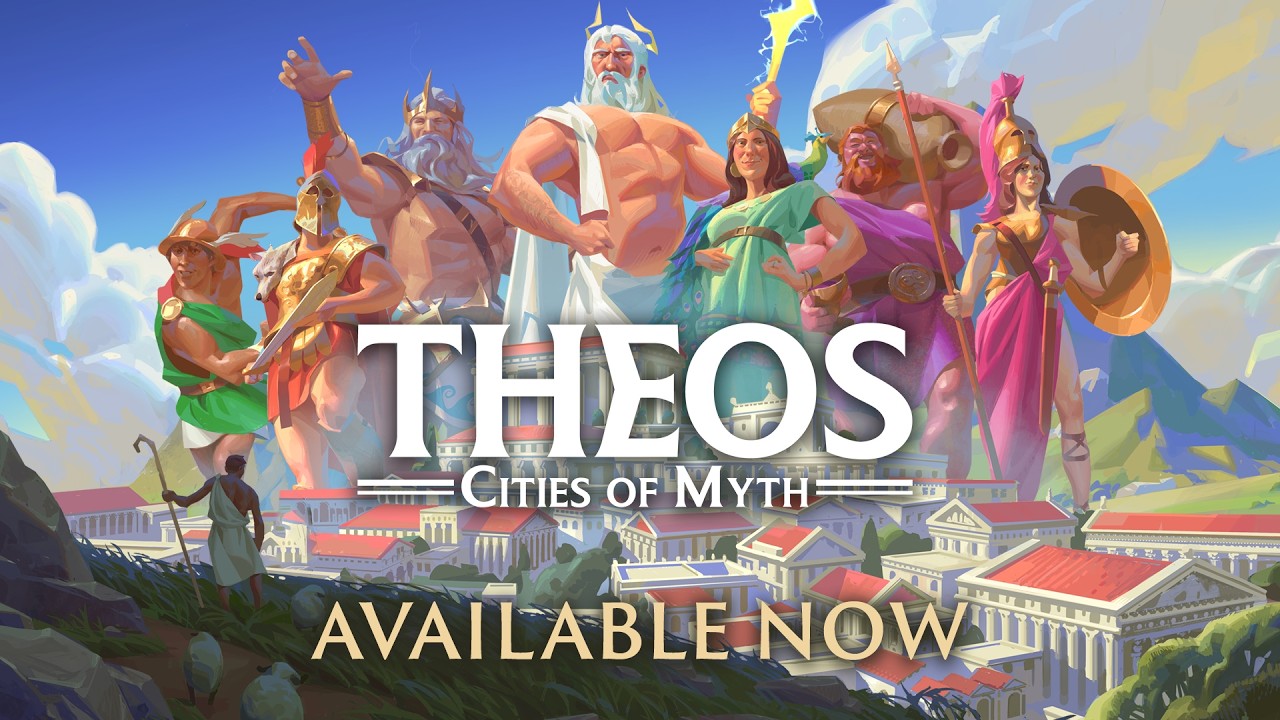
Theos makes old-school Greek city building inviting again, pairing satisfying supply chains with colourful gods and clearer tools. Its battles are shallow, and keeping service routes running can become a chore.

Fans of classic management simulations, Greek mythology and carefully planned neighbourhoods will enjoy the rewarding economic chains and divine-building choices.

Military strategy enthusiasts, players who demand deep simulation flexibility and unrestricted creative maps, or anyone who dislikes repetitive patrol management may be disappointed.

Verdict

Theos: Cities of Myth succeeds most when a simple neighbourhood blossoms into a busy Greek polis. Food, housing, trade and production chains interlock in satisfying ways, while seven patron gods give every settlement a touch of Olympian personality and different priorities. The vivid art and clearer construction interface make this old-school formula easier to enjoy, and guided tutorials provide a useful starting point. The trade-offs become apparent as cities expand: automatic patrols miss areas, manually maintaining service routes is repetitive, and military encounters lack the control and tactical depth of the economic systems. Sandbox is also less open than its name suggests, with preset maps and limited customisation, while some Adventure objectives turn into waiting games. For fans of classical city builders, the charming urban planning is worth those compromises; players seeking inventive warfare or unfettered construction may be less satisfied.

Feature Scorecards

Summary

43 reviewed features
  • Very positive 4.5-5.0
    11 (26%)
  • Positive 3.5-4.4
    14 (33%)
  • Neutral 2.5-3.4
    7 (16%)
  • Negative 1.5-2.4
    8 (19%)
  • Very negative below 1.5
    3 (7%)

Pros highlights

  • 5.0
    7 reviews strong consensus
    core gameplay loop: 5.0, 7 reviews, strong consensus
    Starting from a few homes and building a functioning polis is consistently satisfying. Each expansion creates new supply-chain and service problems worth resolving.
  • 4.9
    7 reviews strong consensus
    art direction: 4.9, 7 reviews, strong consensus
    Its warm, vivid picture-book take on ancient Greece, with marble temples and busy streets, is one of the most consistently praised qualities. The stylisation may not appeal to players who prefer realism.
  • 4.7
    6 reviews strong consensus
    patron deity mechanics: 4.7, 6 reviews, strong consensus
    The seven Olympian patrons offer distinct blessings and priorities that meaningfully shape development. Gods and sanctuaries give familiar economic systems a strong mythological identity.
  • 4.0
    6 reviews low consensus
    onboarding experience: 4.0, 6 reviews, low consensus
    Gradual Adventure unlocks and dedicated lessons make the foundational systems welcoming. More troubleshooting guidance, especially for fires and missing services, would help.
  • 4.0
    6 reviews strong consensus
    overall quality: 4.0, 6 reviews, strong consensus
    Theos is a charming and capable revival of classic Greek city building, with rewarding logistics and delightful scenery. Rough combat, repetitive patrol management and restrictive options keep it from feeling essential for everyone.
  • 4.8
    5 reviews strong consensus
    user interface design: 4.8, 5 reviews, strong consensus
    Menus, building tools and service-path indicators are much clearer than in the older games that inspired Theos. A few broader management views still leave troubleshooting to the player.

Cons highlights

  • 1.8
    5 reviews strong consensus
    combat system: 1.8, 5 reviews, strong consensus
    Battles are the most consistent weakness: critics describe limited tactics, repetitive clashes and clumsy unit control. City management is significantly more rewarding.
  • 3.4
    5 reviews strong consensus
    difficulty balance: 3.4, 5 reviews, strong consensus
    The basics are approachable, but large settlements introduce complicated dependencies and the occasional disaster. Some critics enjoy the planning pressure while others find routine upkeep tiresome.
  • 3.3
    4 reviews moderate consensus
    innovation: 3.3, 4 reviews, moderate consensus
    Modern route controls and meaningful divine patrons refresh the familiar formula. Critics disagree on how far that goes, with some finding the game much too cautious.
  • 2.7
    3 reviews low consensus
    automation: 2.7, 3 reviews, low consensus
    Basic resource production can run smoothly without constant input, but automatic service patrols can miss homes. Repeated manual fixes become especially wearing in larger cities.
  • 2.7
    3 reviews strong consensus
    pacing: 2.7, 3 reviews, strong consensus
    A measured introduction helps beginners but may seem slow to veterans. Certain objectives drag, and the nostalgic formula can wear thin during longer play.
  • 3.3
    3 reviews low consensus
    content variety: 3.3, 3 reviews, low consensus
    Adventure and Sandbox offer structured and free-form approaches, a pairing many welcome. One critic found only two modes and the selection of scenarios too limiting.

Use Cases

Best for

  • 4.8
    6 reviews strong consensus
    Management simulation fans: 4.8, 6 reviews, strong consensus
    Resource chains, street layouts, housing upgrades and civic services deliver the satisfying classic city-builder rhythm. Combat rarely competes with city planning as the main attraction.
  • 4.8
    5 reviews strong consensus
    Greek mythology fans: 4.8, 5 reviews, strong consensus
    Choosing an Olympian patron, earning divine blessings and building monumental sanctuaries give Greek mythology an enjoyable, practical role in the city.
  • 5.0
    4 reviews strong consensus
    Retro games: 5.0, 4 reviews, strong consensus
    Theos recaptures the classic Impressions-era road-and-walker formula while removing several clunky interface frustrations. Nostalgia is a clear strength, even if the design seldom surprises.

Not ideal for

  • Military strategy enthusiasts
    1.8
    5 reviews strong consensus
    Military strategy enthusiasts: 1.8, 5 reviews, strong consensus
    The real-time battles receive frequent criticism for shallow tactics, confusing unit interactions and unresponsive controls. Players primarily interested in warfare should look elsewhere.
  • Croatian-language play
    1.0
    1 review
    Croatian-language play: 1.0, 1 review
    Croatian text is unavailable, so Croatian-speaking players may have to use a second language.

Compared With Category Average

Compared with other Video Games, this product is above average in user interface design, economy and resource balance, construction tools, near average in sandbox freedom, overall quality, below average in sound design, combat system, controls responsiveness.

Comparison summary

37 compared features
  • Above average 0.4+ pts higher
    16 (43%)
  • Same as average within 0.3 pts
    7 (19%)
  • Below average 0.4+ pts lower
    14 (38%)

Largest category differences

Attribute This product Category average Difference
sound design 1.0 4.2 -3.2
combat system 1.8 4.0 -2.2
controls responsiveness 1.5 3.7 -2.2
immersion 2.0 4.2 -2.2
originality 2.0 3.7 -1.7
combat readability 1.0 2.7 -1.7
user interface design 4.8 3.3 +1.5
economy and resource balance 4.6 3.1 +1.5

Consider This Instead

If you want better polish

Choose Faraway. It scores 5.0 vs 2.0 for polish, with a 3.8 overall score.

Compare

If you want better immersion

Choose Echo Weaver. It scores 4.9 vs 2.0 for immersion, with a 3.9 overall score.

Compare

If you want better innovation

Choose Mewgenics. It scores 5.0 vs 3.3 for innovation, with a 4.1 overall score.

Compare

Compared in Reviews

Products reviewers directly compared with this model, grouped into quick takeaways.

Zeus: Master of Olympus (2000)

  • Similar: heritage and lack of surprise Theos openly follows Zeus’s design, which is comforting yet predictable.
  • Similar: classic city-building satisfaction Growing a functioning city recreates the old Zeus appeal.
  • Similar: resource-chain management and city growth Theos is presented as a successful successor to Zeus’s logistics-focused Greek city building.

Pharaoh (1999)

  • Similar: familiar mechanics Veterans of Pharaoh will recognize most systems rather than encounter novel ideas.
  • Similar: classic city-building satisfaction Its logistical city growth brings back Pharaoh’s reward loop.
  • Similar: roads and resource planning Like Pharaoh, it expects careful road networks and resource distribution.

Caesar

  • Similar: familiar mechanics Its mechanics are predictably familiar to players of the Caesar series.
  • Similar: classic city management Theos shares the Caesar series’ emphasis on practical urban logistics.

FAQ

What is the main appeal of Theos: Cities of Myth?

Building a Greek city around interlocking housing, supply, service and trade systems is consistently satisfying, with Olympian patrons adding personality.

Do the Greek gods change how you play?

Yes. Each of the seven patron deities provides different blessings and priorities that affect city planning and encourage varied strategies.

Is it friendly to city-building newcomers?

Generally yes: the interface is clear, Adventure introduces systems gradually and playable tutorials explain the basics. Some service and fire-management failures can still be confusing.

Is the combat worth playing for?

Not primarily. Battles draw repeated criticism for shallow tactics, awkward unit control and poor readability, although some gods allow a largely peaceful approach.

Can you build freely in Sandbox mode?

Sandbox removes campaign goals, but it uses preset maps and restricts some god choices. It does not offer the custom seeds and map creation some builders want.

What are the biggest frustrations?

Maintaining walker patrols across expanding neighbourhoods, grind-heavy Adventure objectives and weak environmental audio are common or notable concerns.

Does it capture the classic Zeus and Pharaoh style?

Yes. Reviewers repeatedly praise its faithful resource-and-road management and more practical interface, while noting that its familiar design rarely breaks new ground.

Sample Expert Reviews We Analyzed

These are a few of the reviews included in our analysis.

gamingboulevard.com

There was a period in my childhood when apparently nothing sounded more exciting than discovering that the olive oil supply had collapsed and...

Review score
4.7
tech-gaming.com

Theos: Cities of Myth scratches that old Zeus and Pharaoh itch, especially when you're dutifully planned neighborhood finally start to...
Review score
3.9

Top Video Games to Consider

#1 Well Dweller
4.7

Best for fluid traversal, rewarding exploration, striking art, and forgiving quality-of-life features. Skip it if you want deep combat, radical genre innovation, or consistently demanding bosses.

Pros: difficulty balance, boss design

Cons: innovation, sandbox freedom

#2 Hades II
4.5

Best for superb combat, inventive builds, and richly voiced characters. Skip it if repeated runs, resource gathering, or visually busy battles outweigh the appeal of steady progress.

Pros: overall quality, combat system

Cons: pacing, grind level
#3 Valheim
4.5

Good if you want a beautiful, demanding survival sandbox built around exploration, building, progression, and memorable co-op. Skip it if long resource runs, harsh death recovery, and deliberate pacing sound...

Pros: town-building system, exploration quality

Cons: grind level, fast travel convenience
#4 Clair Obscur: Expedition 33
4.5

Choose Clair Obscur if you want a story-rich RPG with thrilling timed combat, gorgeous art, and standout music. Skip it if poor maps, tight parry timing, or occasional bugs and...

Pros: narrative quality, combat system

Cons: map and navigation design, menu usability