
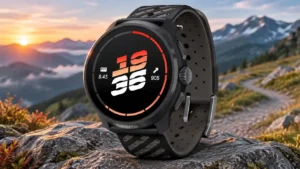
Suunto Race 3S Feature Scores
Overall Scorata score: 4.0/5
Based on 31 analyzed reviews · View source samples
Explore all 60 feature scores for Suunto Race 3S, organized into pros and cons.
Scores by Feature
Summary
60 reviewed features-
Very positive 4.5-5.019 (32%)
-
Positive 3.5-4.422 (37%)
-
Neutral 2.5-3.412 (20%)
-
Negative 1.5-2.47 (12%)
Pros
Sort
-
The screen is readily legible in direct sunshine, making pace and navigation easier to check outdoors.
-
Dual-band positioning is consistently a standout, with accurate distances and routes on roads and trails. Dense buildings and some difficult forest sections can still introduce minor errors.
-
Titanium components and sapphire glass give the watch a premium, sturdy feel.
-
Sapphire glass and rugged construction inspire confidence for trail use and everyday knocks.
-
Its light, thin construction and comfortable strap make extended wear easy for many users.
-
Battery endurance is strong for the size, commonly lasting five to six days with daily GPS and always-on use. Larger rivals can last longer, and navigation increases drain.
-
The redesigned optical sensor is a substantial improvement, often matching chest straps closely on runs. Cold starts, rapid intervals and wrist-heavy workouts can still produce lag or missed peaks.
-
The sharp, vibrant AMOLED is a major strength, though the compact screen can make fine map details harder to read.
-
The watch feels robust and well assembled despite its relatively compact, light construction.
-
Free detailed offline maps are a standout, with contour lines, place names and useful route following. They cannot generate a new route directly on the watch, and zooming can occasionally show black tiles.
-
Quick-release straps and comfortable silicone draw praise; the Orchid color and styling are more subjective.
-
The 2,000-nit display is a useful improvement over the previous model, but competitors offer higher peak brightness at lower prices.
-
SuuntoPlus expands the watch with sport-specific tools and data fields, although its selection is narrower than full smartwatch app stores.
-
The compact, premium-looking design appeals to many, although opinions on the purple finish vary.
-
Turn alerts and climb guidance are helpful on planned trails, though city navigation can be less dependable and routes cannot be generated on-device.
-
The 64GB storage offers ample space for maps and offline music, although some consider the extra capacity unnecessary given the small map files.
-
The crown and buttons are useful for navigating and zooming maps, though occasional dial-response delays were reported.
-
Many find basic navigation straightforward, but advanced settings and sport modes can require more effort.
-
More than 100 sport profiles cover a broad range of activities, though finding and customizing a mode can take extra steps.
-
Touch input feels responsive and deliberate, without excessive sensitivity.
-
The compact case sits close to the wrist, though the strap range may not suit every wrist size.
-
Physical controls and shortcuts help navigation, but unfamiliar menus and long sports lists can slow new users down.
-
Recovery recommendations and training-load feedback can help guide rest days, although the reliability of the underlying metrics depends partly on wrist heart rate accuracy.
-
Training-platform integrations and SuuntoPlus sports apps add versatility, but some integrations have quirks and the broader app selection is limited.
-
The light, compact body is easy to wear while running or sleeping.
-
Bluetooth integration with external sensors and sport-specific apps extends training capabilities, although ANT+ is not supported.
-
Route creation, map access and the app's presentation earn praise; settings changes that block during syncing can be frustrating.
-
Adaptive training plans and recovery suggestions are useful, while the conversational AI coach received mixed early feedback and comes with an unclear subscription cost after the trial.
-
Map panning and zooming are quick for some, but black tiles can briefly appear while detail loads.
-
The interface divides opinion: some find it polished and friendly, while others prefer rivals' simpler menus and clearer at-a-glance data.
-
Bluetooth headphone playback works well with locally stored music.
-
The redesigned magnetic charger is an improvement for some, but others report insecure attachment or incomplete charging.
-
The weather widget implementation is useful and well presented.
-
Sleep timing and REM or light sleep generally look reasonable, but deep-sleep estimates are less convincing in comparative tests.
-
Standard quick-release bands make finding replacement straps convenient.
-
Exercise tracking is substantially improved, particularly through the updated optical heart rate sensor.
-
Vibration feedback aligns well with on-screen actions.
-
HRV readings broadly matched other wearables in early testing.
-
Connecting and syncing can be quick during normal workouts, with improved connectivity reported over earlier models.
-
Basic phone notifications make the watch serviceable for everyday use.
-
Daily health information provides a useful snapshot without overwhelming users with unnecessary metrics.
Cons
Sort
-
A screen-based light is available, but the lack of a dedicated LED flashlight is a missed opportunity for outdoor use.
-
The AI Coach trial is appealing, but the undisclosed recurring price makes its long-term value difficult to assess.
-
The lack of contactless payments outside China disappoints buyers who expect that convenience, although not everyone misses it.
-
Promoted features such as Race Planner were not available in early testing, and music availability varied by software version.
-
The proprietary charging puck is not interchangeable with most older Suunto chargers.
-
At its $599 US launch price, many find the upgrades difficult to justify against less expensive alternatives. A few consider the premium materials, mapping and sensor improvements worth paying for.
-
Default sport modes cannot be edited directly, requiring custom profiles and syncing; the three-screen limit also restricts flexibility.
-
Notifications and offline music cover basic needs, but missing mainstream streaming, payments outside China and advanced smartwatch conveniences limit its appeal.
-
Automatic dimming can engage too quickly outdoors, while some find the screen insufficiently dim at night.
-
The missing intermediate and full-size generations make the naming sequence confusing.
-
Trail users looking for built-in emergency tools may be disappointed by limited SOS and safety features.
-
General health metrics are less comprehensive than on some rivals, even though the improved optical sensor is useful for basic tracking.
-
One test found the watch occasionally stopped charging before reaching full capacity.
-
Map downloads are straightforward and reasonably quick for some users, while others report long transfer times.
-
The main reasons to upgrade from older models are improved optical heart rate, brighter display and longer GPS endurance; much of the underlying training experience remains familiar.
-
Watch faces, shortcuts and widgets can be adjusted, but personalization is less extensive than on some rivals.
-
Local music playback works, but transferring files manually and lacking streaming service downloads make it less convenient.
-
Some find the watch snappy, while others encounter lag when scrolling widgets or opening functions despite the faster processor.
-
The training platform provides extensive load and recovery metrics, but acronym-heavy displays can obscure their meaning.
Use Cases
Best for
Sort
-
Accurate GPS, improved wrist heart rate and readable maps make it a capable running watch, especially for longer outings.
-
Long dual-band GPS endurance and offline navigation suit many ultramarathon distances, though very long events or heavy navigation can warrant a battery check or larger watch.
-
The relatively compact case is attractive for slimmer wrists, though its 46mm width can still be too large for very small wrists.
-
GPS generally performs strongly on rides, although wrist heart rate during some cycling sessions is less consistent.
-
Accurate tracking, detailed offline maps, climb guidance and compact construction make the watch particularly suited to planned trail outings.
-
Multisport support and GPS endurance appeal to triathletes, though alternatives may offer better value or longer runtime.
-
Detailed offline maps and long GPS endurance make it well suited to hiking.
-
The lightweight case is comfortable enough to keep on overnight.
-
Offline maps and local music make it practical to leave the phone behind during workouts.
-
Daily health summaries and recovery feedback make it useful for everyday wellness without excessive data.
-
Gym workouts can be tracked easily, with good results in some heart rate tests.
-
Flexible coaching plans can combine indoor rowing with outdoor running.
-
Walking sessions can be tracked simply and cleanly.
-
Treadmill distance was close to the machine reading in testing, though manual calibration is missing.
Conditional or not ideal for
Sort
-
Budget-conscious buyersBudget-conscious shoppers have strong cheaper alternatives, particularly if they do not need premium materials or extended GPS endurance.
-
Interval trainingGuided intervals are useful, but setup quirks, skipped recovery segments and occasional heart rate lag make chest straps and care with workout settings worthwhile.
-
Strength trainingStrength workouts can be logged, but missing rest timers and variable optical heart rate during wrist movement are drawbacks.
-
Smartwatch replacementIt is better suited to sports tracking than replacing a full-featured smartwatch with payments, streaming and a large app ecosystem.
-
Fitness beginnersNew users may find navigation approachable, but acronym-heavy training terminology and operational quirks can make it harder to learn.
-
Long-term ownershipDurable materials support longer use, but rival brands may deliver new features to older models for longer.
-
Advanced athletic trainingDetailed sports metrics and long GPS runtime suit serious athletes, but dynamic heart rate tracking can limit precision.