Garmin Fenix 9 Review

Brand: Garmin
Released: August 25, 2026
Updated: 56 minutes ago
3.9
Overall review score
307
Review insights
75
Scored features
17
Expert reviews

Bottom Line

Detailed training tools, routable maps, and long endurance make the Fenix 9 compelling for demanding outdoor use. High prices, lingering bugs, and substantial overlap with the Fenix 8 weaken the upgrade case.

Committed runners, hikers, cyclists, and indoor rowers who will use detailed training and navigation tools. Solar variants particularly suit long outings, while Pro inReach appeals to people who value contact and tracking without carrying a phone.

Budget-conscious buyers and most satisfied Fenix 8 owners seeking a dramatic upgrade. People prioritizing an app-rich smartwatch or comfortable overnight wear should weigh the limited smart interaction and larger cases carefully.

Verdict

The Fenix 9 makes its strongest case for athletes who will use detailed training analysis, routable offline maps, and long GPS endurance. Running and cycling accuracy are widely praised, while expanded rowing tools give another sport meaningful depth. Solar models are especially appealing for extended outings, and optional Pro inReach adds reassuring phone-free contact. The tradeoffs are substantial: larger cases can be awkward overnight, satellite communication is cumbersome, and crashes or missing statistics still occur. Several sources find the base model too similar to the Fenix 8 to justify paying more, particularly when older watches receive much of the software. Buy for a specific capability, preferred size, or endurance need; the newer generation alone is a weak reason to replace a capable existing watch.

Product generations

Garmin Fenix

Feature Scorecards

Summary

75 reviewed features
  • Very positive 4.5-5.0
    24 (32%)
  • Positive 3.5-4.4
    34 (45%)
  • Neutral 2.5-3.4
    15 (20%)
  • Negative 1.5-2.4
    2 (3%)

Pros highlights

  • 4.4
    16 reviews strong consensus
    battery life: 4.4, 16 reviews, strong consensus
    Long runtime is a central strength, especially on Solar models in favorable light. AMOLED still lasts several active days, but display settings, LTE use, case size, and individual configuration make a large difference.
  • 4.2
    11 reviews strong consensus
    mapping and navigation: 4.2, 11 reviews, strong consensus
    Detailed routable offline maps remain a standout advantage, with faster panning and useful perspective views. They can still feel clunky, and the speed gain alone rarely transforms the upgrade decision.
  • 3.8
    11 reviews moderate consensus
    satellite messaging: 3.8, 11 reviews, moderate consensus
    Pro inReach satellite contact provides reassuring backup for remote outings and useful weather access. Manual arm positioning, limited coverage, slow interaction, and subscription costs make frequent communication less convenient than on a dedicated device.
  • 4.5
    10 reviews strong consensus
    workout tracking variety: 4.5, 10 reviews, strong consensus
    Extensive sport profiles and detailed training tools are major reasons to buy. Indoor rowing gains substantial depth, although native mixed-session tracking still disappoints a serious Hyrox user.
  • 4.1
    10 reviews strong consensus
    display quality: 4.1, 10 reviews, strong consensus
    AMOLED provides vivid detail and a useful larger map canvas on the biggest Pro. Solar/MIP trades that richness for endurance, and one Forerunner comparison finds the Fenix harder to read.
  • 4.2
    9 reviews moderate consensus
    brightness: 4.2, 9 reviews, moderate consensus
    Most sources welcome the brighter AMOLED screens, particularly outdoors. Others see only a small practical gain or prefer the competing Forerunner display.

Cons highlights

  • 3.0
    14 reviews moderate consensus
    value for money: 3.0, 14 reviews, moderate consensus
    Value depends on using the advanced training, navigation, or optional safety tools. High prices and discounted Fenix 8 alternatives make the base-model upgrade especially hard to justify.
  • 3.2
    6 reviews moderate consensus
    LTE connectivity: 3.2, 6 reviews, moderate consensus
    Pro inReach LTE is most compelling for live tracking during phone-free runs. Garmin Messenger requirements, separate communication workflows, and less seamless setup limit its everyday appeal.
  • 2.9
    4 reviews strong consensus
    reliability: 2.9, 4 reviews, strong consensus
    Core recording often works well, but crashes, missing statistics, Epic bugs, and hybrid-session problems recur. Reports range from generally stable to insufficiently polished for the price.
  • 3.0
    4 reviews strong consensus
    smartphone notifications: 3.0, 4 reviews, strong consensus
    Notifications cover the basics, with richer responses and image support depending on the phone platform. Bigger watch sizes do not necessarily show extra lines of message text.
  • 3.2
    4 reviews moderate consensus
    call handling: 3.2, 4 reviews, moderate consensus
    Wrist calls are convenient when a phone is tucked away, but LTE calling has Garmin Messenger requirements. Audio is adequate for quick exchanges rather than long conversations.
  • 2.7
    3 reviews low consensus
    calorie tracking usefulness: 2.7, 3 reviews, low consensus
    Pack-weight calorie breakdowns are a useful idea, but tested rucking results raise doubts. A zero live calorie display and unexpectedly small added-load estimate undermine confidence.

Use Cases

Best for

  • 4.7
    11 reviews strong consensus
    Advanced athletic training: 4.7, 11 reviews, strong consensus
    Deep training metrics and broad sport support suit committed multisport athletes. The case is strongest when the wearer will actively use the analytics, routing, and endurance rather than just basic tracking.
  • 4.5
    9 reviews strong consensus
    Running: 4.5, 9 reviews, strong consensus
    Accurate land GPS, strong heart rate tracking, and detailed training tools make running a natural fit. Trail runners gain useful climbing context and optional phone-free tracking, with some button-lag complaints.
  • 4.4
    8 reviews strong consensus
    Hiking: 4.4, 8 reviews, strong consensus
    Routable maps, accurate fork guidance, ClimbPro, and long runtime make hiking a strong use case. Optional satellite tools add reassurance, but their cost and limitations matter most on remote trips.

Not ideal for

  • Budget-conscious buyers
    1.9
    10 reviews strong consensus
    Budget-conscious buyers: 1.9, 10 reviews, strong consensus
    This is a difficult purchase for budget-conscious buyers. Discounted Fenix 8 models and cheaper Forerunners repeatedly emerge as more economical ways to obtain much of the capability.
  • Upgrading from Fenix 8
    2.3
    9 reviews strong consensus
    Upgrading from Fenix 8: 2.3, 9 reviews, strong consensus
    Most upgrade advice is cautious or negative because the sensors and much of the software remain similar. Faster maps, a preferred size, or particular Pro hardware can justify the move for selected owners.

Compared With Category Average

Compared with other Smartwatches, this product is above average in voice assistant quality, size options, charging convenience, near average in battery life, coaching features, below average in value for money, app ecosystem, reliability.

Comparison summary

56 compared features
  • Above average 0.4+ pts higher
    24 (43%)
  • Same as average within 0.3 pts
    21 (38%)
  • Below average 0.4+ pts lower
    11 (20%)

Largest category differences

Attribute This product Category average Difference
voice assistant quality 4.9 3.1 +1.8
size options 4.6 3.1 +1.4
charging convenience 4.8 3.3 +1.5
ECG functionality 4.0 2.6 +1.4
onboard music storage 4.2 2.9 +1.3
music controls 4.8 3.5 +1.3
flashlight usefulness 4.7 3.7 +1.0
value for money 3.0 3.8 -0.8

Consider This Instead

If you want better display quality

Choose Garmin Fenix 8. It scores 4.7 vs 4.1 for display quality, with a 3.9 overall score.

Compare

If you want better calorie tracking usefulness

Choose Amazfit Balance 2. It scores 4.8 vs 2.7 for calorie tracking usefulness, with a 4.0 overall score.

Compare

If you want better app ecosystem

Choose Apple Watch Ultra 2. It scores 5.0 vs 2.7 for app ecosystem, with a 3.9 overall score.

Compare

Compared in Reviews

Products reviewers directly compared with this model, grouped into quick takeaways.

  • Worse: battery life The Fenix provides roughly one to two additional heavy-use days in the comparison.
  • Better: display readability The tester finds the Forerunner easier to read.
  • Similar: tracking and navigation accuracy Both watches achieve the same overall testing scores in the core tracking categories.
  • Worse: battery endurance The Fenix lasts substantially longer between charges in the tester’s routine.
  • Better: sleep stages and waking detection The Apple watch detects nighttime waking more sensitively than the Garmin in the tester’s experience.
  • Similar: optical heart rate latency The reviewer describes comparable small delays from wrist-based pulse sensors.
  • Worse: battery life The Fenix substantially outlasts Apple Watch Ultra 3 in the tester’s experience.
  • Worse: urban GPS tracking The Fenix generally tracks urban turns more cleanly in this comparison, with occasional errors on both.

FAQ

Is it worth upgrading from the Fenix 8?

Usually only for a specific hardware benefit, preferred size, or optional Pro capability. Several sources favor keeping or buying a discounted Fenix 8 because core sensors and much of the software overlap.

How long does the battery last in real use?

Several active AMOLED tests report roughly five to seven days, depending on size and settings. A Pro Solar tester covers three weeks and 180 miles with one charge, while other tests show solar gains depend heavily on sunlight and orientation.

Are the maps noticeably better?

Panning, zooming, and route calculation improve, and the maps support detailed offline routing. Some lag remains, so the faster engine is a useful refinement rather than a universal reason to upgrade.

Is it good for running and cycling?

Most tests praise land GPS, wrist heart rate, and detailed training information. Very short intervals can expose sensor lag, and some testers report delayed button responses.

Can I leave my phone behind?

Offline music supports phone-free workouts. LTE tracking and satellite communication require the appropriate Pro inReach configuration and a service plan; satellite messaging also requires stopping and positioning the watch.

Which size is most comfortable?

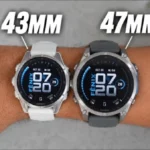
The 43mm is favored by a direct size comparison even on a larger wrist. Larger cases provide longer stated runtime and physically bigger maps, but can feel bulky during workouts or sleep.

How polished is the software?

Some testers find the watch generally stable, but crashes, missing scores, Epic bugs, and hybrid-session problems recur. Mac map-update failures and slow Wi-Fi downloads are additional practical complaints.

Sample Expert Reviews We Analyzed

These are a few of the reviews included in our analysis.
Video Reviews

Article Reviews

mountaineerjourney.com

In this article, I'm going to share my HONEST Garmin Forerunner 9 review for those who are wondering if it is WORTH IT in 2026.

Review score
4.3

Top Smartwatches to Consider

#1 Coros Nomad
4.4

Best for long battery life, accurate GPS and useful offline maps at a strong price. Skip it if you need payments, richer apps, a built-in LED flashlight or polished smartwatch...

Pros: mapping and navigation, value for money

Cons: smartwatch features, contactless payments
#2 Garmin Forerunner 170 Music
4.3

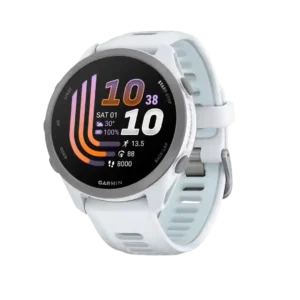
Best for accurate run tracking, deep Garmin coaching and phone-free Spotify in a light package. Skip it if you need full maps, triathlon mode, Apple Music support or the strongest...

Pros: value for money, GPS accuracy

Cons: mapping and navigation, third-party app support
#3 Amazfit Active 3 Premium
4.3

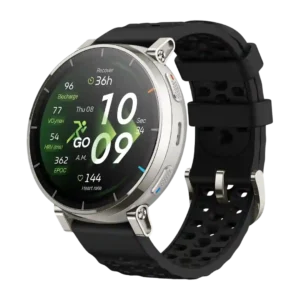
Good if you want premium running features, long battery life, and maps for under $200. Skip it if you need flawless heart-rate data, multiband GPS, LTE, or richer app support.

Pros: value for money, battery life

Cons: heart rate accuracy, third-party app support
#4 Garmin Forerunner 70
4.3

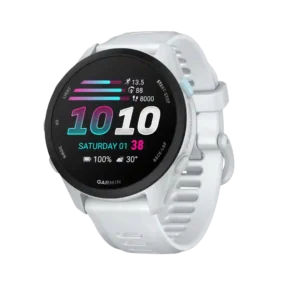
Best for accurate running metrics, excellent coaching tools, a bright AMOLED display, and dependable battery life. Skip it if you need offline maps, music storage, contactless payments, multi-band GPS, or...

Pros: battery life, value for money

Cons: mapping and navigation, smartwatch features