If you want better flashlight usefulness
Choose Garmin Enduro 3. It scores 4.9 vs 2.0 for flashlight usefulness, with a 4.2 overall score.

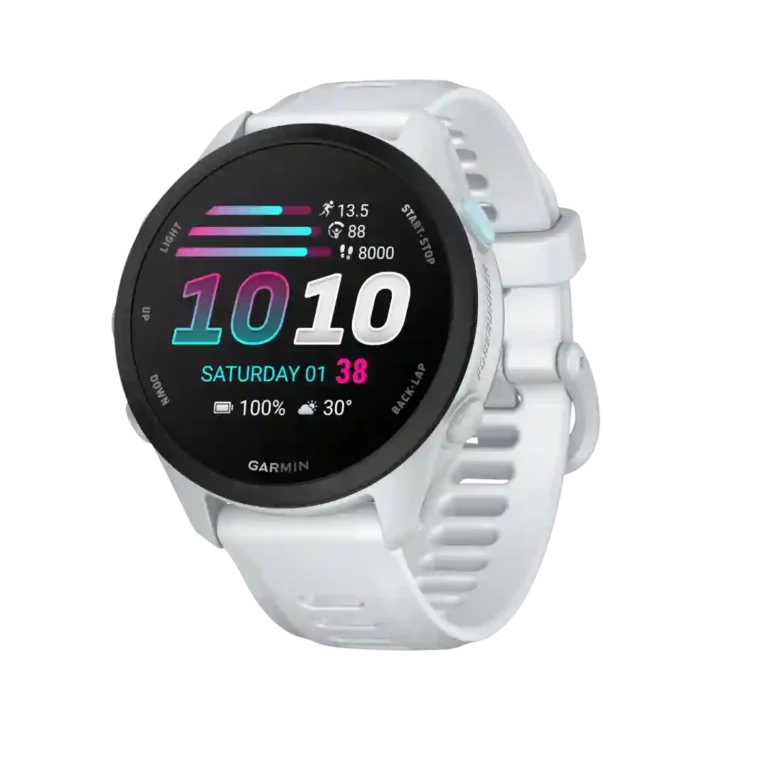
Choose it for accurate running metrics, excellent coaching tools, a bright AMOLED display, and dependable battery life. Skip it if you need offline maps, music storage, contactless payments, multi-band GPS, or full multisport support.
Road runners, run/walk athletes, and fitness-focused buyers who want Garmin’s deepest coaching and recovery tools without paying for a premium model. It also suits beginners who want a watch they can grow into.
Skip it if phone-free music, contactless payments, offline maps, precise elevation, triathlon tracking, or maximum urban GPS resilience are priorities. Value shoppers open to other ecosystems should also compare Coros and Suunto.
The Forerunner 70 delivers an unusually complete running experience for Garmin’s lowest current tier. Its AMOLED display is bright, the five-button interface works well during workouts, and GPS and heart-rate accuracy generally rival more expensive watches. Training Readiness, Training Status, Garmin Coach, wrist-based running power, and Quick Workouts give beginners room to grow while satisfying serious road runners. Battery life is strong for a compact AMOLED model, especially with the always-on display disabled. The compromises are concentrated in hardware and smartwatch extras: no offline maps, barometric altimeter, multi-band GPS, music storage, Garmin Pay, or triathlon mode. Bluetooth syncing also proved frustrating for a small number of testers, and similarly priced Coros and Suunto models offer stronger sensor packages.
Compared with other Smartwatches, this product is above average in third-party app support, running power support, app ecosystem, near average in battery life, GPS accuracy, below average in pairing reliability, Bluetooth connectivity, companion app quality.
| Attribute | This product | Category average | Difference |
|---|---|---|---|
| pairing reliability | 1.3 | 4.1 | -2.8 |
| Bluetooth connectivity | 1.0 | 3.7 | -2.7 |
| third-party app support | 5.0 | 3.2 | +1.8 |
| companion app quality | 2.0 | 3.8 | -1.8 |
| flashlight usefulness | 2.0 | 3.7 | -1.7 |
| running power support | 4.8 | 3.4 | +1.4 |
| app ecosystem | 5.0 | 3.6 | +1.4 |
| call handling | 2.0 | 3.3 | -1.3 |
Choose Garmin Enduro 3. It scores 4.9 vs 2.0 for flashlight usefulness, with a 4.2 overall score.
Choose Suunto Run. It scores 4.7 vs 4.3 for value for money, with a 4.0 overall score.
Choose Suunto Race 2. It scores 4.8 vs 1.3 for pairing reliability, with a 4.0 overall score.
Choose Suunto Vertical 2. It scores 4.7 vs 4.3 for battery life, with a 4.2 overall score.
Products reviewers directly compared with this model, grouped into quick takeaways.
Expect roughly five to six days with the always-on display and frequent workouts, or about a week to ten days with lighter settings. Display brightness, Pulse Ox, and GPS use have a large impact.
Yes. It usually matched more expensive multi-band watches closely on roads, trails, and city routes, though dense buildings and heavy tree cover can still cause occasional small errors.
No. It supports breadcrumb course navigation and phone music controls, but has no offline maps, onboard music storage, or contactless payments.
Yes. Garmin Coach, run/walk alerts, Daily Suggested Workouts, and Quick Workouts provide accessible guidance, while the deeper training metrics give the watch room to remain useful as fitness improves.
It can track many sports and follow breadcrumb routes, but it lacks a triathlon mode, open-water swimming, full maps, an altimeter, and ClimbPro. Serious multisport and technical trail users should look higher in the range.
These are a few of the reviews included in our analysis.


The Garmin Forerunner 70 is packed with more features than many beginners need, meaning it’s a watch designed to grow with you throughout...
After putting the 70 through its paces, I think it's a better buy than the 170
These two watches reintroduce budget-friendly, high-quality options to the Garmin lineup
Disclaimer: The Run Testers sometimes use affiliate links. This means that we may receive payment if you buy products on our website or...
The Garmin Forerunner 70 offers nearly all of the brand's top-tier features and insights for runners, in a supremely lightweight, comfy, and...

Best for long battery life, accurate GPS and useful offline maps at a strong price. Skip it if you need payments, richer apps, a built-in LED flashlight or polished smartwatch...
Pros: mapping and navigation, value for money
Cons: smartwatch features, contactless payments

Best for accurate run tracking, deep Garmin coaching and phone-free Spotify in a light package. Skip it if you need full maps, triathlon mode, Apple Music support or the strongest...
Pros: value for money, GPS accuracy
Cons: mapping and navigation, third-party app support

Good if you want premium running features, long battery life, and maps for under $200. Skip it if you need flawless heart-rate data, multiband GPS, LTE, or richer app support.
Pros: value for money, battery life
Cons: heart rate accuracy, third-party app support

Best for accurate running metrics, excellent coaching tools, a bright AMOLED display, and dependable battery life. Skip it if you need offline maps, music storage, contactless payments, multi-band GPS, or...
Pros: battery life, value for money
Cons: mapping and navigation, smartwatch features