Best for Imaging precision
Nothing Headphone (1) Pro
5.0 attribute score
Highest scored product for this attribute based on supporting review evidence.

Highest scored product for this attribute based on supporting review evidence.
Balances the attribute score, supporting reviews, and overall product strength.
Has the broadest review evidence for this attribute.
Strongest overall product among items with scored evidence for this attribute.

Stereo imaging is precise, placing instruments and effects in distinct positions across the wide soundstage.
Pros: Overall recommendation, Replaceable pads/headband
Cons: 3.5mm analog input availability, Travel friendliness
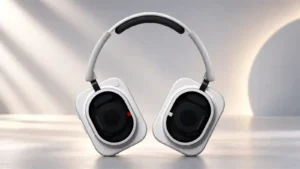
Imaging is excellent, with precise instrument positioning complementing the wider soundstage.
Pros: Active noise cancellation, Overall recommendation
Cons: Carry case quality, Value for money
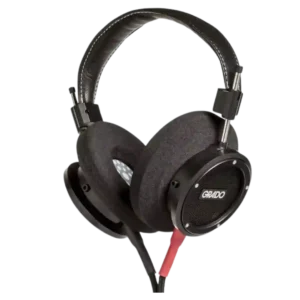
Imaging is exceptionally precise, with stable placement and clear localization across the stage. Reviewers repeatedly describe instruments and voices as easy to position in a convincing three-dimensional space.
Pros: Build quality, Overall satisfaction
Cons: Comfort during long use, Weight comfort
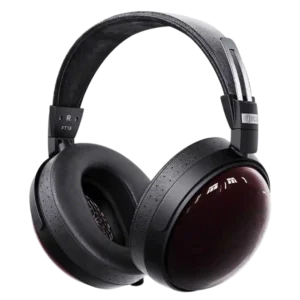
Imaging is repeatedly strong, with instruments, vocals, and game cues occupying stable, easy-to-locate positions. This precision is one of the FT13’s better technical qualities.
Pros: Bass performance, Comfort during long use
Cons: Treble clarity, Midrange clarity
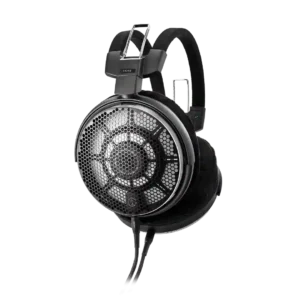
Images are usually well defined laterally and through depth, with strong layering and three-dimensional placement. A few listeners find localization slightly floaty or less precise than top competitors.
Pros: Overall recommendation, Bass performance
Cons: Value for money, Cable quality
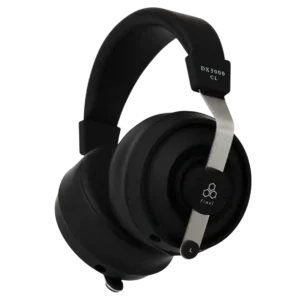
Imaging is consistently strong, with instruments occupying precise lateral positions and layers remaining easy to locate. The spacious stage is organized rather than diffuse, especially impressive for a closed-back design.
Pros: Overall recommendation, Instrument separation
Cons: Dynamic performance, 3.5mm analog input availability

Imaging is a strength, with convincing depth, stable positioning, and clear spatial movement. Even when stage width is limited, placement within that space remains precise.
Pros: Battery, Design and Aesthetics
Cons: Clamping force comfort, Soundstage width
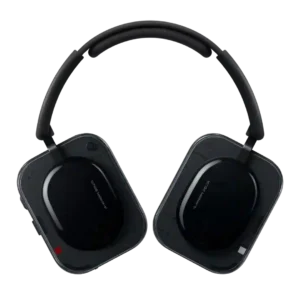
Imaging is strong enough for positional gaming cues such as footsteps and gunshots to come through clearly.
Pros: Battery, Active noise cancellation
Cons: Bass performance, Carry case quality

One direct comparison credits the Space One with slightly stronger spatial positioning than the competing headphone.
Pros: Comfort during long use, Overall recommendation
Cons: Bass performance, Build quality
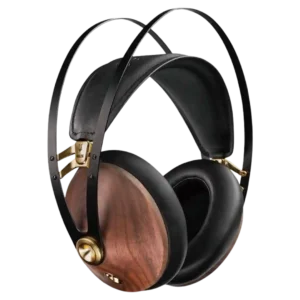
Improved driver matching supports precise, stable placement, and imaging is frequently singled out as one of the headphone's technical strengths.
Pros: Overall satisfaction, Bass performance
Cons: Replaceable earpads
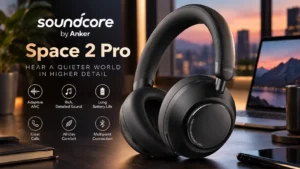
Several listening tests praise accurate instrument placement and believable depth, especially after sound personalization. Even a strongly critical sound assessment finds spatial positioning a relative strength.
Pros: Active noise cancellation, Sound quality
Cons: Carry case quality, Included accessories
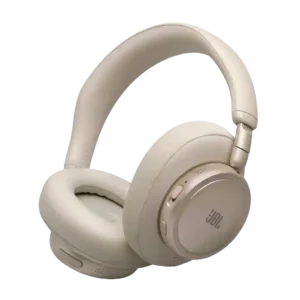
Imaging is generally accurate, with clear center and left-right placement and particularly strong directional cues in gaming. Layering between the main positions is less impressive.
Pros: Overall recommendation, Active noise cancellation
Cons: Bass performance, Clamping force comfort
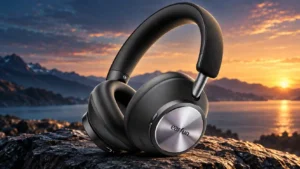
Instrument placement is generally clear and stable within a fairly intimate stage. EQ can improve apparent depth, while some comparisons still favor rivals for layering and spatial precision.
Pros: Comfort during long use, Ear cup padding quality
Cons: Frequency response accuracy, Treble clarity
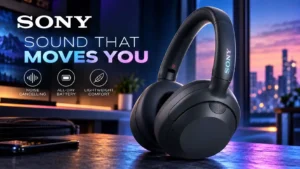
Stereo positioning often makes instruments and directional cues easy to locate. Precision and depth are more convincing than the limited stage width in some assessments.
Pros: Active noise cancellation, Sound quality
Cons: Bass performance, Midrange clarity
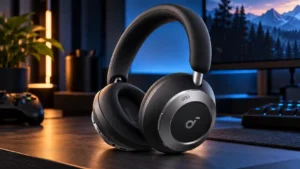
Vocals and suitable instruments can occupy clear positions with a useful sense of depth. Dense backing tracks are less reliably defined.
Pros: Sound quality, Comfort during long use
Cons: Carry case quality, Included accessories
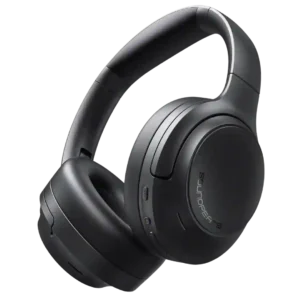
Imaging ranges from decent stereo placement to impressive positional cues for games, but some tests found the built-in spatial mode much less precise.
Pros: Overall satisfaction, Sound quality
Cons: Carry case quality, Transparency mode quality
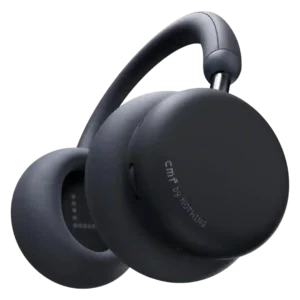
Imaging is competent rather than exceptional. Directional placement can be surprisingly clear on some tracks, but the overall precision remains below dedicated higher-end headphones.
Pros: Sound quality, Active noise cancellation
Cons: Treble clarity, Equalizer customization
One detailed assessment finds sound placement accurate for the price, while others describe a more distant or merely adequate presentation. Positioning is useful without consistently feeling intimate.
Pros: Active noise cancellation, Sound quality
Cons: Headband padding quality, Workout heat and sweat buildup
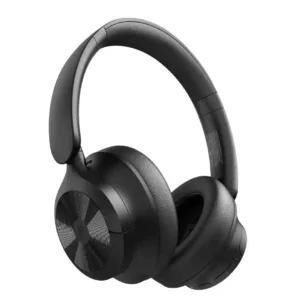
Center placement is generally usable, but imaging is not sharply defined; lateral positions can become fuzzy and center boundaries vague.
Pros: Comfort during long use, Sound quality
Cons: Button control usability, Codec support
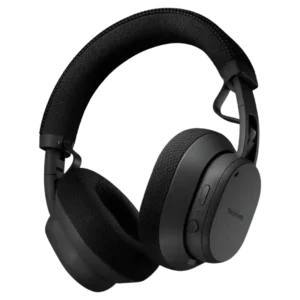
Imaging is serviceable but not pinpoint precise in the more critical listening tests, with a somewhat diffuse presentation.
Pros: Sustainability and repairability, Sound quality
Cons: Value for money, Transparency mode quality