If you want better size options
Choose Garmin Venu 3. It scores 4.8 vs 2.3 for size options, with a 4.1 overall score.

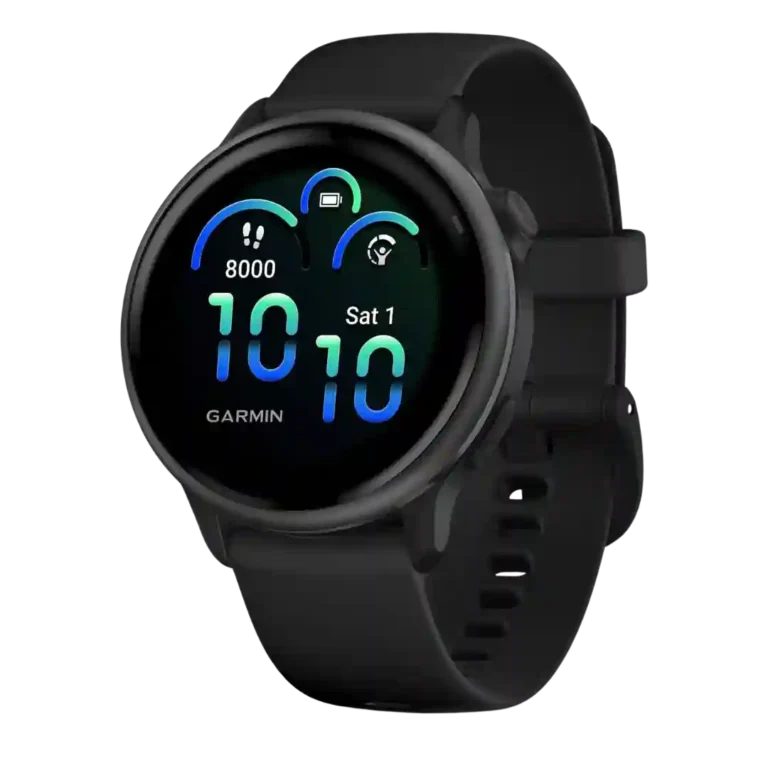
Choose the Garmin Vivoactive 6 for a light, long-lasting fitness-first smartwatch with strong Garmin training tools. Skip it if you need full smartwatch apps, LTE, ECG, calls, or advanced trail mapping.
Best for everyday runners, gym-goers, walkers, and Garmin newcomers who want long battery life, broad fitness tracking, recovery insights, onboard music, and a comfortable watch for day-and-night wear.
Not for users who want a phone replacement, deep third-party apps, LTE, ECG, wrist calls, voice assistant features, full topographic maps, or the most precise high-intensity training data.
The Garmin Vivoactive 6 lands as a fitness-first smartwatch with unusually broad reviewer agreement around comfort, battery life, value, and Garmin’s training ecosystem. Its lightweight design, AMOLED display, expanded sport modes, onboard music, safety tools, and recovery insights make it feel more capable than a basic tracker. The tradeoff is that it stays intentionally limited as a smartwatch: reviewers repeatedly called out weak third-party apps, no LTE, no speaker or microphone, no ECG, and only breadcrumb navigation. Accuracy is also use-case dependent, with GPS and heart rate generally good for casual or steady training but less convincing for high-intensity work, real-time pacing, sleep stages, and serious trail use.
Compared with other Smartwatches, this product is above average in onboard music storage, contactless payments, value for money, near average in sleep tracking accuracy, GPS accuracy, below average in voice assistant quality, call handling, third-party app support.
| Attribute | This product | Category average | Difference |
|---|---|---|---|
| onboard music storage | 4.4 | 2.8 | +1.5 |
| contactless payments | 3.9 | 2.7 | +1.2 |
| voice assistant quality | 1.9 | 3.0 | -1.1 |
| call handling | 2.1 | 3.3 | -1.2 |
| third-party app support | 2.2 | 3.2 | -1.0 |
| value for money | 4.6 | 3.8 | +0.8 |
| band quality | 2.9 | 3.9 | -1.0 |
| cross-platform compatibility | 4.5 | 3.6 | +0.9 |
Choose Garmin Venu 3. It scores 4.8 vs 2.3 for size options, with a 4.1 overall score.
Choose Huawei Watch GT 6 Pro. It scores 4.7 vs 3.3 for heart rate accuracy, with a 4.0 overall score.
Choose Garmin Forerunner 265. It scores 5.0 vs 2.2 for third-party app support, with a 4.0 overall score.
Choose OnePlus Watch 3. It scores 4.7 vs 4.3 for battery life, with a 4.0 overall score.
Products reviewers directly compared with this model, grouped into quick takeaways.
Yes. Reviewers repeatedly found it reliable and useful for everyday workouts, steps, health metrics, recovery insights, and broad activity tracking.
Battery life is one of the strongest themes. Reviewers commonly reported several days to about a week depending on always-on display, GPS, and music use.
It is generally good for steady workouts and casual use, but several reviewers saw lag or weaker performance during intervals, rapid changes, cold/wet conditions, or weightlifting.
Only partly. Reviewers liked notifications, Garmin Pay, and music storage, but repeatedly noted the lack of LTE, speaker, microphone, voice assistant, ECG, and strong app support.
It can follow breadcrumb routes and help on familiar or planned routes, but reviewers warned that it lacks full maps, dynamic rerouting, and a barometric altimeter.
Serious trail runners, triathletes, backcountry explorers, and smartwatch-first users may find its navigation, training depth, app ecosystem, and phone-free features too limited.
These are a few of the reviews included in our analysis.

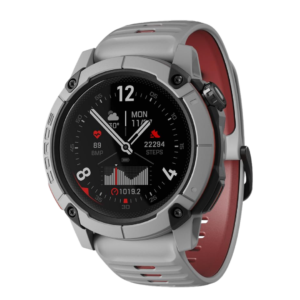
Best for long battery life, accurate GPS and useful offline maps at a strong price. Skip it if you need payments, richer apps, a built-in LED flashlight or polished smartwatch...
Pros: pairing reliability, software smoothness
Cons: activity auto-detection, voice assistant quality
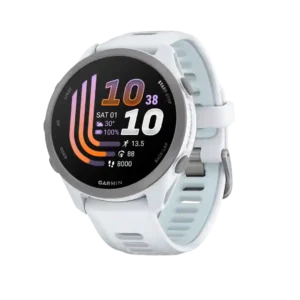
Best for accurate run tracking, deep Garmin coaching and phone-free Spotify in a light package. Skip it if you need full maps, triathlon mode, Apple Music support or the strongest...
Pros: fitness tracking accuracy, music controls
Cons: alert volume controls, charging convenience
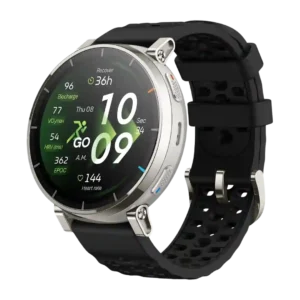
Good if you want premium running features, long battery life, and maps for under $200. Skip it if you need flawless heart-rate data, multiband GPS, LTE, or richer app support.
Pros: pairing reliability, brightness
Cons: Wi-Fi connectivity, Bluetooth connectivity
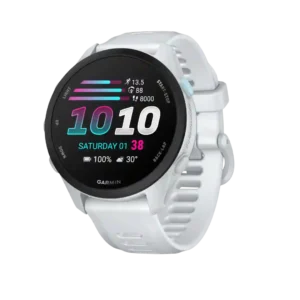
Best for accurate running metrics, excellent coaching tools, a bright AMOLED display, and dependable battery life. Skip it if you need offline maps, music storage, contactless payments, multi-band GPS, or...
Pros: step counting accuracy, app ecosystem
Cons: Bluetooth connectivity, pairing reliability