If you want better comfort
Choose Garmin Vivoactive 6. It scores 4.7 vs 3.7 for comfort, with a 3.9 overall score.

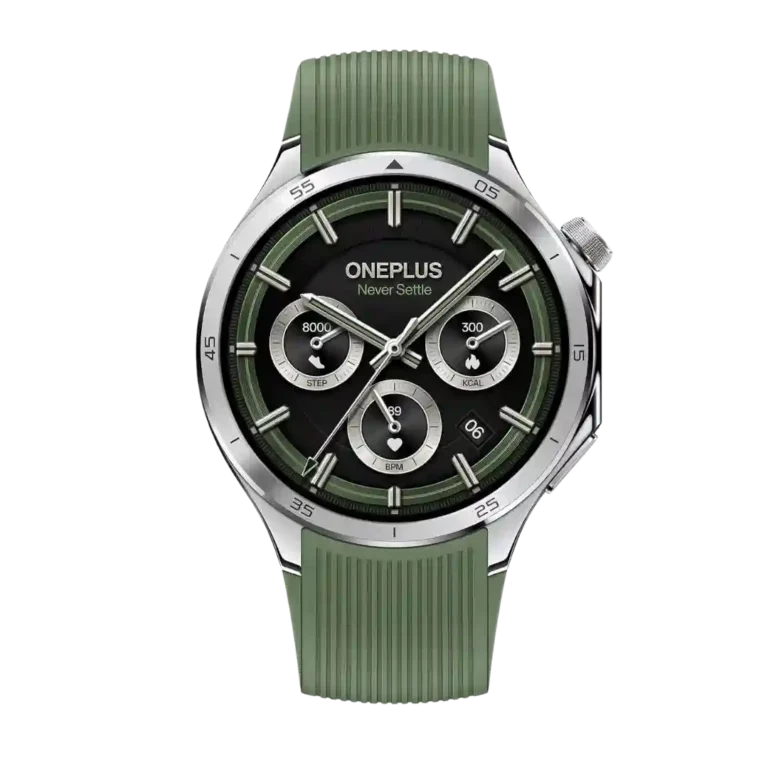
Choose the OnePlus Watch 3 if you want class-leading Wear OS battery life, a bright display, smooth performance, and strong value. Skip it if you need LTE, North American ECG, or a small, light watch.
Best for Android users who want a premium-looking Wear OS watch that can last several days, charge quickly, handle everyday apps, and track casual workouts without constant battery anxiety.
Not for iPhone users, buyers who need LTE, people with small wrists who dislike large watches, or serious athletes who rely on chest-strap precision, triathlon tools, or deeper recovery coaching.
The OnePlus Watch 3 earns its strongest praise for battery life: reviewers repeatedly found it lasted several days where most Wear OS rivals need daily charging. The bright AMOLED display, functional crown, fast charging, premium materials, and smooth software make it feel more complete than earlier OnePlus watches. The tradeoff is that the large model can feel bulky, the 43mm version loses some premium hardware and stamina, LTE is absent, and ECG availability depends heavily on region. Health and fitness tracking are much improved and generally reliable for casual use, but reviewers still saw heart-rate latency, lighter coaching, and fewer advanced insights than top Samsung, Google, Garmin, or chest-strap setups.
Compared with other Smartwatches, this product is above average in contactless payments, blood oxygen tracking, voice assistant quality, near average in outdoor visibility, style and design, below average in recovery insights, calorie tracking usefulness, coaching features.
| Attribute | This product | Category average | Difference |
|---|---|---|---|
| recovery insights | 2.2 | 3.9 | -1.7 |
| contactless payments | 4.3 | 2.8 | +1.5 |
| blood oxygen tracking | 4.9 | 3.4 | +1.5 |
| calorie tracking usefulness | 1.8 | 3.3 | -1.5 |
| voice assistant quality | 4.5 | 3.1 | +1.4 |
| coaching features | 2.7 | 3.9 | -1.2 |
| fit | 2.7 | 3.9 | -1.2 |
| third-party app support | 4.3 | 3.2 | +1.2 |
Choose Garmin Vivoactive 6. It scores 4.7 vs 3.7 for comfort, with a 3.9 overall score.
Choose Apple Watch Ultra 2. It scores 5.0 vs 2.7 for fit, with a 3.9 overall score.
Choose Amazfit Active 2. It scores 5.0 vs 4.2 for value for money, with a 4.0 overall score.
Choose Samsung Galaxy Watch Ultra (2024). It scores 4.9 vs 4.4 for software smoothness, with a 3.7 overall score.
Products reviewers directly compared with this model, grouped into quick takeaways.
Battery life is the strongest point in the reviews. Reviewers repeatedly reported several days of use, with many calling it the best or longest-lasting Wear OS battery they had tested.
Comfort depends on wrist size and model. Several reviewers found it comfortable, but others said the large version felt bulky, heavy, or awkward, especially for sleep and workouts.
No. Reviewers repeatedly flagged the lack of LTE or cellular connectivity as a major missing feature for people who want to leave their phone behind.
Reviewers described ECG as useful where available, but many noted that it is not available in the US or North America because of regulatory approval limits.
Fitness tracking is generally good for casual use, with positive GPS, sleep, and workout feedback. More demanding reviewers still saw heart-rate lag, swim-tracking issues, or a need for chest-strap support.
The 43mm model improves wearability for smaller wrists, but reviewers noted tradeoffs such as shorter battery life and, in some reviews, downgraded materials or a less premium feel.
These are a few of the reviews included in our analysis.

Best for long battery life, accurate GPS and useful offline maps at a strong price. Skip it if you need payments, richer apps, a built-in LED flashlight or polished smartwatch...
Pros: mapping and navigation, value for money
Cons: smartwatch features, contactless payments

Best for accurate run tracking, deep Garmin coaching and phone-free Spotify in a light package. Skip it if you need full maps, triathlon mode, Apple Music support or the strongest...
Pros: value for money, GPS accuracy
Cons: mapping and navigation, third-party app support

Good if you want premium running features, long battery life, and maps for under $200. Skip it if you need flawless heart-rate data, multiband GPS, LTE, or richer app support.
Pros: value for money, battery life
Cons: heart rate accuracy, third-party app support

Best for accurate running metrics, excellent coaching tools, a bright AMOLED display, and dependable battery life. Skip it if you need offline maps, music storage, contactless payments, multi-band GPS, or...
Pros: battery life, value for money
Cons: mapping and navigation, smartwatch features