If you want better materials quality
Choose Suunto Race S. It scores 4.7 vs 2.8 for materials quality, with a 3.9 overall score.

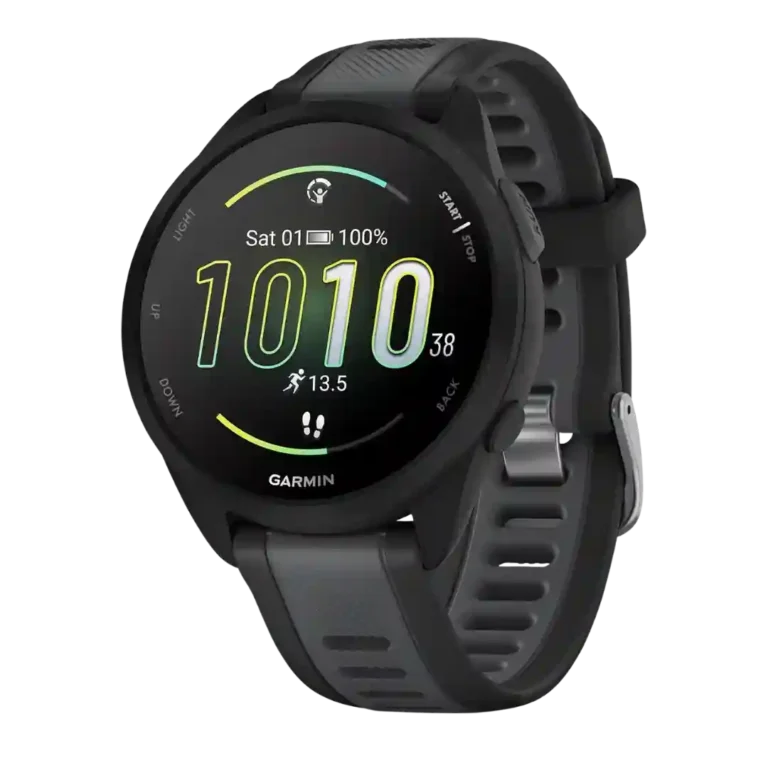
Choose the Garmin Forerunner 165 if you want a light, accurate running watch with a bright AMOLED screen and strong value. Skip it if you need advanced recovery metrics, triathlon profiles, longer GPS battery life, or seamless phone-free music.
Best for runners and fitness users who want accurate GPS, useful Garmin training tools, a readable AMOLED screen, and a lightweight watch without paying for flagship features. It also suits beginners who want serious metrics without a complex multisport watch.
Not for triathletes, backcountry users, or endurance athletes who need richer sport profiles, full maps, dual-band GPS, advanced recovery/load analysis, or longer GPS battery life. The Music edition is also a poor fit for users expecting effortless phone-free streaming.
The Garmin Forerunner 165 comes across as a high-value running watch that gets the essentials right: accurate GPS, dependable heart-rate tracking, a bright AMOLED display, strong comfort, and approachable coaching tools. Reviewers repeatedly liked its lightweight design, button-plus-touch interface, Garmin Connect data, and overall price-to-performance balance. The tradeoff is that Garmin clearly holds back some higher-end tools, including fuller training load/readiness metrics, triathlon support, richer sport profiles, and full mapping. Battery life is good for everyday AMOLED use but not ideal for long endurance events, always-on display users, or heavy music use. The Music edition also drew sharper criticism than the base watch because playlist syncing and controls could feel tedious.
Compared with other Smartwatches, this product is above average in smartphone notifications, reliability, button controls, near average in battery life, app ecosystem, below average in music controls, materials quality, recovery insights.
| Attribute | This product | Category average | Difference |
|---|---|---|---|
| music controls | 2.0 | 3.6 | -1.6 |
| smartphone notifications | 5.0 | 3.5 | +1.5 |
| reliability | 5.0 | 3.7 | +1.3 |
| button controls | 4.9 | 3.9 | +1.1 |
| materials quality | 2.8 | 4.0 | -1.2 |
| value for money | 4.6 | 3.8 | +0.8 |
| contactless payments | 4.0 | 2.8 | +1.2 |
| watch face quality | 5.0 | 3.8 | +1.2 |
Choose Suunto Race S. It scores 4.7 vs 2.8 for materials quality, with a 3.9 overall score.
Choose Suunto Race 2. It scores 4.8 vs 4.2 for battery life, with a 4.0 overall score.
Choose Suunto Vertical 2. It scores 4.9 vs 3.3 for charging convenience, with a 4.2 overall score.
Choose Garmin Forerunner 955. It scores 4.7 vs 3.1 for recovery insights, with a 4.1 overall score.
Products reviewers directly compared with this model, grouped into quick takeaways.
Yes. Reviewers consistently praised its GPS accuracy, with several saying it stayed close to pricier dual-band watches, though one reviewer saw dropouts in more difficult terrain.
Yes. Multiple reviewers said the screen was bright, vibrant, and easy to read in direct sunlight or bright outdoor conditions.
Reviewers generally found battery life good for daily training and smartwatch use, especially for an AMOLED watch. The main caveat is that always-on display, GPS-heavy use, music, or long adventures can make the battery feel limiting.
Only if offline music matters to you. Some reviewers liked having storage, but others found playlist syncing and music controls tedious enough that they recommended saving the extra money.
It has useful tools like Garmin Coach, suggested workouts, Training Effect, Body Battery, HRV Status, and recovery time. Reviewers repeatedly noted that it lacks fuller Training Readiness, Training Load, Training Status, and triathlon support from higher-end models.
Yes. Comfort was one of the strongest points, with reviewers praising the light case, low-profile fit, and soft strap for daily wear, workouts, and sleep tracking.
These are a few of the reviews included in our analysis.

Best for long battery life, accurate GPS and useful offline maps at a strong price. Skip it if you need payments, richer apps, a built-in LED flashlight or polished smartwatch...
Pros: mapping and navigation, value for money
Cons: smartwatch features, contactless payments

Best for accurate run tracking, deep Garmin coaching and phone-free Spotify in a light package. Skip it if you need full maps, triathlon mode, Apple Music support or the strongest...
Pros: value for money, GPS accuracy
Cons: mapping and navigation, third-party app support

Good if you want premium running features, long battery life, and maps for under $200. Skip it if you need flawless heart-rate data, multiband GPS, LTE, or richer app support.
Pros: value for money, battery life
Cons: heart rate accuracy, third-party app support

Best for accurate running metrics, excellent coaching tools, a bright AMOLED display, and dependable battery life. Skip it if you need offline maps, music storage, contactless payments, multi-band GPS, or...
Pros: battery life, value for money
Cons: mapping and navigation, smartwatch features