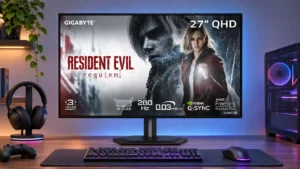
Compare ASUS ROG Strix OLED XG27ACDNG vs Gigabyte MO27Q28G

ASUS ROG Strix OLED XG27ACDNG

ASUS ROG Strix OLED XG27ACDNG

Overall score 4.4 / 5

Based on 17 scored reviews

vs
Gigabyte MO27Q28G

Gigabyte MO27Q28G

Overall score 4.0 / 5

Based on 16 scored reviews

How we score

Scorata scores summarize analyzed review evidence on a 1–5 scale; they are not laboratory measurements or a simple average of customer star ratings. Feature scores summarize the reviews covering that feature. The overall score averages feature scores within each review, then combines review averages. When both expert and customer evidence are available, those two groups receive equal weight. Products can have different review coverage, so small score gaps do not establish a winner.

Recommendations prioritize important features for the category, with a score of at least 3.5, a gap of at least 0.25 points and at least two supporting reviews per product. Features with widely varying scores or broad connectivity contexts are excluded from recommendations. These safeguards do not establish statistical significance.

Quick verdict

What each product is best for

The review evidence points to a tradeoff: screen uniformity and Gradient smoothness versus reflection handling and value for money. Choose according to which strengths matter more to you; the overall score alone does not settle that choice.

Choose ASUS ROG Strix OLED XG27ACDNG for screen uniformity and Gradient smoothness.

Choose Gigabyte MO27Q28G for reflection handling and value for money.

Why these recommendations?

ASUS ROG Strix OLED XG27ACDNG

Where It Has the Edge

  • screen uniformity is 5.0 vs 1.8. Measured white and dark-field uniformity is impressively consistent, with little visible discoloration across the tested panels.
  • Gradient smoothness is 5.0 vs 2.0. The 10-bit panel delivers fine tonal steps and smooth gradients that complement both gaming and creative work.
  • HDMI 2.1 support is 4.7 vs 2.4. Full-bandwidth HDMI 2.1 connections are a genuine advantage for modern consoles and PCs, adding flexibility over some competing...

Gigabyte MO27Q28G

Where It Has the Edge

  • reflection handling is 4.2 vs 3.0. The matte anti-glare finish reduces mirror reflections and preserves blacks under ambient light. It trades away some of...
  • value for money is 4.8 vs 4.0. Tandem OLED brightness and fast gaming performance arrive at a comparatively approachable price, making value one of the...
  • brightness is 4.5 vs 3.8. SDR brightness is a major strength for this OLED generation, and small HDR highlights can be dazzling. Broad...
ASUS ROG Strix OLED XG27ACDNG 4.4 overall score
Gigabyte MO27Q28G 4.0 overall score

Compare features

Scores are out of 5. Missing scores mean missing review evidence, not a missing feature.

Scored on both products

Other features

Screen uniformity
ASUS ROG Strix OLED XG27ACDNG
5.0

Measured white and dark-field uniformity is impressively consistent, with little visible discoloration across the tested panels.

Gigabyte MO27Q28G
1.8

Dark-gray vertical banding, uneven shades and occasional red tints are the most consistently reported panel weaknesses.

Gradient smoothness
ASUS ROG Strix OLED XG27ACDNG
5.0

The 10-bit panel delivers fine tonal steps and smooth gradients that complement both gaming and creative work.

Gigabyte MO27Q28G
2.0

Dark-gray banding and patchiness can interrupt otherwise smooth shading. Pixel maintenance may help but does not consistently eliminate it.

Screen coating clarity
ASUS ROG Strix OLED XG27ACDNG
4.6

The semi-glossy finish keeps images crisp and colorful without the grain of heavy matte coatings, though it trades off some glare resistance.

Gigabyte MO27Q28G
2.3

The matte coating can introduce grain and slight image softness; glossy alternatives appear clearer in a controlled dark room.

USB-C power delivery
ASUS ROG Strix OLED XG27ACDNG
4.8

Up to 90W charging is a meaningful convenience for laptops and portable devices and a welcome addition to a fast gaming monitor.

Gigabyte MO27Q28G
2.7

USB-C laptop charging depends on Smart PD settings and workload. Reviews range from frustration at low default power to reports of much higher delivery when enabled.

Shadow detail
ASUS ROG Strix OLED XG27ACDNG
5.0

Fine shadow nuances remain visible alongside bright accents, taking advantage of OLED's pixel-by-pixel light control.

Gigabyte MO27Q28G
3.2

Dark shadow detail can be crushed at high refresh rates or in specific presets, despite the panel’s excellent absolute black depth.

Sharpness
ASUS ROG Strix OLED XG27ACDNG
4.1

Games and photos look crisp at QHD, and VividPixel can assist text; native 4K screens remain sharper for desktop fine detail.

Gigabyte MO27Q28G
2.5

Native QHD looks reasonably sharp in games, while coating grain, scaling and text subpixels prevent the crispness of denser 4K screens.

Premium feel
ASUS ROG Strix OLED XG27ACDNG
3.3

The screen assembly looks and feels sturdy, but opinions split over the more ordinary plastic stand and its fit with the premium ROG aesthetic.

Gigabyte MO27Q28G
4.6

The metal base, slim stand and restrained styling give the chassis an unexpectedly high-end impression.

SDR/HDR mode switching
ASUS ROG Strix OLED XG27ACDNG
2.8

Changing certain HDR or flicker controls can unexpectedly exit HDR and require re-enabling it in the game, a frustrating setup quirk.

Gigabyte MO27Q28G
1.5

One owner reports that Windows HDR does not automatically revert to SDR as expected, requiring a manual toggle between games and desktop.

Reflection handling
ASUS ROG Strix OLED XG27ACDNG
3.0

The coating keeps some reflections under control but cannot entirely overcome direct light, and stronger illumination can raise black levels.

Gigabyte MO27Q28G
4.2

The matte anti-glare finish reduces mirror reflections and preserves blacks under ambient light. It trades away some of a glossy panel’s crispness.

Photo editing
ASUS ROG Strix OLED XG27ACDNG
4.8

Photoshop images appear detailed and richly colored, while calibration and sRGB options help make the display suitable for serious image work.

Gigabyte MO27Q28G
3.7

Its gamut and glare control are useful for occasional photo editing, but dark midtones and inconsistent uniformity make precision work harder.

VRR compatibility
ASUS ROG Strix OLED XG27ACDNG
4.8

FreeSync, G-SYNC Compatible and HDMI VRR give good support across modern hardware, though some settings require care to avoid disabling the feature.

Gigabyte MO27Q28G
3.8

PC and console VRR support is broad, though unstable frame rates can reveal gamma flicker and some input-switching quirks.

Viewing angles
ASUS ROG Strix OLED XG27ACDNG
5.0

Colors and contrast hold up impressively from off-center positions, giving a forgiving viewing sweet spot.

Gigabyte MO27Q28G
4.0

Off-axis picture consistency is generally strong for OLED, although some testing finds slight color shifts at extreme viewing angles.

Single-player cinematic gaming suitability
ASUS ROG Strix OLED XG27ACDNG
4.2

OLED contrast and color make story-driven games striking, but 360Hz is often unnecessary and bright-scene HDR can be less compelling than higher-resolution alternatives.

Gigabyte MO27Q28G
5.0

Cinematic games benefit from dark blacks, striking HDR effects and rich color, although aggressive peaks can mask some subtle details.

USB hub functionality
ASUS ROG Strix OLED XG27ACDNG
4.5

Three USB-A ports and the upstream connections add useful peripheral access, especially alongside the KVM for a two-computer desk.

Gigabyte MO27Q28G
3.7

The USB hub and KVM are convenient for basic peripherals, but two downstream ports can feel limiting.

Panel type
ASUS ROG Strix OLED XG27ACDNG
5.0

QD-OLED's self-emissive contrast, vivid color and responsiveness are central to the appeal, though brighter rooms can expose its characteristic raised blacks.

Gigabyte MO27Q28G
4.2

The fourth-generation Tandem WOLED brings meaningful gains in brightness and color, but retains some WOLED uniformity and color-volume shortcomings.

Integrated power supply
ASUS ROG Strix OLED XG27ACDNG
4.8

A standard power cable connects directly to the monitor, avoiding a separate external power brick and making cable replacement straightforward.

Gigabyte MO27Q28G
4.0

An external power adapter can be replaced without opening the screen, though it adds a separate item to cable management.

Port selection
ASUS ROG Strix OLED XG27ACDNG
4.8

Two HDMI 2.1 ports, DisplayPort, USB-C and multiple USB connections form a flexible setup for PCs, consoles and peripherals.

Gigabyte MO27Q28G
4.1

HDMI, DisplayPort, USB-C and USB-A give this gaming display a useful mix of connectivity, albeit without a generous peripheral hub.

Productivity versatility
ASUS ROG Strix OLED XG27ACDNG
4.5

The KVM, docking-friendly USB-C and strong color make light creative and desktop work feasible, despite the static-content tradeoff.

Gigabyte MO27Q28G
3.8

The display can handle occasional office tasks alongside gaming, but OLED wear and imperfect text edges discourage all-day static work.

Stand adjustability
ASUS ROG Strix OLED XG27ACDNG
4.7

Height, tilt, swivel and full portrait pivot are generous and generally smooth, although one assessment finds the maximum height merely average.

Gigabyte MO27Q28G
4.0

Height, tilt, swivel and portrait adjustments provide versatile ergonomics from a compact metal stand.

Text fringing
ASUS ROG Strix OLED XG27ACDNG
3.6

Third-generation QD-OLED reduces colored outlines around letters, but fine text remains less clean than on a conventional LCD and sensitivity varies.

Gigabyte MO27Q28G
2.9

The revised subpixel layout improves text over older WOLED designs, but visible fringing remains around lettering and flat-color edges.

Gaming feature selection
ASUS ROG Strix OLED XG27ACDNG
4.8

There is a substantial collection of crosshairs, frame counters, shadow enhancements and custom controls, with more tuning options than several competitors.

Gigabyte MO27Q28G
4.2

Crosshairs, timers, hardware overlays and configurable shortcuts give this gaming monitor a capable toolkit, even if some extras are niche.

Console gaming compatibility
ASUS ROG Strix OLED XG27ACDNG
4.6

PS5 and Xbox can take advantage of HDMI 2.1, 120Hz and compatible VRR/HDR modes, though accepted 4K signals are displayed at native 1440p.

Gigabyte MO27Q28G
4.0

Console support includes 120Hz options and 4K downscaling, with HDMI bandwidth and chroma-format tradeoffs to consider.

Image scaling
ASUS ROG Strix OLED XG27ACDNG
1.5

Sending it 4K for desktop use produces softer text than native QHD, so the higher accepted input resolution is not a substitute for a native 4K panel.

Gigabyte MO27Q28G
2.0

Scaling lower-resolution signals is serviceable but not always sharp; the strongest enhancement settings can look artificially processed.

HDR mode versatility
ASUS ROG Strix OLED XG27ACDNG
4.3

Multiple HDR modes make it possible to prioritize peak highlights or a steadier image, but none is ideal for every brightness level.

Gigabyte MO27Q28G
3.8

Multiple HDR presets offer a useful choice between accuracy and impact. The most aggressive 1500-nit options introduce saturation or tone-mapping compromises.

Backlight strobing
ASUS ROG Strix OLED XG27ACDNG
3.3

Black-frame insertion sharpens motion at 120Hz or 180Hz, but the substantial brightness loss and inability to combine it with VRR or HDR limit its appeal.

Gigabyte MO27Q28G
3.7

The Ultra Clear black-frame mode improves perceived sharpness at 120Hz, but it cannot be combined with VRR or HDR and carries brightness and flicker compromises.

Desk footprint
ASUS ROG Strix OLED XG27ACDNG
5.0

The 27-inch flat screen balances gaming immersion with a manageable amount of desk space, and its size is praised as practical for QHD pixel density.

Gigabyte MO27Q28G
4.6

The small, thin metal base frees room for keyboards and other desk gear without sacrificing much stability.

Included accessories
ASUS ROG Strix OLED XG27ACDNG
4.9

The package is generous, with multiple video and USB cables, cleaning supplies and a mounting adapter that make first setup easier.

Gigabyte MO27Q28G
4.5

The supplied cables, mounting hardware and power accessories support a fairly straightforward initial setup.

Power cable replaceability
ASUS ROG Strix OLED XG27ACDNG
5.0

The integrated power supply uses a standard, easy-to-replace mains cable rather than a proprietary external adapter.

Gigabyte MO27Q28G
4.6

A conventional replaceable mains lead is easier to manage than a proprietary built-in connection.

Stand stability
ASUS ROG Strix OLED XG27ACDNG
4.8

The stand feels solid during adjustments, with smooth travel and little reported looseness or wobble.

Gigabyte MO27Q28G
4.4

Most testers find the thin stand unexpectedly firm, though at least one describes it as flimsy.

Resolution
ASUS ROG Strix OLED XG27ACDNG
4.3

QHD strikes a useful balance between visual detail and the frame rates needed for high-refresh gaming, but it cannot match native 4K sharpness.

Gigabyte MO27Q28G
3.9

1440p is a practical match for high refresh rates and midrange gaming PCs, though 4K is noticeably sharper.

Color gamut
ASUS ROG Strix OLED XG27ACDNG
4.9

The broad QD-OLED gamut produces exceptionally vivid reds and rich colors, with sRGB clamping available when restraint matters more than saturation.

Gigabyte MO27Q28G
4.6

Wide DCI-P3 and expanded BT.2020 coverage give games, movies and creative work rich color. Proper gamut clamping is important to avoid exaggerated SDR saturation.

Refresh rate
ASUS ROG Strix OLED XG27ACDNG
4.9

The native 360Hz panel delivers wonderfully fluid motion, especially over 240fps; that advantage shrinks in slower games or on consoles.

Gigabyte MO27Q28G
4.6

A 280Hz ceiling is fast enough for smooth, competitive play, although the improvement over 240Hz is smaller than the gap to high-end 480Hz-plus models.

Black levels
ASUS ROG Strix OLED XG27ACDNG
4.7

Truly deep blacks are a highlight in dark rooms, but ambient light can turn them grayish or purple on this QD-OLED panel.

Gigabyte MO27Q28G
5.0

The OLED panel produces genuinely inky blacks and convincing depth without the gray glow associated with conventional LCD backlights.

Burn-in protection
ASUS ROG Strix OLED XG27ACDNG
4.3

ASUS supplies extensive pixel cleaning, shifting and static-logo controls plus burn-in warranty coverage, but none removes the inherent risk of permanent marks.

Gigabyte MO27Q28G
4.5

Gigabyte supplies pixel cleaning, logo dimming, shifting and other OLED Care controls. These are helpful safeguards, not a guarantee against wear from static images.

Competitive gaming suitability
ASUS ROG Strix OLED XG27ACDNG
5.0

360Hz operation, near-instant response and low lag are excellent for shooters and esports when the PC can deliver high frame rates.

Gigabyte MO27Q28G
4.8

Fast response and low lag help competitive players track motion and place shots precisely. Reaching the full 280fps requires sufficiently fast hardware.

Motion clarity
ASUS ROG Strix OLED XG27ACDNG
5.0

Fast transitions and 360Hz make moving detail look unusually sharp and stable, with little visible smearing.

Gigabyte MO27Q28G
4.8

Fast OLED transitions and 280Hz operation deliver excellent motion definition. Higher-refresh premium models still offer incremental gains.

Response time
ASUS ROG Strix OLED XG27ACDNG
5.0

Near-instant OLED transitions keep action crisp with exceptionally low blur and very little meaningful pixel-response delay.

Gigabyte MO27Q28G
4.8

Near-instant OLED response times give the screen precise moving detail and excellent high-speed gaming behavior.

Cable management
ASUS ROG Strix OLED XG27ACDNG
2.8

Routing behind the stand is basic, and one hands-on setup found cables hanging visibly when the monitor was raised.

Gigabyte MO27Q28G
2.7

A cable clip tidies the connections, but the external power brick and limited integrated routing can still leave clutter to manage.

Input lag
ASUS ROG Strix OLED XG27ACDNG
5.0

Controls feel immediate, with measured low processing delay that makes the monitor highly responsive in fast games.

Gigabyte MO27Q28G
4.9

Input lag is exceptionally low at high refresh rates, giving clicks and camera movement a responsive, connected feel.

Overall satisfaction
ASUS ROG Strix OLED XG27ACDNG
4.7

The overall experience is strongly praised for fast, gorgeous gaming and abundant features, with lighting, HDR brightness and value providing the principal caveats.

Gigabyte MO27Q28G
4.6

Most assessments recommend this as an unusually capable and affordable OLED gaming monitor; a few give more weight to coating, brightness or uniformity problems.

VRR flicker
ASUS ROG Strix OLED XG27ACDNG
2.5

Flicker can be visible during fluctuating frame rates in dark games or menus; the mitigation settings may narrow VRR's operating range and cause other compromises.

Gigabyte MO27Q28G
2.6

Rapid or large frame-rate changes can cause noticeable VRR flicker, especially in dark scenes; anti-flicker settings help but are not a complete cure.

HDR highlight detail
ASUS ROG Strix OLED XG27ACDNG
3.9

Small HDR lights pop against true black, while larger highlights can dim or roll off, depending on the mode and content.

Gigabyte MO27Q28G
3.9

Small bright details can look spectacular, but some tone-mapping choices dim or crush highlights and reduce the detail they should preserve.

Blooming control
ASUS ROG Strix OLED XG27ACDNG
5.0

Pixel-level OLED illumination keeps bright objects crisp against dark surroundings, without the glowing halos common to some backlit LCDs.

Gigabyte MO27Q28G
5.0

Individually lit pixels prevent the halos and blooming found around bright objects on many locally dimmed LCD screens.

Gaming image presets
ASUS ROG Strix OLED XG27ACDNG
3.5

Racing mode receives praise for natural balance, while certain stylized presets look exaggerated or poorly calibrated without adjustment.

Gigabyte MO27Q28G
3.5

Standard and gaming-oriented picture presets cover different uses, though the special modes are not necessarily more accurate than well-tuned standard settings.

Ghosting control
ASUS ROG Strix OLED XG27ACDNG
5.0

Moving objects remain clean and well defined, with minimal smearing or overshoot even during rapid action.

Gigabyte MO27Q28G
5.0

Fast OLED pixel transitions keep moving edges remarkably free of smearing, ghost trails and overshoot artifacts.

Pixel density
ASUS ROG Strix OLED XG27ACDNG
3.5

1440p at 27 inches looks sharp in games and photographs, but text is not as finely defined as on higher-density 4K OLED displays.

Gigabyte MO27Q28G
3.5

QHD at 27 inches provides useful desktop space and decent clarity, but cannot match the text and fine detail of 4K.

Ownership and support

HDMI 2.1 support
ASUS ROG Strix OLED XG27ACDNG
4.7

Full-bandwidth HDMI 2.1 connections are a genuine advantage for modern consoles and PCs, adding flexibility over some competing OLED monitors.

Gigabyte MO27Q28G
2.4

HDMI 2.1 inputs support high refresh rates but use a limited 24Gbps link rather than full bandwidth; DSC is needed for the richest 280Hz signals.

Value for money
ASUS ROG Strix OLED XG27ACDNG
4.0

Feature-rich 360Hz OLED performance is appealing at a discount, while full-price comparisons with cheaper 240Hz panels and newer OLEDs require care.

Gigabyte MO27Q28G
4.8

Tandem OLED brightness and fast gaming performance arrive at a comparatively approachable price, making value one of the strongest selling points.

Warranty and support service
ASUS ROG Strix OLED XG27ACDNG
4.3

A three-year burn-in-inclusive warranty offers reassurance, but actual coverage and conditions depend on the buyer's region.

Gigabyte MO27Q28G
4.6

Three-year coverage that includes OLED burn-in offers welcome reassurance for a panel with known static-image wear concerns.

Comfort and build

Screen size
ASUS ROG Strix OLED XG27ACDNG
3.0

The 27-inch format is comfortable for normal desk gaming, though some users want a larger, higher-resolution option.

Gigabyte MO27Q28G
4.6

The 27-inch size is comfortable for QHD gaming and desk use, balancing workspace with manageable system demands.

Design and aesthetics
ASUS ROG Strix OLED XG27ACDNG
4.8

A futuristic ROG rear shell and customizable lighting look distinctive, while the comparatively plain plastic stand divides opinion.

Gigabyte MO27Q28G
4.2

Slim bezels, a low-profile base and restrained metal accents make the design neat and unobtrusive. Some find it plain rather than stylish.

Eye comfort features
ASUS ROG Strix OLED XG27ACDNG
4.0

Flicker-free and low-blue-light options offer flexibility, while OLED anti-flicker settings can help some situations at the expense of VRR behavior.

Gigabyte MO27Q28G
3.8

Brightness controls, low-blue-light alternatives and flash dimming can make long or dark-room sessions easier on the eyes, though flicker-sensitive users may still notice OLED behavior.

Screen bezel design
ASUS ROG Strix OLED XG27ACDNG
4.5

Thin top and side borders make the monitor look tidy and help it sit neatly next to a second display.

Gigabyte MO27Q28G
4.3

Slim, largely flush bezels make the picture dominant without an overly chunky bottom edge.

Build quality
ASUS ROG Strix OLED XG27ACDNG
4.2

The screen housing and mechanical parts generally feel solid; some find the stand's plastic finish less premium than similarly priced rivals.

Gigabyte MO27Q28G
4.2

The slender metal stand and stable construction earn praise, although one review found the assembly rather light and flimsy.

Tracking and training

Gamma tracking
ASUS ROG Strix OLED XG27ACDNG
3.6

Some measurements show impressively accurate gamma in the right preset, while others find noticeable errors in several alternative modes.

Gigabyte MO27Q28G
2.3

Dark gamma and black crush appear in some factory modes. Changing gamma or choosing a more accurate color-space preset can recover detail.

Performance

On-screen display usability
ASUS ROG Strix OLED XG27ACDNG
4.7

The joystick-based menus offer lots of control and are generally easy to navigate; desktop software adds a more convenient alternative.

Gigabyte MO27Q28G
3.6

The joystick-led menu and software controls are generally easy to navigate, but placement of APL controls and some locked options frustrate.

Overall picture quality
ASUS ROG Strix OLED XG27ACDNG
4.9

Its combination of deep blacks, bright accents and vivid color makes both SDR and HDR images exceptionally appealing.

Gigabyte MO27Q28G
4.2

Games and video look bold and dimensional thanks to strong contrast and rich color, though individual units and presets can have visible tonal faults.

Brightness
ASUS ROG Strix OLED XG27ACDNG
3.8

It stands out among several QD-OLED competitors in SDR and can deliver striking small HDR peaks, but broad bright HDR scenes remain comparatively dim.

Gigabyte MO27Q28G
4.5

SDR brightness is a major strength for this OLED generation, and small HDR highlights can be dazzling. Broad bright scenes and specific modes show more modest results.

Color accuracy
ASUS ROG Strix OLED XG27ACDNG
4.2

Some tests find near-reference accuracy without calibration, while others recommend tuning specific modes for the best sRGB or HDR results.

Gigabyte MO27Q28G
3.6

Factory color accuracy ranges from good to merely fair depending on preset and sample. Grayscale tint, dark gamma and calibration effort are the main reservations.

Automatic brightness limiting
ASUS ROG Strix OLED XG27ACDNG
3.5

Uniform Brightness can tame distracting changes as windows or bright scenes change, though it reduces peak output. Several tests find the default behavior less intrusive than on rival QD-OLEDs.

Gigabyte MO27Q28G
3.0

Larger bright scenes can trigger dimming, especially in more aggressive brightness modes. The more uniform SDR settings are less distracting for desk work.

KVM switch performance
ASUS ROG Strix OLED XG27ACDNG
4.7

The integrated KVM is a practical benefit for using one keyboard and mouse with a desktop and laptop, even if initial configuration is needed.

Gigabyte MO27Q28G
4.6

The KVM makes sharing a keyboard and mouse between two connected computers convenient, with input switching designed around multi-device desks.

Contrast
ASUS ROG Strix OLED XG27ACDNG
5.0

Pixel-level light control delivers exceptionally strong dark-scene contrast and convincing image depth without LCD-style backlight halos.

Gigabyte MO27Q28G
4.9

Per-pixel OLED control gives dark scenes exceptional contrast and an immediate transition from black to bright highlights.

Black equalizer performance
ASUS ROG Strix OLED XG27ACDNG
4.4

Adjustable Shadow Boost can expose dark gameplay details without excessively washing out highlights.

Gigabyte MO27Q28G
4.5

Dark-scene adjustment can uncover otherwise hidden shadow details, although aggressive settings lift blacks and alter the intended image.

Adaptive sync performance
ASUS ROG Strix OLED XG27ACDNG
4.4

Adaptive sync generally keeps games tear-free and responsive, although fluctuating frame rates can introduce OLED flicker and mitigation tradeoffs.

Gigabyte MO27Q28G
4.3

FreeSync and G-SYNC generally keep motion smooth, with some settings designed to tame frame-rate swings. Adaptive sync still shares OLED’s potential for visible flicker.

HDR performance
ASUS ROG Strix OLED XG27ACDNG
4.4

Deep blacks and vivid QD-OLED color create dramatic HDR images, particularly in dark scenes; bright full-screen scenes and some tone-mapping choices are less convincing.

Gigabyte MO27Q28G
4.5

Deep OLED blacks and impressive highlights make HDR gaming particularly striking. Full-screen brightness, dark-scene detail and preset accuracy are less consistent.

Local dimming performance
ASUS ROG Strix OLED XG27ACDNG
5.0

Individual OLED pixels eliminate the zone-transition and halo artifacts associated with conventional local-dimming backlights.

Gigabyte MO27Q28G
5.0

Self-emissive pixels provide precise local control rather than coarse backlight zones, avoiding halos in mixed bright and dark scenes.

Controls and connectivity

Color calibration controls
ASUS ROG Strix OLED XG27ACDNG
4.8

Extensive gamut, gamma, color-temperature and saturation adjustments make the image highly configurable; the best presets differ according to the task.

Gigabyte MO27Q28G
3.8

Color-space presets, gamma options and RGB adjustments offer useful tuning. Some emulation modes lock controls, and correcting darker tones can take experimentation.

HDR tone mapping accuracy
ASUS ROG Strix OLED XG27ACDNG
3.0

True Black mode can track its target well, but higher-peak modes trade accuracy and brightness behavior, with occasional clipping or dimming complaints.

Gigabyte MO27Q28G
2.6

HDR tracking varies substantially by mode; the conservative preset is generally more faithful, while high-output options alter highlight or midtone levels.

Software and driver support
ASUS ROG Strix OLED XG27ACDNG
4.5

DisplayWidget offers a convenient desktop interface for settings and shortcuts, making frequent picture adjustments easier than joystick-only navigation.

Gigabyte MO27Q28G
4.3

Gigabyte’s desktop utility is useful for configuration and firmware, with some setup requirements and occasional preference for competing software.

HDR adjustment controls
ASUS ROG Strix OLED XG27ACDNG
4.6

Unusually extensive HDR menus let owners adjust brightness, contrast and color rather than accepting a locked preset; tweaking can alter accuracy.

Gigabyte MO27Q28G
4.5

HDR adjustment controls is useful under the described circumstances, though performance depends on the chosen settings.

Evidence available for one product

Other features

Ease of use
ASUS ROG Strix OLED XG27ACDNGNo score yet
Gigabyte MO27Q28G
4.5

Rear joystick controls and practical shortcuts make everyday operation fairly straightforward.

24-inch mode quality
ASUS ROG Strix OLED XG27ACDNGNo score yet
Gigabyte MO27Q28G
3.5

The programmable Tactical Switch makes reduced-size displays easier to call up for competitive play, although these emulation modes require some setup and can introduce scaling compromises.

Built-in RGB lighting
ASUS ROG Strix OLED XG27ACDNG
3.8

The illuminated rear logo gives the chassis a distinctive gamer look and offers customizable effects, but it is too subtle to meaningfully light up a wall.

Gigabyte MO27Q28GNo score yet
Built-in speakers
ASUS ROG Strix OLED XG27ACDNGNo score yet
Gigabyte MO27Q28G
3.4

Built-in speakers are useful for basic audio and casual viewing, but bass and richness are limited compared with external speakers.

Device compatibility
ASUS ROG Strix OLED XG27ACDNGNo score yet
Gigabyte MO27Q28G
4.6

The monitor works with modern gaming PCs and several other source types, but particular ports and modes impose bandwidth limitations.

ELMB strobing quality
ASUS ROG Strix OLED XG27ACDNG
3.1

Its OLED black-frame insertion can improve clarity at 120Hz and 180Hz; the loss of brightness, HDR and variable refresh makes it a niche alternative to normal 360Hz operation.

Gigabyte MO27Q28GNo score yet
Firmware updateability
ASUS ROG Strix OLED XG27ACDNGNo score yet
Gigabyte MO27Q28G
4.3

Firmware updates improved launch-era color and HDR behavior, so checking the installed version is important for getting the reviewed performance.

GPU demands
ASUS ROG Strix OLED XG27ACDNG
4.0

The 1440p resolution is more achievable at high frame rates than 4K, but taking full advantage of 360Hz still demands fast games and a suitably capable PC.

Gigabyte MO27Q28GNo score yet
Headphone jack convenience
ASUS ROG Strix OLED XG27ACDNGNo score yet
Gigabyte MO27Q28G
4.6

The headphone output is a welcome fallback when the modest built-in speakers are not sufficient.

Image retention
ASUS ROG Strix OLED XG27ACDNG
2.5

Static logos, taskbars and other fixed elements still present a risk of image retention or eventual burn-in, despite the monitor’s protective routines.

Gigabyte MO27Q28GNo score yet
OLED motion blur reduction
ASUS ROG Strix OLED XG27ACDNGNo score yet
Gigabyte MO27Q28G
4.2

The black-frame-insertion feature can make 120Hz motion look noticeably clearer, at the cost of brightness and simultaneous VRR operation.

Overdrive tuning
ASUS ROG Strix OLED XG27ACDNGNo score yet
Gigabyte MO27Q28G
4.5

OLED removes the need for conventional overdrive tuning and avoids the overshoot artifacts seen on some LCDs.

PC gaming compatibility
ASUS ROG Strix OLED XG27ACDNG
4.7

High refresh, flexible video inputs and adaptive-sync support suit powerful PCs particularly well, with access to the monitor's full 360Hz speed.

Gigabyte MO27Q28GNo score yet
Per-input settings memory
ASUS ROG Strix OLED XG27ACDNGNo score yet
Gigabyte MO27Q28G
2.0

Brightness values and certain settings are not always remembered independently when toggling display modes, creating extra adjustments.

Phone stand utility
ASUS ROG Strix OLED XG27ACDNG
4.6

A phone slot in the stand is surprisingly useful and can accommodate even some large handsets with cases.

Gigabyte MO27Q28GNo score yet
Pixel refresh effectiveness
ASUS ROG Strix OLED XG27ACDNGNo score yet
Gigabyte MO27Q28G
3.0

Pixel refresh can reduce some visible banding, although it does not always fully correct it; cleaning cycles are also part of OLED protection.

Portability and weight
ASUS ROG Strix OLED XG27ACDNGNo score yet
Gigabyte MO27Q28G
3.0

The thin, relatively light assembly is easy to position and move, even if it feels less substantial than some heavier designs.

Speaker quality
ASUS ROG Strix OLED XG27ACDNGNo score yet
Gigabyte MO27Q28G
3.1

The speakers are passable for basic listening but sound thin and lack bass; external audio is the better choice for music or gaming.

Speaker volume control
ASUS ROG Strix OLED XG27ACDNGNo score yet
Gigabyte MO27Q28G
4.0

Speaker volume control has useful range for quiet evenings as well as ordinary daytime listening.

Tripod mount versatility
ASUS ROG Strix OLED XG27ACDNG
4.5

A top-mounted threaded socket is convenient for placing a compatible microphone, camera or light above the display.

Gigabyte MO27Q28GNo score yet
VESA mount compatibility
ASUS ROG Strix OLED XG27ACDNG
4.6

A supplied VESA adapter and standard 100×100mm support make monitor arms and wall mounting straightforward.

Gigabyte MO27Q28GNo score yet

Performance

Automatic brightness adjustment
ASUS ROG Strix OLED XG27ACDNGNo score yet
Gigabyte MO27Q28G
3.0

APL Stabilize offers a choice between steadier brightness and punchier highlights. Higher settings can produce noticeable luminance shifts as on-screen content changes.

Color brightness
ASUS ROG Strix OLED XG27ACDNGNo score yet
Gigabyte MO27Q28G
3.8

The newer Tandem panel delivers much greater saturation and color purity than earlier WOLEDs. Very bright saturated HDR colors can still trail QD-OLED alternatives.

Display-mode switching reliability
ASUS ROG Strix OLED XG27ACDNGNo score yet
Gigabyte MO27Q28G
2.0

At least one test found VRR could stop working when changing HDMI and DisplayPort inputs, reducing confidence in seamless mode switching.

DisplayPort connectivity
ASUS ROG Strix OLED XG27ACDNGNo score yet
Gigabyte MO27Q28G
2.5

DisplayPort can drive the native high-refresh mode with compression, while turning compression off forces significant signal compromises.

Display Stream Compression clarity
ASUS ROG Strix OLED XG27ACDNGNo score yet
Gigabyte MO27Q28G
3.0

Display Stream Compression enables full refresh rates over limited-bandwidth inputs. Users who want compression disabled face lower refresh or color-format ceilings.

Listing accuracy
ASUS ROG Strix OLED XG27ACDNGNo score yet
Gigabyte MO27Q28G
1.5

A critical account objects to the HDMI 2.1 label because the ports lack full bandwidth and need compression for certain high-refresh formats.

Operating noise
ASUS ROG Strix OLED XG27ACDNGNo score yet
Gigabyte MO27Q28G
4.5

The passive design avoids the distraction of an audible cooling fan.

Picture-in-picture and picture-by-picture
ASUS ROG Strix OLED XG27ACDNG
3.5

Viewing more than one source is useful, though some accounts distinguish between available picture-in-picture and missing side-by-side options.

Gigabyte MO27Q28GNo score yet

Ownership and support

Setup ease
ASUS ROG Strix OLED XG27ACDNG
5.0

Stand parts snap or screw together quickly, and the included mounting adapter eases the move to a monitor arm.

Gigabyte MO27Q28GNo score yet

Other Top Monitors to Consider

#1 Asus ROG Swift 34 QD-OLED PG34WCDN
4.5

This 360Hz QD-OLED ultrawide delivers exceptional gaming motion, vibrant HDR and dramatically cleaner text. Its high price, less-than-perfect bright-room blacks and occasional HDR dimming are the main reasons to hesitate.

Pros: color gamut, contrast

Cons: value for money, Resolution

#2 Dell U4025QW
4.4

A huge, sharp ultrawide workspace and unusually capable Thunderbolt dock make the U4025QW outstanding for demanding productivity and editing. Its high price, modest HDR, and imperfect motion handling keep it...

Pros: overall picture quality, color accuracy

Cons: value for money, built-in speakers

#4 ASUS ROG Swift OLED PG27UCDM
4.4

The 27-inch 4K OLED picture is exceptionally crisp and responsive, with useful USB-C and KVM extras. Its high price, oversized stand, and bright-room compromises limit its appeal.

Pros: sharpness, overall satisfaction

Cons: value for money, VRR flicker

#5 MSI MPG 322UR QD-OLED X24
4.4

Best for exceptional 4K HDR, accurate color, fast 240Hz gaming, and strong work connectivity. Skip it if you need built-in speakers, ultrawide immersion, television-level HDR brightness, or a budget-friendly upgrade.

Pros: brightness, reflection handling

Cons: cable management