Best for 4K at 120 Hz support
Sony Bravia 9 II
5.0 attribute score
Highest scored product for this attribute based on supporting review evidence.

Highest scored product for this attribute based on supporting review evidence.
Balances the attribute score, supporting reviews, and overall product strength.
Has the broadest review evidence for this attribute.
Strongest overall product among items with scored evidence for this attribute.
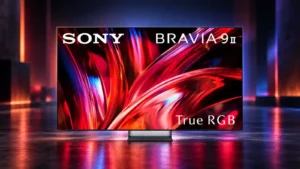
4K/120Hz works well for current-generation console gaming, especially alongside VRR and ALLM.
Pros: overall satisfaction, overall image accuracy
Cons: value for money, bass performance
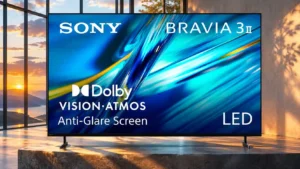
Native 4K/120Hz support gives modern consoles smooth, responsive play on any of the four HDMI inputs. There is no higher-than-120Hz option for demanding PC players.
Pros: HDMI 2.1 port count, overall satisfaction
Cons: HDR performance, bass performance
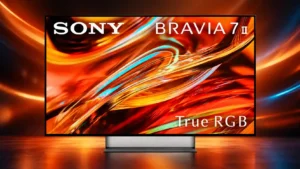
4K/120Hz works well for current consoles and is repeatedly praised as enough for PS5 and Xbox gaming. The limitation is that only two HDMI inputs can carry the full signal.
Pros: overall satisfaction, picture quality
Cons: HDMI 2.1 port count, reflection handling
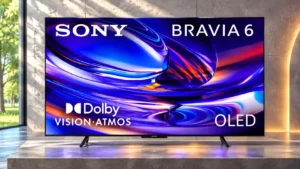
Current consoles and compatible PCs can play at 4K/120Hz on every HDMI input. Native 1440p signals are not supported, so some alternate output setups are more restrictive.
Pros: HDMI 2.1 port count, Video input versatility
Cons: value for money, overall satisfaction
Current consoles can take advantage of smooth 4K120 play, provided they use one of the two full-bandwidth HDMI ports.
Pros: picture quality, black levels
Cons: HDR brightness, value for money
4K/120Hz works well for console play and can look excellent, but 120Hz is also the ceiling rather than a cutting-edge refresh target.
Pros: gaming performance, peak brightness
Cons: HDMI 2.1 support, HDMI 2.1 port count
High-frame-rate 4K play is a serious limitation: the 60 Hz television cannot provide the 4K/120 experience sought by demanding console gamers.
Pros: picture quality, overall satisfaction
Cons: sound quality, reliability