
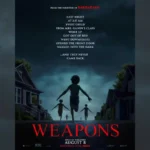
Weapons Feature Scores
Explore all 40 feature scores for Weapons, organized into pros and cons.
Scores by Feature
Summary
40 reviewed features-
Very positive 4.5-5.09 (23%)
-
Positive 3.5-4.424 (60%)
-
Neutral 2.5-3.43 (8%)
-
Negative 1.5-2.44 (10%)
Pros
Sort
-
The ensemble earns broad praise for making frightened, compromised characters feel vivid, with a few performances standing out even in brief chapters.
-
The macabre comedy frequently releases tension without erasing the dread, though its broad final turn will not suit everyone.
-
Cregger’s control of viewpoint, staging, and abrupt tonal turns impresses many, even when the plotting divides them.
-
Horror fans praise its mix of dread, gore, and absurd humor, while a few want steadier scares or deeper answers.
-
Many find the film a lively, unpredictable theater experience, with its black humor and shocks carrying them through the slower stretches.
-
Tracking shots, deep shadows, and ominous framing make the familiar neighborhood feel threatening.
-
Suspense grows through withheld information, shifting viewpoints, and the threat of something just outside the frame.
-
The score underlines dread with abrasive textures, while quieter stretches leave room for the images to work.
-
The screenplay’s chapter design and measured reveals are widely admired; a few find the construction cleverer than its answers.
-
The film alternates jump scares, creeping dread, and startling violence. Some find the mystery more gripping than frightening throughout.
-
The supporting players add offbeat energy and pathos to the expanding town mystery.
-
The premise and unpredictable route through it feel unusually fresh, even to viewers who recognize some familiar genre pieces.
-
The missing children premise and intersecting points of view keep the mystery absorbing. A few find the larger story thinner than its hook.
-
The running children and other stark images linger, while the visual language shifts with each viewpoint.
-
The wild, darkly comic climax is a major payoff for many. Others find its resolution unearned or less emotionally satisfying than the setup.
-
The editing makes overlapping chapters legible and lets individual scenes simmer before they collide.
-
The film pivots between grief, dread, and absurd comedy with confidence for many, though the shift can feel jarring.
-
The chapter structure and unusual turns feel fresh to many viewers, though some see familiar horror machinery beneath the puzzle.
-
Crowd reactions and shared surprise are part of the appeal, especially when the finale turns theatrical and funny.
-
Layered sound effects and quiet spaces sharpen the tension before violent or comic releases.
-
The volatile connections among the townspeople help the overlapping stories feel more alive.
-
Costume choices add to the film’s uncanny, exaggerated character design.
-
The child disappearances and townwide suspicion give the horror a credible dramatic pull.
-
Grounded reactions and imperfect people help the supernatural events feel closer to everyday life.
-
The 4K UHD image draws praise for deep blacks, clear detail, and effective HDR in the film’s dark interiors.
-
The Dolby Atmos mix uses enveloping effects and forceful bass to make the film’s uneasy spaces feel active.
-
The central performers help anchor the shifting viewpoints and keep the disappearance personal.
-
The makeup adds an eerie edge to the film’s most memorable presence.
-
The flawed teacher, grieving father, and peripheral townspeople give the mystery human texture. Some think the chapter format leaves several roles thin.
-
Images of missing children invite readings about grief, scapegoating, and violence. Some find those ideas suggestive rather than fully developed.
-
A pointed needle drop gives the opening disappearance an eerie, strangely dreamy quality.
-
The ordinary suburban setting becomes unsettling as neighbors turn suspicious and familiar streets feel unsafe.
-
A few set pieces draw praise for their sharp staging and sudden escalation.
Cons
Sort
-
The delayed answers reward some viewers, while others question the logic or clarity of the eventual explanation.
-
The film’s dialogue gets a pointed complaint for slowing the first half with dull exchanges.
-
The secretive campaign raised expectations for a colder nightmare than one critic felt the finished film delivered.
-
The film’s planted clues and shifting viewpoints invite another viewing, though one critic doubts the surprise will hold up.
-
The long runtime feels justified to some by the layered mystery; others think repeated chapters could be trimmed.
-
The patient buildup gives the mystery room to breathe, but repeated perspectives and slower chapters test some viewers’ patience.
-
The loss and suspicion land hard for some viewers, but others feel the film’s emotional depth fades behind its puzzle and mayhem.
Cast & Creators
-
Justine GandyHer nervous, resilient teacher anchors the early mystery and earns praise for mixing fragility with determination.
-
Alex LillyThe young actor’s quiet distress and eventual resolve stand out amid the adult ensemble.
-
Archer GraffHis grieving father brings desperation and vulnerability to the search, giving the puzzle an emotional center.
-
GladysHer late-arriving performance is singled out for uncanny commitment, menace, and gleeful oddity.
-
DirectorHis command of the shifting viewpoints and escalating dread earns praise, with particular attention to his staging and tonal control.
-
Andrew MarcusHis principal moves between warmth and unease, with several viewers highlighting his unsettling turns.
-
Paul MorganHis troubled cop adds volatility and dark humor to the story’s shifting perspectives.
-
JamesHis disheveled drifter brings comic energy without losing the character’s desperation.
-
ComposerHis contribution to the score adds unnerving texture to quiet and violent passages.
-
CinematographerHis camera work turns ordinary rooms and streets into expressive, threatening spaces.
-
ComposerHis uneasy, abrasive score helps sustain the film’s dread.
-
Casting DirectorHer casting of the young actor at the center of the mystery draws explicit praise.
-
MusicianHis song gives the opening disappearance a dreamy, unsettling counterpoint.
-
EditorHis editing lets the viewpoints overlap without losing the story’s tension.
-
ActorHer brief turn contributes to the ensemble’s comic flashes.
-
ActorHis brief appearance provides a comic accent to the ensemble.
-
ActorHis short appearance leaves a surprisingly melancholy impression.