If you want better stress tracking
Choose Garmin Venu 3. It scores 4.8 vs 1.8 for stress tracking, with a 4.1 overall score.

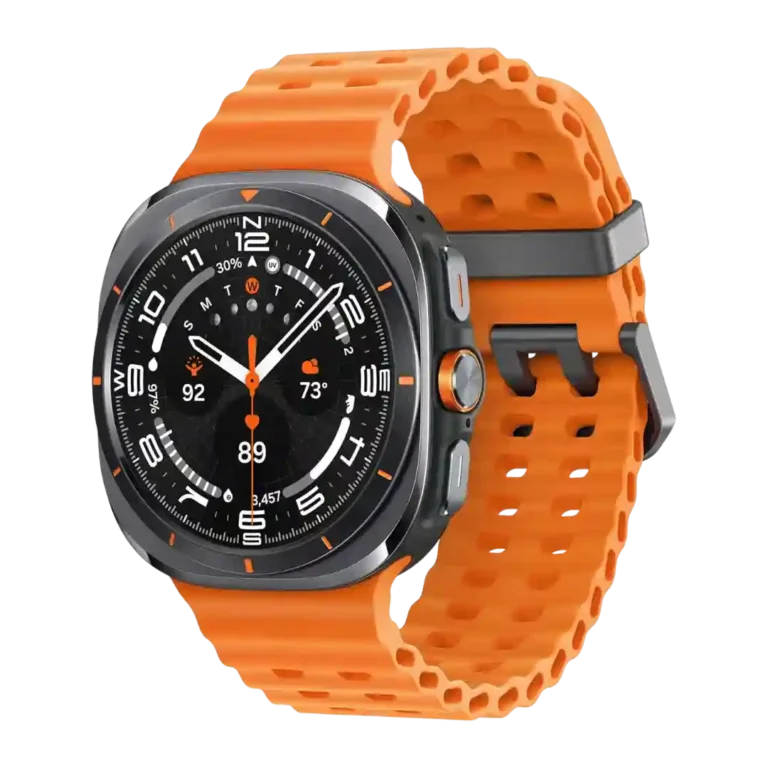
Choose the Galaxy Watch Ultra if you want a rugged Samsung-focused Wear OS watch with strong GPS, a bright display, and multi-day battery. Skip it if you need lower cost, smaller sizing, dive-grade water sports, or elite all-sport accuracy.
Best for Samsung or Android users who want a premium rugged Wear OS watch with a bright display, reliable GPS, useful smart features, and battery life that usually stretches beyond a day.
Not for shoppers who want a small or inexpensive watch, iPhone compatibility, true dive-watch water sports, Garmin-level endurance battery, or consistently elite health and sleep accuracy.
Reviewers consistently frame the Galaxy Watch Ultra as Samsung’s most capable Wear OS watch: rugged, bright, smooth, and far better for battery life and GPS than prior Galaxy watches. The strongest evidence centers on outdoor visibility, durable materials, responsive software, useful quick controls, and mostly accurate GPS, with several reviewers calling it a serious sports-watch alternative. The tradeoff is that the Ultra branding raises expectations it does not always meet. The watch is large, expensive, sometimes awkward to navigate without a physical bezel, and its health metrics are uneven: sleep, stress, blood oxygen, and some heart-rate scenarios drew caveats. It is best understood as a premium Samsung smartwatch with improved fitness credibility, not a full Garmin-style endurance watch or Apple-level dive/sports platform.
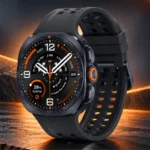
Compared with other Smartwatches, this product is above average in voice assistant quality, smartphone notifications, call handling, near average in battery life, health tracking accuracy, below average in charging speed, stress tracking, Bluetooth connectivity.
| Attribute | This product | Category average | Difference |
|---|---|---|---|
| charging speed | 2.3 | 4.1 | -1.9 |
| stress tracking | 1.8 | 3.5 | -1.8 |
| Bluetooth connectivity | 2.0 | 3.7 | -1.7 |
| menu navigation | 2.3 | 3.9 | -1.6 |
| blood oxygen tracking | 2.0 | 3.4 | -1.4 |
| voice assistant quality | 4.5 | 3.1 | +1.4 |
| value for money | 2.7 | 3.8 | -1.2 |
| companion app quality | 2.5 | 3.8 | -1.3 |
Choose Garmin Venu 3. It scores 4.8 vs 1.8 for stress tracking, with a 4.1 overall score.
Choose OnePlus Watch 3. It scores 4.9 vs 2.0 for blood oxygen tracking, with a 4.0 overall score.
Choose Huawei Watch GT 6 Pro. It scores 4.7 vs 4.0 for battery life, with a 4.0 overall score.
Choose Garmin Vivoactive 6. It scores 4.7 vs 3.8 for comfort, with a 3.9 overall score.
Products reviewers directly compared with this model, grouped into quick takeaways.
Most reviewers reported around two days, with some reaching closer to three days depending on settings and workout use. Several still said it is not long enough for true weekend backcountry use.
Yes. GPS accuracy was one of the strongest points, with reviewers finding accurate routes, fast locks, and solid distance tracking, though dense city environments could still cause issues.
It is generally good for running and many workouts, but not uniformly excellent. Reviewers flagged weaknesses during cycling, rowing, rough surfaces, or specific high-intensity situations.
A Samsung phone is not required for basic use, but reviewers repeatedly noted that features such as ECG, blood pressure, some AI features, or sleep apnea tools depend on Samsung phone support.
Reviewers saw the Ultra as worthwhile mainly for people who value the bigger battery, rugged materials, brighter screen, Quick Button, LTE model, and outdoor-focused build. Many said most Android users get better value from the Watch 7.
It is fine for swimming and held up in surf-style testing, but reviewers warned it is not a true dive watch and is not suitable for high-pressure water sports like scuba diving or jet skiing.
These are a few of the reviews included in our analysis.
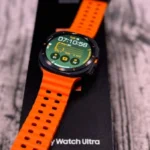




Best for long battery life, accurate GPS and useful offline maps at a strong price. Skip it if you need payments, richer apps, a built-in LED flashlight or polished smartwatch...
Pros: mapping and navigation, value for money
Cons: smartwatch features, contactless payments

Best for accurate run tracking, deep Garmin coaching and phone-free Spotify in a light package. Skip it if you need full maps, triathlon mode, Apple Music support or the strongest...
Pros: value for money, GPS accuracy
Cons: mapping and navigation, third-party app support

Good if you want premium running features, long battery life, and maps for under $200. Skip it if you need flawless heart-rate data, multiband GPS, LTE, or richer app support.
Pros: value for money, battery life
Cons: heart rate accuracy, third-party app support

Best for accurate running metrics, excellent coaching tools, a bright AMOLED display, and dependable battery life. Skip it if you need offline maps, music storage, contactless payments, multi-band GPS, or...
Pros: battery life, value for money
Cons: mapping and navigation, smartwatch features