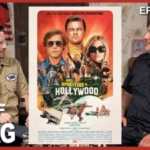
A richly detailed Hollywood time capsule powered by DiCaprio and Pitt’s terrific chemistry. The leisurely, plot-light structure and abruptly graphic finale make it less inviting for viewers seeking a tightly paced story.
Patient cinephiles, vintage Hollywood enthusiasts, and viewers who prioritize expressive acting, production craft and character chemistry over a fast-moving plot.
Plot-first viewers, anyone seeking a short film, and audiences uncomfortable with abrupt graphic violence or a deliberately rewritten historical tragedy.
Verdict
Quentin Tarantino’s affectionate recreation of 1969 Los Angeles is the biggest draw here: neon-lit streets, old television, vintage music and meticulous design create a Hollywood that feels almost touchable. Leonardo DiCaprio brings poignant insecurity to a fading TV star, and Brad Pitt’s unflappable charisma makes their long friendship a pleasure to follow. Margot Robbie supplies a tender counterpoint as Sharon Tate, although her limited dialogue and characterization leave some wanting more. This is much more a meandering hangout movie than a plot-driven thriller, and the extended runtime rewards patience rather than urgency. The climactic burst of graphic violence is the clearest dividing line: some find it audacious and cathartic, while others think it disrupts the film’s elegiac mood. For movie lovers and period-detail enthusiasts, the craft and performances make those risks worthwhile.
Content guidance
Scorata recommended age17+
Strong, graphic and bloody violence erupts late in the film, alongside frequent harsh language, drug and alcohol use, and sexual references. The disturbing Manson-family subject matter also makes it best suited to older teens and adults.
Sharon Tate is presented with warmth, innocence and tenderness, especially in the cinema sequence. Some find the portrait moving, while others wish she had a fuller personality and more to do.
1960s period recreation: 5.0, 17 reviews, strong consensus
Late-1960s Los Angeles feels wonderfully alive through meticulous storefronts, marquees, cars, television clips and radio details. The richly recreated era is one of the movie’s most dependable pleasures.
Performances are an outstanding strength, with expressive leading turns and lively supporting actors. Even viewers frustrated by the story often admire the cast.
The startling alternate-history ending inspires both excitement and disappointment. Its abrupt graphic violence can seem at odds with the movie’s preceding tenderness.
The story works best as an affectionate collection of lives and scenes rather than a tightly driven plot. Several viewers find its loose structure unsatisfying.
DiCaprio gives Rick Dalton a hilarious and touching mixture of vanity, insecurity and fading hope. His acting-within-acting scenes are repeatedly praised.
His affectionate filmmaking and confident genre play are central to the film’s appeal, though the drifting narrative and explosive conclusion also draw criticism.
Robbie gives Sharon Tate warmth and expressive sincerity with limited dialogue. Some praise the tenderness of her work while others find the character underwritten.
Compared with other Movies, this product is above average in writing quality, tonal consistency, realism, near average in nostalgia appeal, pacing, below average in Final confrontation, cultural representation, Portrayal of women.
Comparison summary
46 compared features
Above average0.4+ pts higher
26(57%)
Same as averagewithin 0.3 pts
10(22%)
Below average0.4+ pts lower
10(22%)
Largest category differences
Attribute
This product
Category average
Difference
Final confrontation
2.0
4.7
-2.7
cultural representation
1.0
3.5
-2.5
Portrayal of women
1.0
3.1
-2.1
writing quality
5.0
3.0
+2.0
tonal consistency
5.0
3.2
+1.8
voiceover effectiveness
2.0
3.7
-1.7
realism
5.0
3.3
+1.7
memorability
5.0
3.5
+1.5
Consider This Instead
If you want better cultural representation
Choose The Stunt Driver. It scores 4.8 vs 1.0 for cultural representation, with a 3.9 overall score.
ComparedProvides a reference point for the new film’s familiar style and unusually reflective mood.
BetterConnects its parallel Los Angeles stories more successfully.
BetterHas a sharper, more electrifying narrative drive.
Django Unchained (2012)
WorseFalls short of this film’s more affecting Hollywood portrait.
WorseLess engrossing overall than the new Hollywood-set story.
Jackie Brown (1997)
SimilarAlso favors wistful, unhurried atmosphere over relentless action.
SimilarShares a tender, generous affection for characters rather than constant provocation.
FAQ
Is Once Upon a Time ... in Hollywood worth watching?
Yes for its performances, period detail and affectionate film-world atmosphere. Its leisurely story and provocative ending will not suit everyone.
Is it an action-packed Tarantino movie?
Not for most of its runtime. It spends much more time with the characters and late-sixties Hollywood atmosphere before an abrupt violent climax.
Are Leonardo DiCaprio and Brad Pitt good together?
Their easy chemistry is one of the film’s most celebrated strengths. DiCaprio plays the anxious star against Pitt’s relaxed, charismatic stuntman.
Does it tell the true story of Sharon Tate?
No. It incorporates real Hollywood figures and the shadow of the Manson murders into a consciously fictional, alternate-history fairy tale.
Is the movie slow?
It is deliberately leisurely, with long driving, movie-set and hangout sequences. Some find that immersive, while others think it drags.
Is it appropriate for teenagers?
It carries an R rating and includes strong bloody violence, harsh language, substances and sexual references. It is better suited to older teens and adults.
Sample Expert Reviews We Analyzed
These are a few of the reviews included in our analysis.
Choose this inventive, unsettling documentary for fearless questioning, dark humor, and unpredictable storytelling. Skip it if you want a short, straightforward exposé with definitive answers.
Extraordinary performances and richly observed relationships make this a rewarding, emotionally forceful drama. Its nearly three-hour length and slow opening demand patience and undivided attention.
Best for a hypnotic, bookish mystery with tactile visuals and cerebral chills. Skip it if reading-heavy, attention-demanding storytelling sounds more exhausting than exciting.
Best for an intimate, searching documentary that rewards focused attention and invites discussion. Skip it when devastating grief, addiction footage, and unresolved family tensions would be too much.