
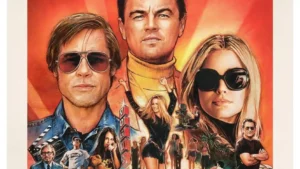
Once Upon a Time … in Hollywood Feature Scores
Overall Scorata score: 4.1/5
Based on 43 analyzed reviews · View source samples
Explore all 52 feature scores for Once Upon a Time … in Hollywood, organized into pros and cons.
Scores by Feature
Summary
52 reviewed features-
Very positive 4.5-5.024 (46%)
-
Positive 3.5-4.411 (21%)
-
Neutral 2.5-3.47 (13%)
-
Negative 1.5-2.48 (15%)
-
Very negative below 1.52 (4%)
Pros
Sort
-
Late-1960s Los Angeles feels wonderfully alive through meticulous storefronts, marquees, cars, television clips and radio details. The richly recreated era is one of the movie’s most dependable pleasures.
-
The movie blends slapstick, character comedy and dark absurdity, with several scenes delivering big laughs even for viewers who find the plot weak.
-
Performances are an outstanding strength, with expressive leading turns and lively supporting actors. Even viewers frustrated by the story often admire the cast.
-
Leonardo DiCaprio brings insecurity and humor to a fading television star, while Brad Pitt contributes effortless confidence and charm. Their performances hold the loose story together.
-
The easygoing connection between DiCaprio and Pitt makes their partnership credible and enjoyable. Their contrasting energies carry lengthy stretches of character-led storytelling.
-
Brief appearances by character actors add texture and sparkle, with several scene-stealing turns in the ranch and studio sequences.
-
Beneath the jokes and show-business trivia lies genuine tenderness about aging, friendship and fleeting fame. The film’s quietest moments often land hardest.
-
Rick and Cliff’s loyal, affectionate companionship is the heart of the film. Their shared history makes even mundane driving and television-watching scenes engaging.
-
The vintage rock, pop and carefully timed song selections deepen the sense of place and the story’s wistful mood.
-
The loving recreation of late-sixties entertainment culture is intoxicating for many. Others regard the backward gaze as indulgent or regressive.
-
Marquees, cars, streetscapes and sets recreate Hollywood at a turning point with remarkable detail. The period immersion often outweighs complaints about the plot.
-
Most find this a funny, visually lush and absorbing movie, despite reservations about its length and uneven payoff.
-
Sunlit streets, twilight neon and lovingly composed period imagery make Los Angeles visually intoxicating. The photography is repeatedly singled out as a major achievement.
-
Striking performances, vivid set pieces and a controversial final act leave a strong impression.
-
Knowledge of the Manson murders adds looming dread to seemingly carefree scenes. Cliff’s tense ranch visit is a particular high point.
-
The Bruce Lee encounter produces a crowd-pleasing comic set piece, though the exaggerated characterization and outcome strike some as disrespectful.
-
A reflection on fame, aging, Hollywood mythmaking and the distance between history and fantasy gives the film more to ponder than its wandering plot suggests.
-
The anxiety of being discarded by a changing entertainment industry adds melancholy and unexpected humanity to Rick’s struggles.
-
Sharon Tate is presented with warmth, innocence and tenderness, especially in the cinema sequence. Some find the portrait moving, while others wish she had a fuller personality and more to do.
-
Rich color, retro signage and a dreamlike cinematic glow create a distinctive visual identity. A few find the images showy rather than meaningful.
-
The Manson followers bring an unsettling menace to the otherwise sunny Hollywood setting. The eerie Spahn Ranch visit is especially effective.
-
The exaggerated Bruce Lee fight is a particularly memorable source of physical comedy, although its characterization is contentious.
-
The script can be playful, surprising and emotionally revealing, although its digressions and weak overall propulsion frustrate plot-first viewers.
-
The blend of fictional film-industry lives with true history can feel audacious and surprising, although its familiar directorial tricks seem predictable to some.
-
There is enough period detail and layered character work to invite another viewing, though its long, wandering structure limits repeat appeal for some.
-
The filmmaking is packed with confident visual and comic flourishes. That confidence sometimes tips into self-indulgence, especially around the ending.
-
A few carefully staged fight scenes have memorable comic energy, even though action is not the film’s main focus.
-
The principal casting makes the fictional Hollywood friendship feel natural, and several supporting performers fit their eccentric parts beautifully.
-
The late-sixties wardrobe is a stylish, sharply observed part of the movie’s period atmosphere.
-
The period setting feels plausible and tactile, even as the plot openly favors stylized fantasy over strict realism.
-
Radio chatter, old advertisements, music and TV audio overlap to create a vivid, lived-in soundscape of 1969.
-
The mix of wistful character drama, broad comedy and sudden extreme violence is daring, but not always comfortable or cohesive.
-
A playful credits surprise offers one more small pleasure for attentive movie fans.
-
Rick’s insecurity and Cliff’s relaxed self-assurance make a memorable pair, although some find the characters too thin or hard to care about.
-
Old Westerns, forgotten television programs and pop-culture callbacks fill almost every scene. Film enthusiasts may revel in the details, though the density can be overwhelming.
Cons
Sort
-
At roughly two hours and forty minutes, the film feels lavishly immersive to some and unnecessarily lengthy to others.
-
The climactic brutality delivers deliberately outrageous shocks, but several find it excessive or tonally disruptive.
-
The celebration of a male-centered Hollywood past and the caricature of Bruce Lee raise concerns about whose stories the film values.
-
Some appreciate the tenderness shown toward Sharon Tate, while others object to how little agency women have and to the camera’s lingering objectification.
-
The movie’s detours can be enjoyable, but some scene transitions and cutaways feel choppy or needlessly prolonged.
-
The occasional explanatory voiceover disrupts the film’s otherwise immersive, show-don’t-tell approach.
-
The alternate-history showdown is designed to be explosive and unexpected, but its extreme brutality and resolution divide opinion.
-
The late use of narration can feel like a clumsy way of connecting the separate storylines.
-
The startling alternate-history ending inspires both excitement and disappointment. Its abrupt graphic violence can seem at odds with the movie’s preceding tenderness.
-
Long stretches of driving, filmmaking and hanging out reward patient viewers, but the middle can feel indulgent or slow.
-
The three parallel Hollywood storylines create an ambitious mosaic, but their eventual connection feels uneven or underdeveloped to some.
-
The story works best as an affectionate collection of lives and scenes rather than a tightly driven plot. Several viewers find its loose structure unsatisfying.
-
Sharon Tate has several striking moments but little dialogue and less time than the male leads; her limited presence is a notable frustration for some.
-
The sudden burst of graphic chaos is an audacious payoff for some and an unpleasant mismatch for others.
-
Rick’s fear of fading relevance gives the film real pathos, while Cliff’s complicated past adds mystery. Sharon’s comparatively limited arc disappoints some viewers.
-
The film deliberately mingles real events and characters with an invented fairy tale; it is more interested in cinematic myth than historical fidelity.
-
There are funny and revealing conversations, but some miss the tight, instantly quotable dialogue of the director’s earlier films.
Use Cases
Best for
Sort
-
Especially rewarding for movie lovers who enjoy old Hollywood, filmmaking lore and dense cinematic references.
-
The film suits viewers happy to spend time with a colorful cast and atmosphere rather than chase a tightly structured plot.
-
A rich playground of Westerns, vintage television and movie-making details for viewers who enjoy spotting cinematic homages.
-
The meticulously restored streets, sets and vintage soundtrack make the period setting an especially satisfying attraction.
-
The film rewards this viewing approach when its character-driven atmosphere and period detail suit the audience.
-
Its controversial ending, historical fantasy and competing views of nostalgia offer plenty to debate afterward.
-
Hollywood-history fans can relish the recreated culture and locations, as long as they accept its invented alternate history.
-
The film rewards this viewing approach when its character-driven atmosphere and period detail suit the audience.
-
Its period references are dense, but an inviting tone makes the film accessible without encyclopedic movie knowledge.
Conditional or not ideal for
Sort
-
Character-focused viewingThe film rewards this viewing approach when its character-driven atmosphere and period detail suit the audience.
-
Patient viewingThose comfortable with a long, leisurely movie are most likely to enjoy the atmosphere and friendship between the leads.
-
Straightforward-story viewingAnyone wanting a direct, tightly constructed story may find the relaxed, meandering narrative frustrating.
Cast & Creators
-
Cliff BoothPitt’s swagger, ease and comic confidence make Cliff Booth a standout. His relaxed charisma anchors many of the film’s most entertaining moments.
-
Rick DaltonDiCaprio gives Rick Dalton a hilarious and touching mixture of vanity, insecurity and fading hope. His acting-within-acting scenes are repeatedly praised.
-
DirectorHis affectionate filmmaking and confident genre play are central to the film’s appeal, though the drifting narrative and explosive conclusion also draw criticism.
-
Sharon TateRobbie gives Sharon Tate warmth and expressive sincerity with limited dialogue. Some praise the tenderness of her work while others find the character underwritten.
-
ActorButters shines as the precocious child actor whose confidence and candor draw surprising vulnerability from Rick.
-
Marvin SchwarzPacino’s enthusiastic agent cameo brings lively comic energy, although its length draws some criticism.
-
Squeaky FrommeFanning makes Squeaky Fromme chilling and intimidating during the tense Spahn Ranch sequence.
-
PussycatQualley gives Pussycat a vibrant, disquieting energy that makes her brief appearances stick.
-
CinematographerRichardson’s richly colored photography gives late-sixties Los Angeles much of its dreamy, seductive appeal.
-
ActorRussell adds gruff personality to a brief flashback and a warmly weathered quality to the narration.
-
Bruce LeeMoh’s heightened Bruce Lee performance brings energy to a memorable comic fight scene, though the depiction itself is divisive.
-
Costume DesignerPhillips’ stylish costumes are a major part of the film’s immersive period look.
-
Steve McQueenLewis adds a recognizable Steve McQueen appearance to the movie’s lively Hollywood world.
-
Sound DesignerCohen’s intricate sound work mixes period radio, advertisements, music and television chatter into an absorbing backdrop.
-
Francesca CapucciIzzo brings a spirited energy to her role as an Italian actress.
-
ActorPerry earns praise for a short but effective supporting performance.
-
SadieMadison gives the looming Manson threat a fearsome intensity.