If you want better core gameplay loop
Choose It Takes Two. It scores 5.0 vs 2.5 for core gameplay loop, with a 4.5 overall score.

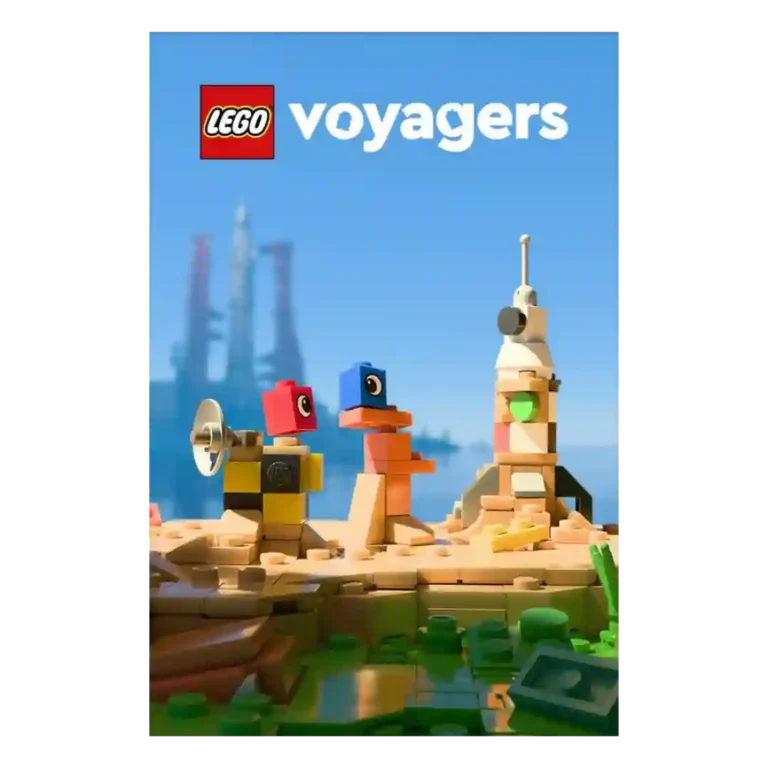
Choose Lego Voyagers for a short, cozy two-player LEGO adventure with heartfelt co-op charm. Skip it if you need deep puzzles, strong replay value, tight platforming, or lots of content for the price.
Best for pairs who want a relaxed, heartfelt co-op evening built around LEGO charm, gentle puzzles, and shared discovery. It especially suits families, partners, and mixed-skill players who value mood over difficulty.
Not for solo players, challenge seekers, or anyone expecting a long, replayable co-op game with deep puzzle variety. It is also less ideal for players sensitive to fiddly platforming, fixed-camera depth issues, glare, or screen shake.
Lego Voyagers lands as a charming, unusually sincere co-op puzzle-platformer built around teamwork, creativity, and the simple pleasure of moving through a gorgeous brick-built world together. Reviewers consistently praised its art direction, music, forgiving respawns, and wordless emotional story, with several calling it memorable despite its tiny scale. The main tradeoff is that the same simplicity that makes it approachable can also limit it: puzzles often revolve around bridges, steps, and light coordination, while fiddly controls, fixed-camera depth issues, and sparse replay incentives frustrated some players. Its best moments come when two players communicate, experiment, and share the journey rather than chase challenge or longevity.
Compared with other Video Games, this product is above average in save system reliability, checkpoint system, family friendliness, near average in soundtrack quality, fun factor, below average in visual effects quality, replay value, core gameplay loop.
| Attribute | This product | Category average | Difference |
|---|---|---|---|
| visual effects quality | 2.3 | 4.3 | -2.0 |
| save system reliability | 4.8 | 3.0 | +1.8 |
| replay value | 2.5 | 4.0 | -1.6 |
| checkpoint system | 5.0 | 3.5 | +1.5 |
| family friendliness | 4.8 | 3.4 | +1.4 |
| writing quality | 5.0 | 3.6 | +1.4 |
| core gameplay loop | 2.5 | 3.9 | -1.4 |
| menu usability | 1.8 | 3.0 | -1.2 |
Choose It Takes Two. It scores 5.0 vs 2.5 for core gameplay loop, with a 4.5 overall score.
Choose Shinobi: Art of Vengeance. It scores 5.0 vs 1.8 for menu usability, with a 4.4 overall score.
Choose TOEM 2. It scores 5.0 vs 2.2 for user interface design, with a 4.4 overall score.
Choose Super Mario Bros. Wonder: Nintendo Switch 2 Edition + Meetup in Bellabel Park. It scores 4.9 vs 3.2 for controls responsiveness, with a 3.9 overall score.
Products reviewers directly compared with this model, grouped into quick takeaways.
No. Reviewers repeatedly describe it as a mandatory two-player co-op game, with no solo or bot companion option.
Most reviews describe it as very short, commonly around three to five hours, though slower or younger pairs may take longer.
Reviewers generally found it family-friendly and approachable, but several warned that some platforming, vehicle control, and later puzzles may be tricky for younger children.
Usually no. Many reviewers called the puzzles simple, gentle, or easy to understand, though a few noted occasional difficulty spikes and repetitive bridge-building.
The most consistent strengths are cozy two-player cooperation, beautiful LEGO diorama visuals, a mellow soundtrack, forgiving respawns, and a surprisingly emotional wordless story.
Common complaints include the short runtime, limited replay value, fiddly controls, depth-perception issues, repetitive puzzle ideas, and occasional performance or visual-effect problems.
Yes. Multiple reviewers praised that only one player needs to own the game for online co-op, which helped its value despite the short length.
These are a few of the reviews included in our analysis.

Best for fluid traversal, rewarding exploration, striking art, and forgiving quality-of-life features. Skip it if you want deep combat, radical genre innovation, or consistently demanding bosses.
Pros: difficulty balance, boss design
Cons: innovation, sandbox freedom

Good if you want fast, tactical roguelite combat with huge progression depth, striking art, and standout music. Skip it if repetition, resource micromanagement, or a less emotionally satisfying sequel story...
Pros: combat system, progression system
Cons: originality

Good if you want a beautiful, demanding survival sandbox built around exploration, building, progression, and memorable co-op. Skip it if long resource runs, harsh death recovery, and deliberate pacing sound...
Pros: town-building system, exploration quality
Cons: grind level, fast travel convenience

Best for joyful destruction, dense exploration, and a charming DK-Pauline adventure. Skip it if camera quirks, frame-rate dips, easy bosses, or premium Switch 2 pricing are dealbreakers.
Pros: fun factor, world interactivity
Cons: frame rate stability, boss design