If you want better protagonist appeal
Choose Donkey Kong Bananza. It scores 4.7 vs 2.4 for protagonist appeal, with a 4.4 overall score.

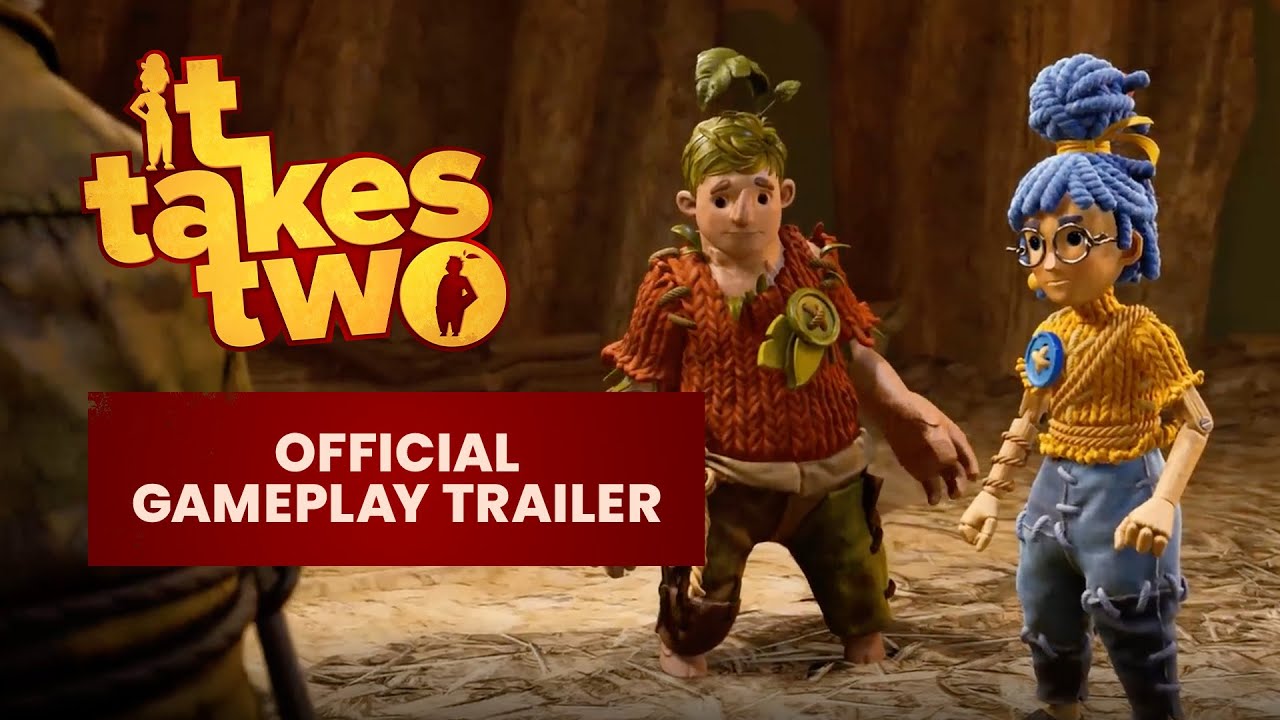
Choose It Takes Two for creative, constantly changing two-player fun, especially with a patient partner. Skip it if you need solo play, demanding challenges, or a consistently convincing relationship story.
Two-player partners, especially couples, close friends, and beginners learning alongside an experienced gamer, benefit from the inventive cooperative challenges. Couch co-op is a particular highlight, and online friends can share the adventure.
Solo players cannot progress at all, and challenge seekers may find the forgiving campaign too easy. Players sensitive to divorce themes or disturbing moments, and pairs frustrated by mismatched skill levels, should be cautious.
It Takes Two builds almost every encounter around genuine cooperation, giving each player complementary powers and refreshing those powers before they become stale. Its toy-sized environments overflow with amusing interactions, clever puzzles, memorable bosses, and optional competitive mini-games. Responsive platforming, generous checkpoints, and an inviting learning curve make it especially appealing for mixed-skill pairs, while Friend’s Pass adds value for online partners. The biggest division is its story: some find the troubled marriage sincere and affecting, while others dislike the bickering protagonists, intrusive love-book character, and disturbing tonal shifts. Partner patience also matters, since a struggling player cannot simply be left behind. Switch players gain portability but sacrifice sharp visuals. For two people willing to collaborate, the mechanical creativity is exceptional even when the narrative misfires.
Cartoon combat includes explosions and a particularly distressing scene in which a pleading toy is torn apart, along with brief blood imagery. Divorce and family distress, some coarse language, and mildly suggestive behavior make this better suited to teens.
Compared with other Video Games, this product is above average in HUD clarity, monetization fairness, tutorial quality, near average in narrative quality, co-op role balance, below average in narrative tone consistency, solo play quality, violence level.
| Attribute | This product | Category average | Difference |
|---|---|---|---|
| narrative tone consistency | 1.0 | 3.8 | -2.8 |
| solo play quality | 1.0 | 3.7 | -2.7 |
| violence level | 2.0 | 4.2 | -2.2 |
| HUD clarity | 5.0 | 3.1 | +1.9 |
| monetization fairness | 5.0 | 3.2 | +1.8 |
| cutscene visual quality | 2.0 | 3.8 | -1.8 |
| tutorial quality | 5.0 | 3.2 | +1.8 |
| checkpoint system | 5.0 | 3.5 | +1.5 |
Choose Donkey Kong Bananza. It scores 4.7 vs 2.4 for protagonist appeal, with a 4.4 overall score.
Choose Nintendo Switch Sports Resort. It scores 4.7 vs 2.6 for family friendliness, with a 4.1 overall score.
Choose TOEM 2. It scores 5.0 vs 2.0 for violence level, with a 4.4 overall score.
Choose SiN: Reloaded. It scores 5.0 vs 1.0 for solo play quality, with a 4.3 overall score.
Compared with It Takes Two
No. Every level and progression puzzle is built for two human players, with no solo campaign.
Often yes: coordinating complementary abilities creates memorable moments of teamwork. However, its divorce plot and the pressure of waiting for a partner can be uncomfortable for some pairs.
Yes, the early chapters introduce straightforward controls and gradually build skills. More demanding platforming sequences still require some patience from both players.
The adventure supports online co-op and Friend’s Pass, which allows an invited friend to join without buying a second full copy. Local couch play is also a major strength.
Its cheerful visuals can be misleading: mature marriage themes, coarse language, and an upsetting toy-elephant scene make it better suited to teenagers than young children.
It adds portable, local wireless, and online play options with generally smooth performance. Image quality is noticeably lower, especially in cutscenes and on a large TV.
Many describe around 10–15 hours, with some longer playthroughs. Swapping characters offers different abilities, while collectible competitive mini-games give you extra reasons to return.
These are a few of the reviews included in our analysis.





Best for fluid traversal, rewarding exploration, striking art, and forgiving quality-of-life features. Skip it if you want deep combat, radical genre innovation, or consistently demanding bosses.
Pros: difficulty balance, boss design
Cons: innovation, sandbox freedom

Best for superb combat, inventive builds, and richly voiced characters. Skip it if repeated runs, resource gathering, or visually busy battles outweigh the appeal of steady progress.
Pros: overall quality, combat system
Cons: pacing, grind level

Good if you want a beautiful, demanding survival sandbox built around exploration, building, progression, and memorable co-op. Skip it if long resource runs, harsh death recovery, and deliberate pacing sound...
Pros: town-building system, exploration quality
Cons: grind level, fast travel convenience

Leonida is a breathtakingly alive crime sandbox with memorable protagonists, spectacular heists, and extraordinary detail. The tradeoff is a 30 fps ceiling, occasional control awkwardness, and some progression friction.
Pros: immersion, graphics quality
Cons: grind level, controls responsiveness