If you want better exploration quality
Choose It Takes Two. It scores 5.0 vs 2.2 for exploration quality, with a 4.4 overall score.

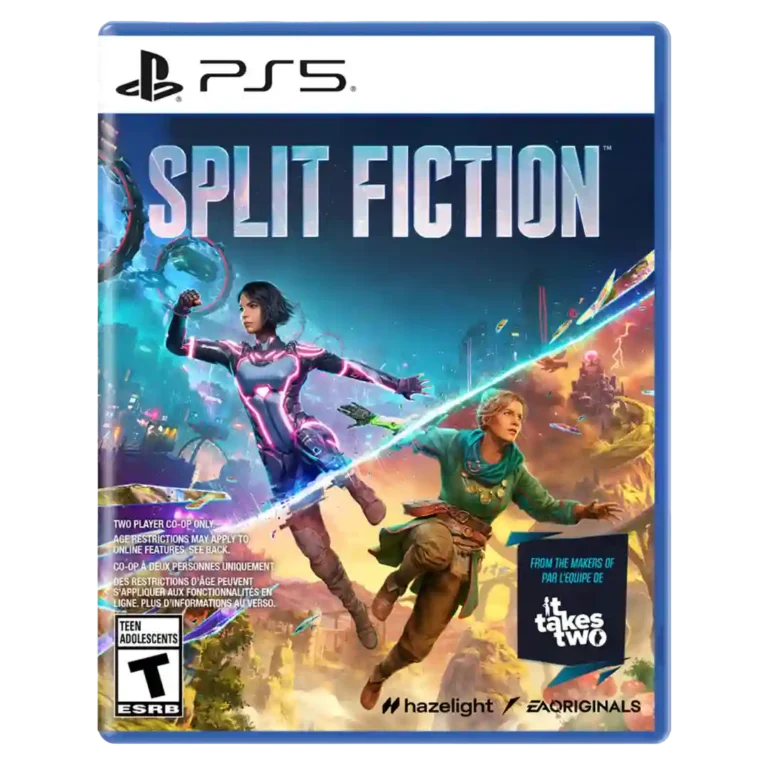
Choose Split Fiction for inventive two-player co-op, rapid gameplay variety, and memorable set pieces. Skip it if you need solo play, polished writing, or an easier casual-partner experience.
Best for two players who enjoy active communication, puzzle-platforming, rapid genre shifts, and set-piece-driven co-op. It especially suits pairs who can laugh through trial-and-error moments.
Not for players who need a solo mode, deep progression, open exploration, or consistently strong writing. Casual partners may also find some combat, platforming, and boss sections more demanding than expected.
Split Fiction’s reviews point to a standout co-op adventure built on constant reinvention, generous checkpoints, strong presentation, and unusually committed two-player design. Reviewers repeatedly praised the side stories, puzzle cooperation, set pieces, and finale as inventive highlights that keep the experience fresh. The main tradeoff is that the same maximalist pace and co-op dependence can expose weaker writing, predictable character beats, and tougher demands on less experienced partners. Switch 2 impressions add another caveat: portability and local convenience are valuable, but visuals and frame rate take hits. Overall, the evidence favors Split Fiction as a highly polished, joy-forward co-op showcase with storytelling and platform-specific rough edges.
Compared with other Video Games, this product is above average in platforming precision, online stability, puzzle design, near average in narrative quality, art direction, below average in exploration quality, side character depth, writing quality.
| Attribute | This product | Category average | Difference |
|---|---|---|---|
| exploration quality | 2.2 | 4.0 | -1.8 |
| side character depth | 2.3 | 3.7 | -1.4 |
| platforming precision | 4.5 | 3.1 | +1.4 |
| writing quality | 2.4 | 3.6 | -1.2 |
| world interactivity | 2.5 | 3.9 | -1.4 |
| online stability | 4.3 | 3.1 | +1.2 |
| puzzle design | 4.8 | 3.7 | +1.1 |
| pacing | 4.2 | 3.2 | +1.0 |
Choose It Takes Two. It scores 5.0 vs 2.2 for exploration quality, with a 4.4 overall score.
Choose Lego Batman: Legacy of the Dark Knight. It scores 5.0 vs 4.2 for pacing, with a 4.2 overall score.
Choose Hyrule Warriors: Age of Imprisonment. It scores 4.9 vs 3.4 for voice acting, with a 4.1 overall score.
Choose Shinobi: Art of Vengeance. It scores 5.0 vs 4.6 for graphics quality, with a 4.4 overall score.
Compared with Split Fiction
No. Reviewers repeatedly describe it as a co-op-only game built around two human players working together.
Yes. Reviews praised both local and online co-op, with several calling the shared-play experience the game’s main strength.
It is forgiving thanks to fast respawns and generous checkpoints, but reviewers also said it is more demanding than It Takes Two and can challenge casual partners.
Yes. Multiple reviewers called the side stories some of the most creative, memorable, or joyful parts of the game.
Reviewers were split. Some liked the friendship arc and emotional moments, while others criticized the predictable plot, cliches, and weak villain.
Switch 2 impressions valued portability, tabletop play, and Game Share, but noted lower visual detail and occasional frame-rate dips.
These are a few of the reviews included in our analysis.






Best for fluid traversal, rewarding exploration, striking art, and forgiving quality-of-life features. Skip it if you want deep combat, radical genre innovation, or consistently demanding bosses.
Pros: difficulty balance, boss design
Cons: innovation, sandbox freedom

Best for superb combat, inventive builds, and richly voiced characters. Skip it if repeated runs, resource gathering, or visually busy battles outweigh the appeal of steady progress.
Pros: overall quality, combat system
Cons: pacing, grind level

Good if you want a beautiful, demanding survival sandbox built around exploration, building, progression, and memorable co-op. Skip it if long resource runs, harsh death recovery, and deliberate pacing sound...
Pros: town-building system, exploration quality
Cons: grind level, fast travel convenience

Leonida is a breathtakingly alive crime sandbox with memorable protagonists, spectacular heists, and extraordinary detail. The tradeoff is a 30 fps ceiling, occasional control awkwardness, and some progression friction.
Pros: immersion, graphics quality
Cons: grind level, controls responsiveness