If you want better fold-flat handle
Choose Grecell T-1000. It scores 5.0 vs 1.0 for fold-flat handle, with a 4.1 overall score.

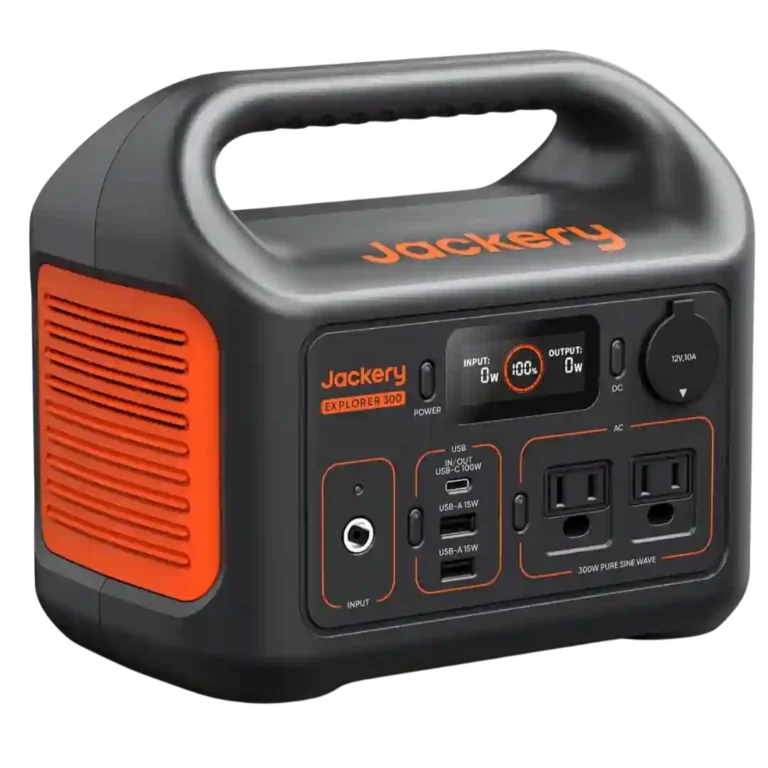
Choose it for lightweight camping, road trips and backup power for phones, laptops, cameras and lights. Skip it for heaters, cooking appliances, long fridge runtime or daily cycling where newer LiFePO4 models offer better longevity.
Weekend campers, photographers, road-trippers, van travelers and households wanting compact backup for phones, laptops, lights and other low-watt electronics benefit most from its portability and flexible charging.
Skip it for high-draw appliances, whole-home backup, frequent daily cycling, wet-weather exposure or air travel. Buyers prioritizing long cycle life should consider a newer LiFePO4 model.
The Explorer 300 earns unusually consistent praise for portability, simple controls, solid construction and flexible charging. At about 7.1 pounds, it is genuinely easy to carry, while USB-C PD, dual-input charging, solar support and two AC outlets make the small chassis practical for camping, photography and light outage duty. The tradeoff is equally consistent: 300W continuous output rules out many heaters, cooking appliances and tools, and the 293Wh battery is not designed for whole-home backup or long appliance runtime. Its older NMC chemistry also trails newer LiFePO4 rivals in cycle life. For occasional portable power, the balance remains compelling; frequent users may get better long-term value from a newer LFP model.
Compared with other Generators, this product is above average in weight, instruction quality, DC output, near average in battery capacity, value for money, below average in fold-flat handle, high-demand appliance support, rated output.
| Attribute | This product | Category average | Difference |
|---|---|---|---|
| fold-flat handle | 1.0 | 4.4 | -3.4 |
| high-demand appliance support | 1.3 | 4.1 | -2.7 |
| rated output | 2.0 | 4.8 | -2.8 |
| remaining runtime estimate | 1.4 | 4.0 | -2.6 |
| expandability | 1.0 | 3.6 | -2.6 |
| battery expandability | 1.0 | 3.5 | -2.5 |
| battery cycle life | 2.5 | 4.7 | -2.2 |
| battery chemistry | 2.6 | 4.6 | -2.0 |
Choose Grecell T-1000. It scores 5.0 vs 1.0 for fold-flat handle, with a 4.1 overall score.
Choose EcoFlow River 2. It scores 5.0 vs 2.5 for battery cycle life, with a 4.0 overall score.
Choose Bluetti Pioneer Na. It scores 5.0 vs 1.4 for remaining runtime estimate, with a 3.9 overall score.
Choose Jackery Explorer 1000 V2. It scores 4.8 vs 1.9 for built-in light, with a 4.4 overall score.
Products reviewers directly compared with this model, grouped into quick takeaways.
It is best with phones, laptops, cameras, lights, fans, routers and other low-watt electronics. Reviewers repeatedly warn that its 300W continuous ceiling rules out many heaters, kettles, coffee makers, air fryers and power tools.
AC-only charging is commonly reported around 3.5–4.5 hours. Using the wall adapter and USB-C together can reach about 80% in roughly two hours, while solar commonly takes about 5–6 hours in good conditions.
Yes. Jackery’s SolarSaga panels pair smoothly, and several reviewers also used compatible third-party panels, though connector requirements can mean adapters or extra setup.
It works well for short, light backup needs such as phones, lights, a router, laptops and some CPAP setups. It is not a whole-home backup station and should not be counted on for high-draw appliances.
The original model uses NMC lithium-ion chemistry and is commonly cited around 500 cycles to 80% capacity. Reviewers note that newer LiFePO4 competitors can offer several times more cycle life.
It is very quiet at light loads and the fan is usually modest under heavier use. It is not waterproof or water-resistant, so it needs protection from rain and moisture.
These are a few of the reviews included in our analysis.


Small battery, sane price, no pretensions. The Explorer 300 is a phone-and-laptop machine, and it is honest about that. Ask it to run a...
I tested the Jackery Explorer 300 for 8 months. See real numbers on runtime, solar charging speed, and weight. Find out if this 293 Wh unit...
Over the past five years, the Jackery Explorer 300 has quietly become one of the most dependable pieces of gear in our entire vanlife setup...
Looking for honest Jackery Explorer 300 reviews? We test the 293Wh lithium battery for camping, hunting, and blackouts. See if this portable...
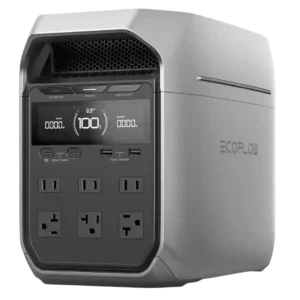
Best for rapid charging, versatile ports, excellent app control, and portable backup for appliances or electronics. Skip it for unattended low-load use or sustained heavy loads unless fan behavior and...
Pros: rated output, peak output
Cons: 30-amp output, parallel operation support
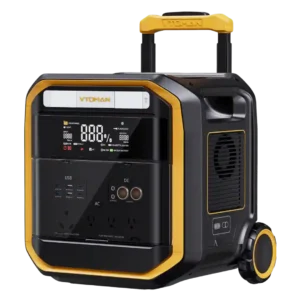
Best for fast-charging, high-output backup power that can run major appliances and roll easily between locations. Skip it if you need frequent lifting, a small footprint, or a screen that...
Pros: power output, surge capacity
Cons: specification accuracy, peak output
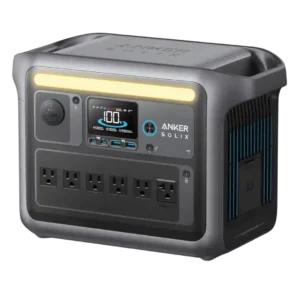
Best for fast charging, strong portable output, and short outage or camping duty. Skip it for quiet rooms, multi-day whole-home backup, or solar-only use with small panels.
Pros: power output, rated output
Cons: dual-input charging, cable storage
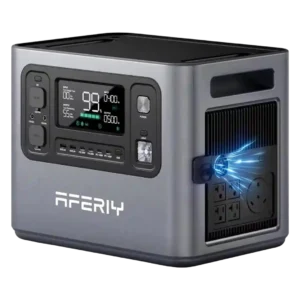
Choose the P280 for high-output home, RV, or off-grid backup with fast charging, strong usable capacity, UPS protection, and expansion. Skip it if you need lightweight portability, polished app control,...
Pros: rated output, peak output
Cons: app connectivity, voltage regulation