If you want better checkpoint system
Choose Shinobi: Art of Vengeance. It scores 5.0 vs 2.2 for checkpoint system, with a 4.4 overall score.

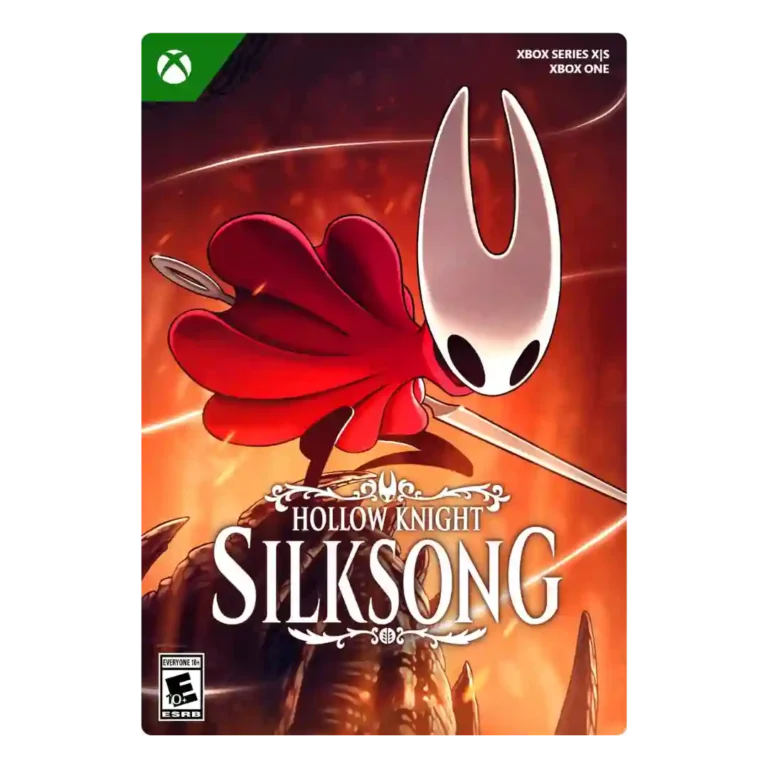
Choose Silksong for a gorgeous, demanding Metroidvania with superb movement, bosses, music, and secrets. Skip it when long runbacks, sparse checkpoints, resource grinding, or limited accessibility options would turn challenge into frustration.
Best for players who enjoy demanding Metroidvanias built around mastery, exploration, precision movement, and repeated boss attempts. Completionists also benefit from the dense map, optional endings, and many hidden routes.
Not for players who want generous checkpoints, broad accessibility options, low-stress exploration, or frequent material rewards after every challenge. Reviewers repeatedly warn that runbacks, currency loss, and early friction can sour the experience.
Across the supplied reviews, Silksong emerges as an exceptionally crafted sequel whose strongest traits are movement, combat, exploration, art direction, music, and world-building. Reviewers repeatedly praise Hornet’s speed, the dense map, choreographed bosses, and the sense that Pharloom rewards curiosity. The tradeoff is that the same conviction also creates friction: sparse benches, runbacks, punishing two-mask damage, resource pressure, and some opaque progression can make the game feel cruel or exhausting. It is widely treated as a top-tier Metroidvania, but not a frictionless one; its best moments depend on a willingness to learn, retreat, experiment, and endure.
Compared with other Video Games, this product is above average in endgame content, writing quality, movement feel, near average in fun factor, progression system, below average in accessibility options, loot system, crafting system.
| Attribute | This product | Category average | Difference |
|---|---|---|---|
| accessibility options | 2.0 | 3.8 | -1.8 |
| endgame content | 5.0 | 3.5 | +1.5 |
| loot system | 2.0 | 3.4 | -1.4 |
| writing quality | 5.0 | 3.6 | +1.4 |
| crafting system | 2.2 | 3.7 | -1.5 |
| checkpoint system | 2.2 | 3.5 | -1.3 |
| movement feel | 4.9 | 3.8 | +1.1 |
| value for money | 4.9 | 3.8 | +1.1 |
Choose Shinobi: Art of Vengeance. It scores 5.0 vs 2.2 for checkpoint system, with a 4.4 overall score.
Choose Clair Obscur: Expedition 33. It scores 4.9 vs 2.8 for onboarding experience, with a 4.5 overall score.
Choose Donkey Kong Bananza. It scores 4.8 vs 4.1 for map and navigation design, with a 4.5 overall score.
Choose SPRAWL zero. It scores 5.0 vs 2.0 for accessibility options, with a 4.0 overall score.
Products reviewers directly compared with this model, grouped into quick takeaways.
Most reviewers say it is harder or more punishing, especially early on. Several still argue the challenge is intentional and rewarding once players explore, learn patterns, and experiment with tools.
The strongest praise goes to Hornet’s movement, combat, exploration, boss design, art direction, soundtrack, and world-building. Reviewers repeatedly describe Pharloom as beautiful, dense, and rewarding to uncover.
The recurring complaints are long runbacks, sparse or paid benches, heavy two-mask damage, stingy currency and shard balance, occasional grind, and limited accessibility options.
Yes. Reviews say prior Hollow Knight knowledge enhances callbacks and context, but Hornet’s story and Pharloom’s world can be understood as their own adventure.
Reviewers are very positive on Hornet. They praise her speed, charisma, dialogue, and stronger narrative presence compared with the silent Knight.
Yes. Reviewers mention optional endings, additional zones, bosses, secrets, and completion goals, though some criticize how opaque certain requirements can be.
These are a few of the reviews included in our analysis.


Best for fluid traversal, rewarding exploration, striking art, and forgiving quality-of-life features. Skip it if you want deep combat, radical genre innovation, or consistently demanding bosses.
Pros: difficulty balance, boss design
Cons: innovation, sandbox freedom

Good if you want fast, tactical roguelite combat with huge progression depth, striking art, and standout music. Skip it if repetition, resource micromanagement, or a less emotionally satisfying sequel story...
Pros: combat system, progression system
Cons: originality

Good if you want a beautiful, demanding survival sandbox built around exploration, building, progression, and memorable co-op. Skip it if long resource runs, harsh death recovery, and deliberate pacing sound...
Pros: town-building system, exploration quality
Cons: grind level, fast travel convenience

Best for joyful destruction, dense exploration, and a charming DK-Pauline adventure. Skip it if camera quirks, frame-rate dips, easy bosses, or premium Switch 2 pricing are dealbreakers.
Pros: fun factor, world interactivity
Cons: frame rate stability, boss design