If you want better GPS accuracy
Choose Garmin Forerunner 965. It scores 4.7 vs 4.2 for GPS accuracy, with a 3.9 overall score.

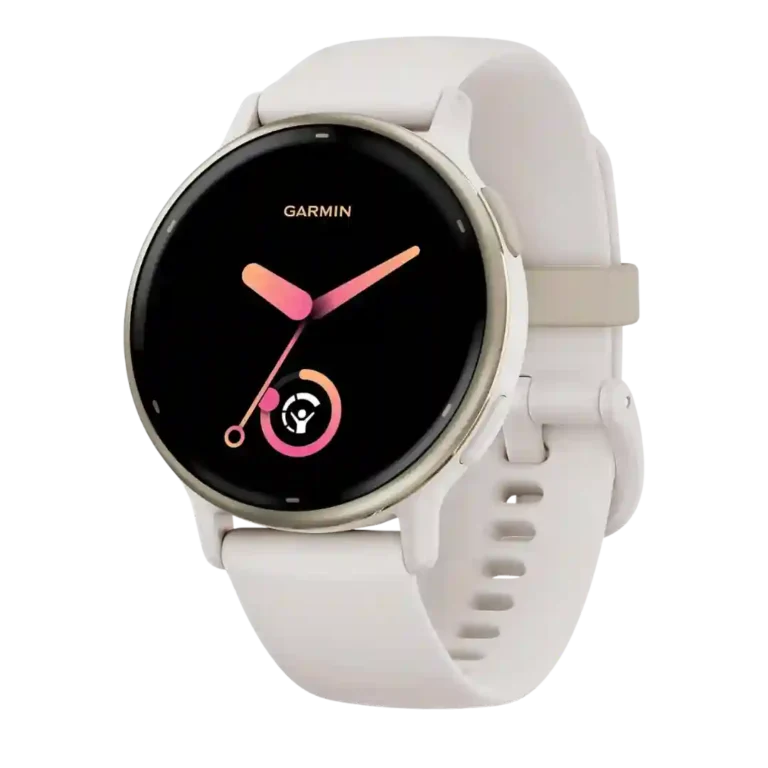
Choose the Garmin Vivoactive 5 for a light, fitness-first smartwatch with strong battery, GPS, and wellness insights. Skip it if you need richer apps, calls, advanced navigation, or top-tier training metrics.
Best for health-conscious users who want a lightweight Garmin with long battery life, accurate-enough GPS, strong daily wellness tools, and more sports tracking than a basic fitness band.
Not for users who need a premium smartwatch ecosystem, on-wrist calls, voice assistant support, ECG, LTE, advanced navigation, or Garmin’s deepest running and training analysis.
Reviewers describe the Garmin Vivoactive 5 as a strong midrange fitness smartwatch built around a bright AMOLED display, light comfort, long battery life, reliable GPS, and useful wellness tools like Body Battery, stress tracking, and sleep coaching. The main tradeoff is that it feels less premium and less complete than Garmin’s higher-end models or full smartwatch rivals: app support is limited, call and voice-assistant features are missing, navigation is basic, and advanced training analysis is thinner. Sleep and heart-rate accuracy are generally useful but not uniformly reliable, especially during stages, wakefulness, and high-intensity intervals.
Compared with other Smartwatches, this product is above average in cross-platform compatibility, music controls, onboard music storage, near average in touchscreen responsiveness, coaching features, below average in software smoothness, build quality, materials quality.
| Attribute | This product | Category average | Difference |
|---|---|---|---|
| software smoothness | 1.5 | 4.0 | -2.5 |
| build quality | 2.8 | 4.3 | -1.6 |
| materials quality | 2.5 | 4.0 | -1.5 |
| activity auto-detection | 2.5 | 3.7 | -1.2 |
| mapping and navigation | 2.3 | 3.4 | -1.2 |
| menu navigation | 2.8 | 3.8 | -1.1 |
| call handling | 2.3 | 3.3 | -1.1 |
| cross-platform compatibility | 4.5 | 3.5 | +1.0 |
Choose Garmin Forerunner 965. It scores 4.7 vs 4.2 for GPS accuracy, with a 3.9 overall score.
Choose Amazfit Active 2. It scores 4.7 vs 2.8 for build quality, with a 4.0 overall score.
Choose Garmin Epix Pro (Gen 2). It scores 4.7 vs 2.3 for mapping and navigation, with a 4.2 overall score.
Choose Amazfit Bip 6. It scores 4.7 vs 3.9 for value for money, with a 3.7 overall score.
Products reviewers directly compared with this model, grouped into quick takeaways.
Yes. Reviewers consistently found its GPS, sports modes, step tracking, and general fitness tracking strong for everyday workouts, running, cycling, swimming, and gym use.
Heart rate tracking is generally good, especially for steady workouts, but some reviewers saw lag, spikes, or errors during intervals and high-intensity efforts.
Battery life is a major strength. Reviewers commonly reported several days to about a week depending on GPS use, notifications, and whether the always-on display was enabled.
Not consistently. Reviewers liked the light, comfortable design, but several criticized the plastic body, aluminum bezel, or plain build compared with pricier watches.
It can for users who prioritize fitness, battery life, and wellness insights, but it falls short for richer third-party apps, calls, voice assistants, and broader smartwatch polish.
Sleep tracking is mixed. Some reviewers praised nap detection and useful sleep coaching, while others found wakefulness, duration, or sleep-stage accuracy less reliable.
These are a few of the reviews included in our analysis.




Best for long battery life, accurate GPS and useful offline maps at a strong price. Skip it if you need payments, richer apps, a built-in LED flashlight or polished smartwatch...
Pros: mapping and navigation, value for money
Cons: smartwatch features, contactless payments

Best for accurate run tracking, deep Garmin coaching and phone-free Spotify in a light package. Skip it if you need full maps, triathlon mode, Apple Music support or the strongest...
Pros: value for money, GPS accuracy
Cons: mapping and navigation, third-party app support

Good if you want premium running features, long battery life, and maps for under $200. Skip it if you need flawless heart-rate data, multiband GPS, LTE, or richer app support.
Pros: value for money, battery life
Cons: heart rate accuracy, third-party app support

Best for accurate running metrics, excellent coaching tools, a bright AMOLED display, and dependable battery life. Skip it if you need offline maps, music storage, contactless payments, multi-band GPS, or...
Pros: battery life, value for money
Cons: mapping and navigation, smartwatch features