If you want better pairing reliability
Choose Garmin MARQ Gen 2. It scores 4.8 vs 2.7 for pairing reliability, with a 4.2 overall score.

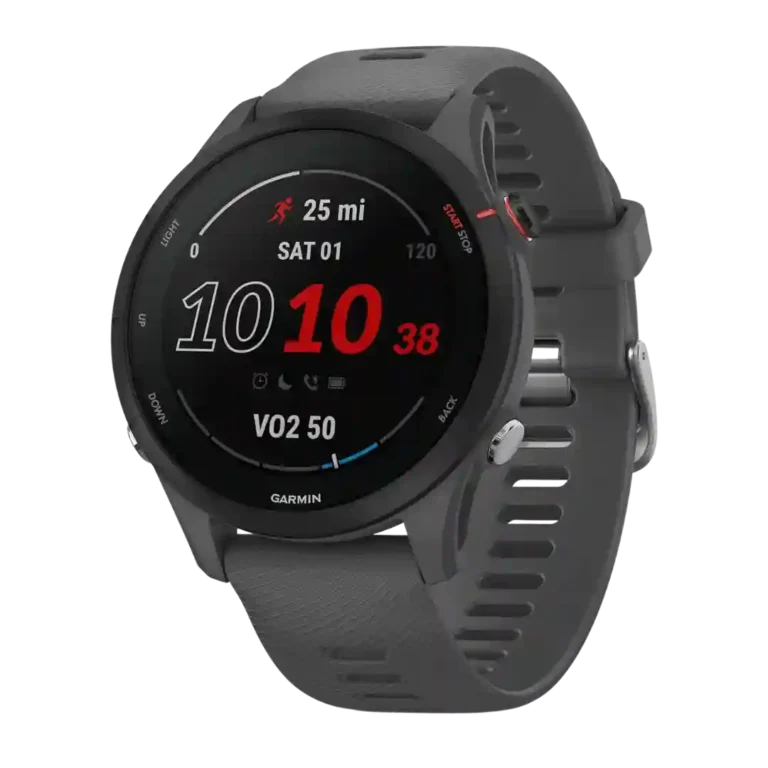
Choose the Garmin Forerunner 255 for accurate GPS, long battery life, comfort, and serious run/triathlon training tools. Skip it if you need full maps, richer smartwatch apps, calls, or a brighter AMOLED-style experience.
Best for runners, triathletes, and data-focused fitness users who want accurate GPS, strong battery life, comfort, race planning, and Garmin's training ecosystem without paying for a higher-end mapping watch.
Not for buyers who prioritize full maps, calls, a large smartwatch app ecosystem, AMOLED-style brightness, or the simplest possible interface. It is also less ideal if Training Readiness is a must-have metric.
Reviewers consistently frame the Garmin Forerunner 255 as a major upgrade for runners and emerging triathletes: GPS accuracy, battery life, comfort, race-focused coaching, HRV/Morning Report insights, and Garmin Connect depth all receive strong support. The main tradeoff is that it behaves like a serious sports watch first and a smartwatch second. Its MIP display is excellent outdoors but less flashy than AMOLED, mapping is mostly breadcrumb-level, and richer smartwatch tools such as calls, broad apps, and Training Readiness are either limited or absent. That balance makes it highly compelling for training value, less so for buyers who want a lifestyle smartwatch.
Compared with other Smartwatches, this product is above average in size options, onboard music storage, third-party app support, near average in workout tracking variety, smartphone notifications, below average in pairing reliability, stress tracking, app ecosystem.
| Attribute | This product | Category average | Difference |
|---|---|---|---|
| size options | 4.5 | 3.1 | +1.3 |
| onboard music storage | 4.2 | 2.9 | +1.3 |
| pairing reliability | 2.7 | 4.1 | -1.4 |
| third-party app support | 4.5 | 3.2 | +1.3 |
| cross-platform compatibility | 4.8 | 3.5 | +1.3 |
| stress tracking | 2.3 | 3.5 | -1.2 |
| app ecosystem | 2.5 | 3.6 | -1.1 |
| brightness | 3.1 | 4.2 | -1.1 |
Choose Garmin MARQ Gen 2. It scores 4.8 vs 2.7 for pairing reliability, with a 4.2 overall score.
Choose Garmin Epix Pro (Gen 2). It scores 4.7 vs 2.7 for mapping and navigation, with a 4.2 overall score.
Choose Garmin Forerunner 165. It scores 5.0 vs 3.2 for smartphone notifications, with a 4.3 overall score.
Choose Garmin Forerunner 265. It scores 5.0 vs 3.1 for brightness, with a 4.0 overall score.
Products reviewers directly compared with this model, grouped into quick takeaways.
Yes. GPS accuracy was one of the strongest points across the reviews, with several reviewers calling it extremely accurate or among the best they had tested.
Reviewers generally praised it. Several reported a week or more of use with workouts, while others noted that music, Pulse Ox, and multi-band GPS reduce runtime.
Yes. Reviewers repeatedly highlighted full multisport and triathlon support as a major upgrade over the Forerunner 245.
Only in a basic way. Notifications, Garmin Pay, music options, and watch faces are useful, but reviewers said it does not rival Apple Watch or Samsung-style smartwatch experiences.
It is worth considering if you want phone-free Spotify or stored audio during workouts. Several reviewers suggested saving the extra money if you usually carry your phone.
No. Reviewers liked some route and waypoint tools, but several criticized the lack of full mapping and described navigation as breadcrumb-level.
These are a few of the reviews included in our analysis.




Best for long battery life, accurate GPS and useful offline maps at a strong price. Skip it if you need payments, richer apps, a built-in LED flashlight or polished smartwatch...
Pros: mapping and navigation, value for money
Cons: smartwatch features, contactless payments

Best for accurate run tracking, deep Garmin coaching and phone-free Spotify in a light package. Skip it if you need full maps, triathlon mode, Apple Music support or the strongest...
Pros: value for money, GPS accuracy
Cons: mapping and navigation, third-party app support

Good if you want premium running features, long battery life, and maps for under $200. Skip it if you need flawless heart-rate data, multiband GPS, LTE, or richer app support.
Pros: value for money, battery life
Cons: heart rate accuracy, third-party app support

Best for accurate running metrics, excellent coaching tools, a bright AMOLED display, and dependable battery life. Skip it if you need offline maps, music storage, contactless payments, multi-band GPS, or...
Pros: battery life, value for money
Cons: mapping and navigation, smartwatch features