
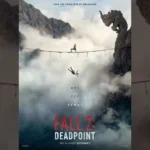
Fall 2: Deadpoint Feature Scores
Explore all 46 feature scores for Fall 2: Deadpoint, organized into pros and cons.
Scores by Feature
Summary
46 reviewed features-
Very positive 4.5-5.01 (2%)
-
Positive 3.5-4.412 (26%)
-
Neutral 2.5-3.416 (35%)
-
Negative 1.5-2.415 (33%)
-
Very negative below 1.52 (4%)
Pros
Sort
-
Height-based suspense is the clearest consensus strength. Even many negative reviews admit that POV shots, unstable planks, exposed drops, and a few standout set pieces can produce sweaty palms and real anxiety.
-
As a survival thriller, the movie usually delivers enough vertigo, physical danger, and nail-biting set pieces to satisfy genre fans. The weakest reactions come from reviewers who feel the repetition and writing blunt those strengths.
-
The best climbing set pieces turn simple movement into white-knuckle action, with monkey-bar crossings and exposed traversals repeatedly singled out. Some later action grows exaggerated or less inventive than the original.
-
Harriet Slater's lead work is one of the more consistent strengths, with praise for vulnerability, determination, and believable fear. Even a more negative take still found her performance acceptable.
-
Arsema Thomas and Tom Brittney receive strong praise when singled out, with Thomas described as electric and Brittney as convincingly authoritative.
-
The cast generally earns more praise than the script, especially for selling fear and keeping thin material watchable. A minority found the performances merely adequate or poorly calibrated to the danger.
-
Much of the humor is accidental, but several reviewers still have fun laughing at the absurd decisions, twists, and heightened action. That campy appeal can make the movie more enjoyable for the right audience.
-
The camera frequently creates potent vertigo through POV shots, wide views, and disorienting angles, making the mountain feel genuinely dangerous. Several reviewers still miss the original tower's stronger sense of scale.
-
The Spierig brothers draw strong tension from angles, editing, and exposed climbing, and several reviewers praise their technical craft. Others feel the sequel lacks imagination or slips into tedium when it leaves the core survival setup.
-
For viewers seeking a big-screen vertigo experience, the theatrical presentation is considered worth paying for. The scale and exposed mountain imagery benefit from a cinema screen.
-
The shorter running time is mostly viewed as a benefit, keeping the simple premise from overstaying its welcome. One reviewer still found the experience exhausting despite its modest length.
-
Fear of heights remains the movie's most reliable source of scares. Some reviewers find it genuinely terrifying and face-hidingly effective, while a dissenting take feels almost no fear at all.
-
The physical filmmaking is strongest when performers, real movement, and environmental scale carry the spectacle, creating a more convincing sense of danger than the weaker digital work.
Cons
Sort
-
Plausibility is a major weakness, especially the characters' decision to attempt the climb and the escalating late twists. Even positive reviews often ask viewers to accept foolish choices and strained survival logic.
-
The screenplay is the most repeated source of criticism, with predictable beats, shaky logic, forced exposition, and overcomplicated twists. A few reviewers find enough intrigue or playful pulp to keep it afloat.
-
Repetition of Fall is one of the most consistent complaints. Reviewers repeatedly describe the sequel as familiar, copied, by-the-numbers, or too faithful to the original's structure, with only a few seeing meaningful evolution.
-
Dialogue is widely criticized as basic, clichéd, repetitive, or overly expositional. Even favorable reviews tend to credit the actors with elevating lines that give them limited help.
-
Character writing is a persistent weakness: Jax and Luce are often described as thin, trope-driven, or underexplored. A few reviewers found enough growth and rooting interest to make the survival stakes work.
-
The story is generally seen as weaker than the central survival concept, with contrivances, shallow backstory, and unnecessary crime elements drawing criticism. A smaller group finds the basic sequel story solid enough for the ride.
-
The CGI is one of the clearest technical weak spots, with several reviewers saying digital backgrounds and effects break the illusion of height. A few sequences hold up better, but the overall consistency is poor.
-
The grief setup has clear potential, but many reviewers say it never lands with the weight it is aiming for. Slater's performance helps, yet underdeveloped relationships keep the emotion mostly surface-level.
-
The movie's shift toward soapier, pulpier, and more exaggerated storytelling often clashes with its grounded survival tension. Several reviewers say the silliness or melodrama breaks immersion.
-
Pacing varies sharply across reviews. Some praise the shorter runtime and brisk survival momentum, but many complain about a slow or rushed setup, repetitive obstacles, flashback interruptions, and late padding.
-
Several reviewers struggle with story logic and twist construction, describing beats as nonsensical, obvious, or hard to accept. The plot remains followable, but its internal reasoning often is not convincing.
-
The finale is one of the most divisive parts of the movie. Some enjoy its energy, shocks, and sequel tease, while many others call the late twists overcooked, convoluted, ridiculous, or baffling.
-
Strong language, drug material, and intense violence make this a poor fit for younger viewers despite the PG-13 framework.
-
This is not presented as family-friendly viewing; strong profanity, drug material, violence, and sustained peril make it better suited to adults and older viewers.
-
The central Jax-Luce dynamic divides opinion, ranging from good rapport to a relationship that feels mechanical or nearly chemistry-free. Their bond is often limited by rushed or contrived writing.
-
The strong profanity is specifically called out as a suitability concern, especially for younger viewers.
-
The violence is described as strong enough to be a major concern for younger viewers, with injuries and intense peril contributing to a harsher experience.
-
Creaking wood, wind, and ominous climbing hardware can strongly intensify the height anxiety. However, poor ADR, dubbing, and lip-sync issues drag the overall audio experience down.
-
The fear-and-courage message gets mixed results: one reviewer strongly approves of its moral framing, while others find the motivational ideas bland, tone-deaf, or emotionally underpowered.
-
The emotional drama works best when it stays tied to fear, trust, and survival. Soapier conflicts and late plot complications often feel forced, though a few reviewers found the character drama genuinely engaging.
-
One reviewer jokingly criticized the way the Thailand setting and its people are framed, suggesting the location is used more as a perilous backdrop than meaningful representation.
-
One reviewer found the promotional association with Obsession misleading because the two films have little in common.
-
Effects quality is inconsistent: some reviewers find the height illusion convincing or improved, while many others call out green-screen seams and weak digital backgrounds. The technical unevenness can directly reduce suspense.
-
The sequel is explicitly seen as less original than its predecessor, even by a reviewer who otherwise finds ways it distinguishes itself.
-
The sequel does little meaningful expansion of its lore; the broader franchise setup exists, but one reviewer explicitly says rich world-building is not what earns the movie its credit.
-
Ideas about grief, courage, trust, isolation, and perseverance are present, but reviewers disagree on how well they are developed. The themes add some substance without consistently becoming deep character drama.
-
Critical reception is distinctly mixed rather than broadly enthusiastic, with roundup coverage showing both strong praise for the thrills and sharp criticism of the writing.
-
The sets are judged passable at matching real locations, but not so convincing that they disappear completely into the environment.
-
The music receives a lukewarm assessment: serviceable rather than memorable or especially effective.
-
Entertainment value depends heavily on tolerance for silliness: some reviewers find a fun, exciting B-movie ride, while others are bored or frustrated. A notable group enjoys it specifically as so-bad-it's-good spectacle.
-
The mountain setting can look beautiful and vertigo-inducing, but the visual presentation is inconsistent. Strong wides and POV shots compete with flat rock-face framing, artificial backgrounds, and a weaker sense of scale than the original.
-
Editing gets sharply divided reactions: some praise it for turning artificial environments into convincing tension, while others find the presentation sloppy or drawn out. The strongest cuts support the climbing sequences.
-
Viewers who mainly want another dose of vertigo and survival thrills are the likeliest to enjoy it. Broader appeal is shakier because attachment to the new characters and overall critical enthusiasm are mixed.
Cast & Creators
-
JaxHarriet Slater is frequently praised for making Jax vulnerable, likable, and believably terrified even when the writing strains credibility. A few reviewers are cooler on the performance, but most see her as a stabilizing strength.
-
LuceArsema Thomas often elevates Luce beyond thin material, with praise ranging from likable and energetic to a true breakthrough performance. One negative review finds the acting poorly calibrated, but the overall response is strongly positive.
-
CinematographerAndrew Strahorn's cinematography is repeatedly praised for vertigo-inducing POV shots, wide landscapes, and a strong sense of exposed height. His work is one of the movie's clearest technical strengths.
-
DirectorMichael Spierig's direction gets mixed-to-positive marks: strong technical control and tension-building are balanced by criticism that the sequel lacks imagination in places.
-
DirectorPeter Spierig's direction gets mixed-to-positive marks: strong technical control and tension-building are balanced by criticism that the sequel lacks imagination in places.
-
JohnTom Brittney is singled out for giving John a convincing sense of authority even when the character's motives are intentionally questionable.
-
WriterJonathan Frank's writing receives split reactions, with some credit for paying off rough script edges but strong criticism for returning to contrived late twists.
-
WriterScott Mann's writing receives split reactions, with some credit for paying off rough script edges but strong criticism for returning to contrived late twists.