
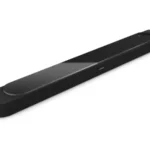
Bose Lifestyle Ultra Soundbar Feature Scores
Explore all 63 feature scores for Bose Lifestyle Ultra Soundbar, organized into pros and cons.
Scores by Feature
Summary
63 reviewed features-
Very positive 4.5-5.030 (48%)
-
Positive 3.5-4.415 (24%)
-
Neutral 2.5-3.47 (11%)
-
Negative 1.5-2.47 (11%)
-
Very negative below 1.54 (6%)
Pros
Sort
-
Dialogue clarity is the clearest consensus strength: voices stay centered and intelligible in busy mixes, and SpeechClarity can lift them further without sounding heavily processed.
-
The fabric wrap, rounded form, and glass top earn near-universal praise for looking premium in a living room. The main aesthetic tradeoff is that the glass can reflect the TV and collect fingerprints.
-
Overall sound quality is overwhelmingly positive for clarity, scale, and clean presentation, though a minority of tests found it less dynamic or immersive than the strongest rivals.
-
The modular system can grow from a strong standalone bar into a genuinely immersive wireless home theater with subwoofer and rears. The biggest gains come from the add-ons, but so does the cost.
-
Initial setup is usually quick and beginner-friendly, often taking only minutes. The exceptions are app, Wi-Fi, or full-system pairing glitches that can turn an otherwise simple process into troubleshooting.
-
Everyday operation is consistently easy, from the app to the touch controls, with controls described as logical, simple, and natural to use.
-
Stereo and spatial width are a major strength, with many tests hearing a soundstage that extends well beyond the physical bar and keeps effects clearly placed.
-
The optional subwoofer usually transforms movie impact with deeper extension and physical weight while staying controlled. One test found it somewhat one-note and in need of level adjustment.
-
Overall product quality is rated very highly, with multiple sources calling it Bose's best or most polished soundbar yet. The main caveats are premium pricing and connectivity omissions.
-
Build quality is consistently premium, with solid cabinetry, high-end materials, and furniture-like fit and finish. The glossy glass surface is the recurring practical compromise.
-
Smart features are broad, with Alexa, open casting standards, spatial processing, and multi-room options. The experience is flexible, though some important controls still depend on the app.
-
The new top-mounted touch controls are widely seen as a welcome, premium-feeling addition and make basic playback and volume changes easy without a remote.
-
Rear speakers make the biggest spatial upgrade, adding true rear placement and stronger overhead movement. Their performance is excellent, but their extra cost is harder to justify for every buyer.
-
CustomTune is usually a real strength, with phone-based calibration praised for improving scale, clarity, and convenience. A few tests ran into failures, lost calibration, or little audible change, so results are not uniformly smooth.
-
Dolby Atmos height effects are often convincing, especially after calibration or with rear speakers, but a few tests found the standalone height presentation subtle or too screen-bound.
-
Bose provides useful control over bass, mids, treble, center, height, surround, and subwoofer level. The main limitation is the lack of deeper presets or source-specific EQ memory.
-
Fine detail is generally strong, especially through the mids and highs, though one demanding music test found less insight and precision than expected at this price.
-
Virtual surround is generally convincing and often reaches beyond the bar with strong side and overhead cues. Its success depends on room acoustics and content, and a few tests found the standalone presentation less immersive.
-
At its best, the soundbar presents highs, mids, lows, and spatial effects as a controlled, unified whole rather than disconnected channels.
-
Music generally sounds clear, spacious, and enjoyable for a soundbar, with strong results on pop, electronic, and Atmos material. Dedicated stereo speakers or some rivals can still sound more natural, detailed, or engaging.
-
The bar usually stays clean at high output and avoids muddy bass, although one test heard occasional distortion when volume was pushed hard.
-
Standalone bass is usually tight, clean, and surprisingly substantial for one bar, but the deepest sub-bass is inconsistent and several comparisons favor Sonos. A subwoofer adds the physical weight that action-heavy content can still lack.
-
SpeechClarity is especially useful at lower volumes and for late-night viewing, keeping voices easy to follow without forcing the whole soundtrack louder.
-
The Lifestyle Ultra rear speakers are unusually versatile because they can also operate independently as smart speakers around the home.
-
Voice clarity is outstanding, with Clear Dialogue and SpeechClarity making speech sharply intelligible while remaining natural.
-
Tonal balance is usually natural and even, but the Bose house sound can lean bright or V-shaped enough that some listeners may want to trim treble.
-
Dynamics are generally punchy and energetic, with good contrast between quiet and loud moments, though one critical test found the presentation too timid and flat.
-
Wireless expansion keeps speaker-wire clutter low and makes the full system easier to place, though the rear speakers still need AC power.
-
Wi-Fi streaming support is broad and often smooth, but wireless reliability is not flawless; some full-system tests reported repeated speaker cutouts or setup friction.
-
SpeechClarity can raise voices without also lifting distracting background noise, which helps keep busy mixes intelligible.
-
The cabinet feels solid and convincingly premium rather than hollow or plasticky.
-
Google Cast grouping worked smoothly once configured through Google Home, making cross-device playback a useful ecosystem strength.
-
Gaming audio is a strong use case, with crisp effects, audible positional cues, and an immersive mix in tested titles.
-
Google Home integration worked smoothly once the soundbar was assigned and grouped, supporting convenient multi-room playback.
-
HDMI eARC and HDMI-CEC integration can be quick and painless, letting a modern TV remote handle normal volume control.
-
The system can play extremely loud while remaining controlled, giving it enough output for theater-like playback in typical living rooms.
-
The built-in microphone picks up spoken commands well, supporting dependable hands-free control.
-
Alexa+ integration is a notable smart-assistant advantage, especially for households already using Amazon's newer assistant.
-
The upfiring drivers project sound upward very effectively, giving the presentation a convincing sense of elevation.
-
Voice commands are handled quickly, with prompt responses to basic playback controls.
-
Voice pickup is accurate enough for the soundbar to hear commands reliably from the room.
-
The low profile sits neatly below most screens, but the roughly 43-inch width makes the bar best suited to TVs around 55 inches and larger.
-
Bluetooth source switching is straightforward through the app and works as a practical fallback when Wi-Fi streaming is not used.
-
Speaker-to-speaker connectivity is a mixed story: third-party Cast grouping can work very well, while compatibility with older Bose wireless home-theater gear is tightly restricted.
-
Wall mounting is supported and the mounting-hole continuity can ease upgrades, but the required bracket is an extra purchase that feels stingy at this price.
Cons
Sort
-
The absence of extra HDMI passthrough ports is one of the most consistent complaints, especially for disc players, consoles, and more complex home-theater setups.
-
Backward compatibility is poor: older Bose wireless surrounds and subwoofers generally cannot join the new Lifestyle system, with only limited wired exceptions.
-
Dolby Atmos support is welcome, but the repeated omission of DTS/DTS:X is a major drawback for disc-heavy setups. Atmos music support also has some streaming limitations.
-
Multi-speaker pairing is one of the shakier areas: several full-system setups needed retries or hard restarts, although other tests found expansion mostly seamless.
-
The lack of an optical input is a hard limitation for older TVs that do not provide HDMI ARC/eARC.
-
A dedicated physical remote is absent, which several sources call an omission at this price even though TV-remote, app, and on-bar control are available.
-
There is no dedicated HDMI passthrough for a game console, limiting direct gaming connectivity through the soundbar.
-
Spotify Connect showed a serious reliability problem in one setup, repeatedly pausing while the TV or Xbox was active.
-
The touch interface is attractive, but the play/pause control showed noticeable lag in one hands-on test.
-
The single LED status light can be so subtle that its feedback is easy to miss unless you are looking directly for it.
-
Wired-input flexibility is limited, with no 3.5mm auxiliary input alongside the single HDMI-centered TV connection.
-
AirPlay can be stable and convenient for music, but one test found it repeatedly pausing when a TV or Xbox was active.
-
The app-first design brings a privacy tradeoff because using the system involves collection of product-use, device, diagnostic, and network information.
-
The bar can work well in a smaller room, but its flagship power, size, and price may be unnecessary where a more compact model would suffice.
-
TV control through HDMI-CEC is generally seamless on modern sets, but inconsistent CEC implementations can still create occasional connection frustration.
-
Value is the biggest tradeoff: the bar is competitive within the premium tier, but $1,099 is already expensive and the full Bose system quickly climbs much higher. Discounted rivals can make the equation tougher.
-
Soundstage height is inconsistent across rooms and material: some tests hear a tall, expansive field, while others find height and width too constrained without adjustment.
-
The redesigned Bose app is often described as clean, intuitive, and stable, but several tests ran into crashes, lost speaker setups, or frustrating pairing problems.