If you want better fit
Choose Huawei Watch Fit 4 Pro. It scores 4.8 vs 3.1 for fit, with a 4.1 overall score.

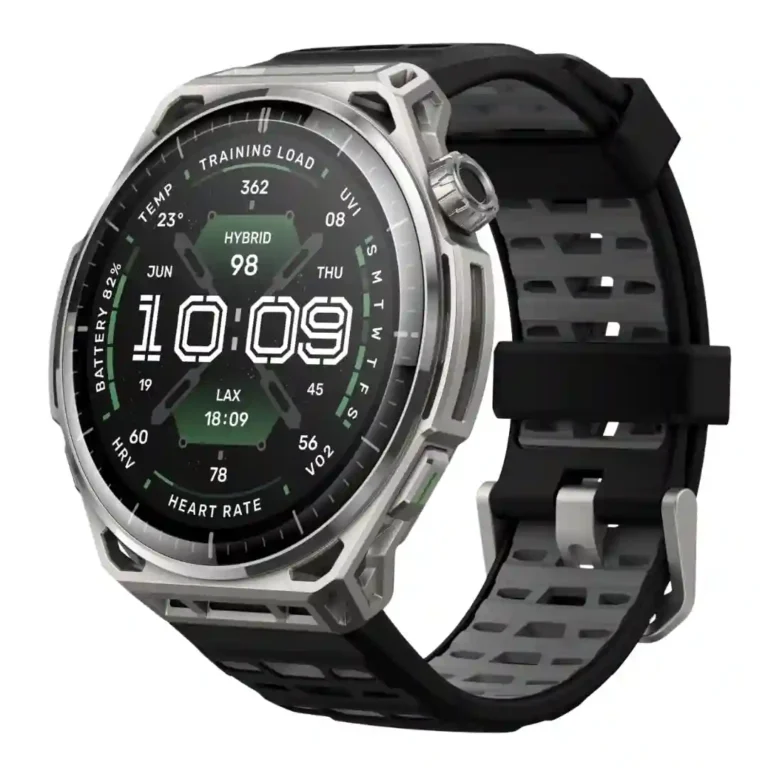
Choose it for outstanding battery life, bright maps, accurate GPS and heart-rate tracking, and serious training tools at a competitive price. Skip it if you have a small wrist, need LTE, ECG, deep apps, or dependable strength auto-detection.
Best for runners, hybrid athletes, hikers, HYROX users, and fitness-focused buyers who want long battery life, accurate tracking, and excellent maps without paying flagship Garmin prices.
Skip it if you have a small wrist, prioritize a deep smartwatch app ecosystem, need LTE or ECG, rely on streaming music, or expect flawless automatic strength-set detection.
The Amazfit Balance 3 succeeds by delivering the parts serious fitness users notice every day: excellent battery endurance, a large and exceptionally bright AMOLED screen, dependable dual-band GPS, strong heart-rate results, useful offline navigation, and increasingly mature recovery tools. Its sapphire glass and stainless-steel build also feel convincingly premium for the price. The compromises are equally clear. The single 51.4mm case is unsuitable for many smaller wrists, the stock band may irritate some users, and strength-training auto-detection can misread paused movements. Zepp OS covers practical smartwatch basics, but LTE, ECG, streaming music, and a deep app catalog are missing. Existing Balance 2 owners may not gain enough to justify the higher price, but newcomers wanting a fitness-first Garmin alternative get an unusually complete package.
Compared with other Smartwatches, this product is above average in mapping and navigation, onboard music storage, flashlight usefulness, near average in recovery insights, companion app quality, below average in activity auto-detection, size options, fit.
| Attribute | This product | Category average | Difference |
|---|---|---|---|
| activity auto-detection | 1.3 | 3.7 | -2.4 |
| mapping and navigation | 4.6 | 3.4 | +1.2 |
| onboard music storage | 4.1 | 2.9 | +1.1 |
| size options | 2.0 | 3.2 | -1.2 |
| flashlight usefulness | 4.7 | 3.7 | +1.0 |
| smartphone notifications | 4.6 | 3.5 | +1.1 |
| watch face quality | 4.8 | 3.8 | +1.0 |
| smartwatch features | 4.4 | 3.5 | +0.9 |
Choose Huawei Watch Fit 4 Pro. It scores 4.8 vs 3.1 for fit, with a 4.1 overall score.
Choose Amazfit Active 3 Premium. It scores 4.6 vs 4.0 for button controls, with a 4.3 overall score.
Choose TicWatch Pro 5. It scores 5.0 vs 3.1 for contactless payments, with a 4.0 overall score.
Choose Garmin Venu 3. It scores 4.8 vs 2.0 for size options, with a 4.1 overall score.
Products reviewers directly compared with this model, grouped into quick takeaways.
Reviewers consistently got well over a week with demanding use, while Amazfit rates typical use at up to 21 days. GPS endurance was also praised, with about 41 hours in accurate mode.
Yes. Dual-band GPS and heart-rate tracking usually stayed close to Garmin, Apple, Suunto, Coros, and chest-strap references, especially during steady runs.
Probably not for many users. The single 51.4mm case is very large, although its relatively thin profile helps it sit flatter than the diameter suggests.
Yes. It supports offline maps, turn-by-turn directions, route creation, POI search, and automatic rerouting, and the large screen makes routes easy to read.
Sleep duration and restlessness generally matched competing wearables, but one reviewer found the scoring too mild after a poor night. The watch's size and stock strap may also make overnight wear uncomfortable.
No. It has neither LTE nor ECG, so connected calls and notifications require a nearby phone, and ECG-focused buyers need another device.
The upgrade is less compelling for existing Balance 2 owners because battery and sensors are similar and some software features overlap. The stronger reasons are the premium case, brighter display, extra controls, flashlight, storage, and improved navigation.
These are a few of the reviews included in our analysis.



The Amazfit Balance 3 is for the kind of person who resents charging a smartwatch every night, who wants accurate GPS and heart-rate data...
Amazfit Balance 3 review with real-world testing, specs, battery life, GPS accuracy and how it compares with the Balance 2.
I've been wearing the Amazfit Balance 3 for a few weeks now, and somewhere along the way it developed an annoying habit.
Amazfit's Balance 3 packs up to 21 days of battery, sapphire glass, a 3,000-nit AMOLED, and HYROX tools. Get pricing, specs, and release timing.
A graveyard, a misread lake, and a chance run with a sleep tech CEO. First impressions of the Amazfit Balance 3 on a lumpy Stockholm trail...

Best for long battery life, accurate GPS and useful offline maps at a strong price. Skip it if you need payments, richer apps, a built-in LED flashlight or polished smartwatch...
Pros: mapping and navigation, value for money
Cons: smartwatch features, contactless payments

Best for accurate run tracking, deep Garmin coaching and phone-free Spotify in a light package. Skip it if you need full maps, triathlon mode, Apple Music support or the strongest...
Pros: value for money, GPS accuracy
Cons: mapping and navigation, third-party app support

Good if you want premium running features, long battery life, and maps for under $200. Skip it if you need flawless heart-rate data, multiband GPS, LTE, or richer app support.
Pros: value for money, battery life
Cons: heart rate accuracy, third-party app support

Best for accurate running metrics, excellent coaching tools, a bright AMOLED display, and dependable battery life. Skip it if you need offline maps, music storage, contactless payments, multi-band GPS, or...
Pros: battery life, value for money
Cons: mapping and navigation, smartwatch features