A. Rimbaud

A. Rimbaud Movie Review

Studio: Several Futures
Released: May 12, 2026
Updated: 18 minutes ago
4.2
Overall review score
159
Review insights
45
Scored features
11
Expert reviews

Bottom Line

Blake Draper’s absorbing solo performance and inventive musical conversations make this experimental biopic extraordinary for adventurous viewers. Its repetitive stretches and 175-minute runtime are substantial hurdles.

Adventurous arthouse viewers, cinephiles and poetry enthusiasts who enjoy formally daring films and can focus on extended monologues and instrumental dialogue.

Viewers seeking a straightforward, brisk or visually lavish period biopic, or those who dislike difficult central characters and repetitive storytelling.

Verdict

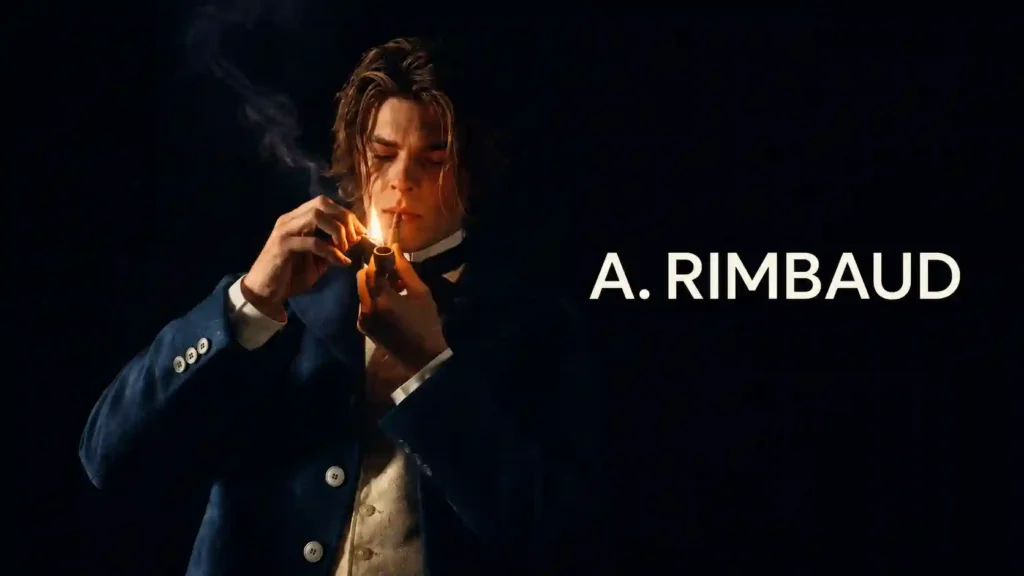
Patrick Wang’s A. Rimbaud is a strikingly unconventional portrait of the French poet, carried from restless adolescence into his later merchant years by Blake Draper’s commanding solo performance. Instead of conventional supporting actors or elaborate period sets, the film uses instruments as other people’s voices and turns light, sound and close-ups into an imaginative world. That approach makes Rimbaud’s isolation palpable and gives the poetry unexpected visual and musical force. The biographical scope also complicates the familiar image of the youthful literary rebel by exploring trade, colonialism and regret. But the 175-minute experiment is not uniformly absorbing. Repeated monologues and a circular first half can become exhausting, and the central figure’s self-regard is a genuine barrier for some viewers. For adventurous filmgoers and poetry enthusiasts, the artistic ambition and lead performance make the commitment worthwhile; conventional-biopic audiences may be frustrated.

Content guidance
Scorata recommended age 14+

Contains mature relationship and sexual references, a shooting, an implied assault, and unsettling scenes involving serious illness and death.

Feature Scorecards

Summary

45 reviewed features
  • Very positive 4.5-5.0
    27 (60%)
  • Positive 3.5-4.4
    10 (22%)
  • Neutral 2.5-3.4
    3 (7%)
  • Negative 1.5-2.4
    4 (9%)
  • Very negative below 1.5
    1 (2%)

Pros highlights

  • 4.6
    10 reviews moderate consensus
    lead performance: 4.6, 10 reviews, moderate consensus
    Blake Draper is repeatedly singled out for carrying the entire movie and making Rimbaud’s changing temperament convincing. A few find the later scenes less vivid than his youthful energy.
  • 4.5
    10 reviews moderate consensus
    Musical-instrument dialogue: 4.5, 10 reviews, moderate consensus
    Other characters answer Rimbaud through strings, brass and other instruments instead of spoken dialogue. The idea is playful and emotionally expressive, though the constant decoding can become tiring.
  • 4.9
    9 reviews strong consensus
    cinematography: 4.9, 9 reviews, strong consensus
    Close-ups, 35mm texture and meticulous framing make a bare stage feel unusually expressive. The camera repeatedly discovers new visual possibilities in very little physical space.
  • 4.8
    9 reviews strong consensus
    originality: 4.8, 9 reviews, strong consensus
    Few biopics look or sound like this one-man performance with instrumental conversations. Its extreme formal originality draws some of the film’s most enthusiastic praise.
  • 4.6
    8 reviews low consensus
    directing quality: 4.6, 8 reviews, low consensus
    Patrick Wang turns shoestring restrictions into a distinct cinematic language. The bold control impresses many, although some believe the experiment runs past its natural length.
  • 4.6
    7 reviews low consensus
    visual style: 4.6, 7 reviews, low consensus
    The bare black-box imagery is transformed by close-ups, changing backdrops, visual distortions and theatrical light. Some find it continually exhilarating, while others think the novelty eventually fades.

Cons highlights

  • 2.3
    6 reviews low consensus
    pacing: 2.3, 6 reviews, low consensus
    The movie can be hypnotic when its experiments click, but its circular opening stretch and extended monologues repeatedly draw complaints. Reactions to the slow rhythm vary widely.
  • 2.0
    5 reviews low consensus
    runtime: 2.0, 5 reviews, low consensus
    At 175 minutes, the solo presentation is a significant commitment. Some find the visual invention sustains it, while others would cut an hour or add an intermission.
  • 2.0
    3 reviews strong consensus
    narrative repetition: 2.0, 3 reviews, strong consensus
    Repeated youthful scenes and monologues sometimes feel recursive rather than cumulative. The film’s intentional patterns can test patience before its later shift.

Use Cases

Best for

  • 4.4
    10 reviews low consensus
    Arthouse viewing: 4.4, 10 reviews, low consensus
    The radical staging, unusual dialogue and literary density make this especially appealing to experimental-film audiences. It remains a test of patience even for some enthusiasts.
  • 4.8
    6 reviews strong consensus
    Writer and artist viewing: 4.8, 6 reviews, strong consensus
    The film links Rimbaud’s verse to images, performance and questions of artistic identity. Its emphasis on creative process should resonate with those who make or closely study art.
  • 4.2
    6 reviews low consensus
    Biographical insight viewing: 4.2, 6 reviews, low consensus
    The film takes Rimbaud beyond the familiar story of his poetic youth into his conflicted later life. Its psychological interpretation is rich but may not answer every factual or motivational question.

Not ideal for

  • Patient viewing
    2.0
    3 reviews strong consensus
    Patient viewing: 2.0, 3 reviews, strong consensus
    The almost three-hour runtime and recursive passages ask for real endurance. Some find the work rewarding, while others see the duration as its chief obstacle.
  • Straightforward-story viewing
    2.0
    2 reviews limited evidence
    Straightforward-story viewing: 2.0, 2 reviews, limited evidence
    The nonlinear feel of the staging and unexplained personal transformation may frustrate viewers expecting a simple, clearly motivated biopic.

Cast & Creators

  • Arthur Rimbaud
    4.8
    9 reviews strong consensus
    Blake Draper: 4.8, 9 reviews, strong consensus
    The solo performance spans youthful swagger, emotional damage and aging with remarkable range. Even the more skeptical reactions largely admire the commitment, while finding the older portrayal less electric.
  • Director
    4.3
    9 reviews low consensus
    Patrick Wang: 4.3, 9 reviews, low consensus
    His highly controlled, imaginative approach turns severe restrictions into an ambitious cinematic experiment. For some the daring is an extraordinary success; for others the same formal insistence becomes a chore.
  • Cinematographer
    5.0
    6 reviews strong consensus
    Frank Barrera: 5.0, 6 reviews, strong consensus
    Close framing, expressive 35mm textures and carefully calibrated light make a near-empty space feel vivid and emotionally precise.
  • Composer
    4.7
    3 reviews strong consensus
    Dan Schlosberg: 4.7, 3 reviews, strong consensus
    The musical score gives offscreen characters recognizable voices and carries the film’s unusual conversations. Its energetic instrumental writing earns particular praise.
  • Production Designer
    5.0
    1 review
    Amy Williams: 5.0, 1 review
    The deliberately spare sets allow ordinary objects and the surrounding darkness to suggest whole places without elaborate period reconstruction.
  • Editor
    4.0
    1 review
    John Gurdebeke: 4.0, 1 review
    The editing adds thought and momentum to an otherwise exhausting long-form piece, even though it cannot resolve every pacing problem.

Compared With Category Average

Compared with other Movies, this product is above average in writing quality, originality, ending satisfaction, near average in lead performance, Poetry presentation, below average in character appeal, audience appeal, runtime.

Comparison summary

39 compared features
  • Above average 0.4+ pts higher
    26 (67%)
  • Same as average within 0.3 pts
    7 (18%)
  • Below average 0.4+ pts lower
    6 (15%)

Largest category differences

Attribute This product Category average Difference
character appeal 1.0 3.7 -2.7
writing quality 5.0 3.0 +2.0
originality 4.8 3.2 +1.6
ending satisfaction 5.0 3.3 +1.7
Narrative structure 4.4 2.9 +1.5
dialogue quality 4.5 3.1 +1.4
Symbolism 5.0 3.5 +1.5
Biographical coverage 5.0 3.7 +1.3

Consider This Instead

If you want better character appeal

Choose Elsinore. It scores 5.0 vs 1.0 for character appeal, with a 4.2 overall score.

Compare

If you want better lead performance

Choose Rose of Nevada. It scores 5.0 vs 4.6 for lead performance, with a 4.5 overall score.

Compare

If you want better sound design

Choose The Incomer. It scores 5.0 vs 4.0 for sound design, with a 4.2 overall score.

Compare

Compared in Reviews

Compared with A. Rimbaud

A Bread Factory (2018)

  • Compared Builds its generous drama around an ensemble rather than one isolated figure.
  • Compared Uses a community ensemble, unlike this film’s single-performer approach.
  • Compared Its two-part structure offers breaks missing from this extended solo presentation.

Total Eclipse (1995)

  • Worse Treats the turbulent romance far less convincingly.
  • Similar Uses lavish period settings but similarly struggles to make the difficult poet compelling.

A Couple (2022)

  • Similar Also relies on a literary monologue and risks draining vitality from the drama.

FAQ

What makes A. Rimbaud different from a traditional biopic?

Only Blake Draper appears as a speaking person onscreen. Other characters reply through musical instruments, while sparse sets, lighting and sound suggest the wider world.

Is the nearly three-hour runtime worth it?

It depends on your tolerance for formal experimentation. Some find the film continually inventive, while others struggle with its repetitive first half and extended monologues.

Do I need to know Arthur Rimbaud’s poetry first?

Not necessarily, but familiarity with the poet and an interest in literary art will make the long recitations and creative experiments more rewarding.

Does the film cover Rimbaud’s later life?

Yes. It follows him beyond the celebrated youthful poetry and Paul Verlaine relationship into his years of trade and colonial-era work.

How is the lead performance?

Blake Draper is the film’s most consistently admired element, portraying the poet from a restless teenager to an older, inward-looking man.

Is this suitable for casual or family viewing?

Its challenging length, adult relationship themes, suggested violence and illness make it a poor fit for relaxed family entertainment. It is better suited to engaged, mature viewers.

Is A. Rimbaud officially rated in the United States?

U.S. theatrical listings identify the film as Not Rated; no verified MPA classification was found.

Sample Expert Reviews We Analyzed

These are a few of the reviews included in our analysis.

reverseshot.org

The majority of A. Rimbaud is confined to the black box theater, dressed with only what is essential to evoke a given setting and mood�a...

Review score
5.0
vintageviolence.substack.com

to live outside the law you must be honest // contact me at vintageviolencesubmissions@gmail.com

Review score
4.9

Top Movies to Consider

#1 You Can See Everything
4.7

Choose this inventive, unsettling documentary for fearless questioning, dark humor, and unpredictable storytelling. Skip it if you want a short, straightforward exposé with definitive answers.

Pros: originality, humor
#2 Cameron Winter at Carnegie Hall
4.7

A singular voice, powerful piano playing and intimate film photography make this concert absorbing for receptive listeners. Its uninterrupted, often similar-sounding songs and lack of background context are an acquired...

Pros: directing quality, cinematography

Cons: pacing, Song variety

#3 Possible Love
4.7

Extraordinary performances and richly observed relationships make this a rewarding, emotionally forceful drama. Its nearly three-hour length and slow opening demand patience and undivided attention.

Pros: class commentary, character development

#4 Chronovisor
4.7

Best for a hypnotic, bookish mystery with tactile visuals and cerebral chills. Skip it if reading-heavy, attention-demanding storytelling sounds more exhausting than exciting.

Pros: Atmosphere, cinematography

Cons: audience appeal