
If you want better editing quality
Choose Disneyland Handcrafted. It scores 5.0 vs 4.4 for editing quality, with a 4.6 overall score.

A singular voice, powerful piano playing and intimate film photography make this concert absorbing for receptive listeners. Its uninterrupted, often similar-sounding songs and lack of background context are an acquired taste.
Cameron Winter fans, adventurous concert-film enthusiasts and film lovers who appreciate patient cinematography will get the most from its close, immersive musical presentation.
Newcomers who need an artist biography or prefer lively, varied sets may find the long run of spare piano songs and minimal stage conversation unrewarding.
Paul Thomas Anderson turns a largely motionless piano recital into a surprisingly immersive film, using warm 16mm and 35mm images, dramatic shadows, searching close-ups and sustained takes. Cameron Winter supplies the other half of the magic: a startling baritone, forceful piano playing and eccentric songs whose emotional weight can exceed their literal meaning. The result often feels less like a conventional concert documentary than a private performance shared with a roomful of listeners. Yet its fidelity to the event is also the chief limitation. The songs occupy similar tempos and tones, Winter barely speaks, and there are no interviews to orient newcomers. Some camera moves and edits also feel improvised rather than polished. For fans of Winter and adventurous concert cinema, that rawness is part of the attraction; others may find the spell wearing thin.
Brief strong profanity and brooding songs about loneliness, mortality and religion make this most suitable for young teens and older. The film is otherwise an understated piano concert.
Compared with other Movies, this product is above average in runtime, film framing, visual style, near average in creative collaboration, humor, below average in End credits quality.
| Attribute | This product | Category average | Difference |
|---|---|---|---|
| runtime | 4.5 | 2.9 | +1.6 |
| film framing | 4.9 | 3.7 | +1.2 |
| visual style | 5.0 | 3.9 | +1.0 |
| emotional impact | 5.0 | 3.9 | +1.1 |
| lighting quality | 4.7 | 3.8 | +0.9 |
| directing quality | 4.8 | 3.9 | +0.9 |
| entertainment value | 5.0 | 3.7 | +1.3 |
| cinematography | 4.9 | 4.2 | +0.7 |
Choose Disneyland Handcrafted. It scores 5.0 vs 4.4 for editing quality, with a 4.6 overall score.
Choose Barbara Forever. It scores 4.5 vs 4.1 for humor, with a 4.6 overall score.
Choose Making Marie Antoinette. It scores 4.5 vs 4.0 for originality, with a 4.5 overall score.
Choose Earth, Wind & Fire (To Be Celestial vs. That’s the Weight of the World). It scores 5.0 vs 4.5 for audience appeal, with a 4.5 overall score.
Compared with Cameron Winter at Carnegie Hall
It is almost entirely a recording of Winter singing and playing piano at Carnegie Hall. There are no substantial interviews, career overview or behind-the-scenes explanations.
Possibly: some newcomers and skeptics found the performance mesmerizing. Others may struggle with his eccentric voice, sparse songs and lack of introductory context.
Anderson uses warm 16mm and 35mm photography, intimate close-ups, balcony views and changing shadows to make a largely stationary performance visually engaging.
The stripped-down piano songs are intense and emotional, but usually slow and similarly arranged. Some find the flow hypnotic; others find it repetitive.
The piano, baritone voice and room ambience receive particularly strong praise for their clarity and richness.
Yes. The encore song appears after the credits begin, and the film also includes a playful “Dead at 23” title gag.
A theatrical presentation can enhance the film grain, sound and shared listening atmosphere, though the main draw remains the music itself.
These are a few of the reviews included in our analysis.
Paul Thomas Anderson operates his own Panavision camera onstage as the Geese frontman plays and croons through hauntingly sparse piano...
A new film review of Cameron Winter at Carnegie Hall, directed by Paul Thomas Anderson, for film review site In Review Online.
Paul Thomas Anderson’s deft filming of the Geese frontman’s solo performance is a lovely musical marriage and essential viewing for fans.
If you’re looking for someone to shatter the myth of Cameron Winter as some grand musical prophet, you won’t find it here. Through Paul...
On December 11, 2025, Geese frontman Cameron Winter played to a sold-out audience at Carnegie Hall. For the near-entirety of his 12-song...

Choose this inventive, unsettling documentary for fearless questioning, dark humor, and unpredictable storytelling. Skip it if you want a short, straightforward exposé with definitive answers.
Pros: originality, humor
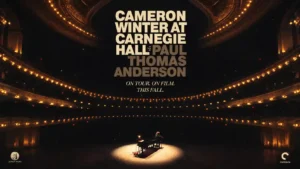
A singular voice, powerful piano playing and intimate film photography make this concert absorbing for receptive listeners. Its uninterrupted, often similar-sounding songs and lack of background context are an acquired...
Pros: directing quality, cinematography
Cons: pacing, Song variety

Extraordinary performances and richly observed relationships make this a rewarding, emotionally forceful drama. Its nearly three-hour length and slow opening demand patience and undivided attention.
Pros: class commentary, character development

Best for a hypnotic, bookish mystery with tactile visuals and cerebral chills. Skip it if reading-heavy, attention-demanding storytelling sounds more exhausting than exciting.
Pros: Atmosphere, cinematography
Cons: audience appeal