
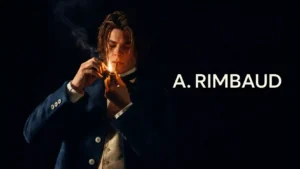
A. Rimbaud Feature Scores
Overall Scorata score: 4.2/5
Based on 11 analyzed reviews · View source samples
Explore all 45 feature scores for A. Rimbaud, organized into pros and cons.
Scores by Feature
Summary
45 reviewed features-
Very positive 4.5-5.027 (60%)
-
Positive 3.5-4.410 (22%)
-
Neutral 2.5-3.43 (7%)
-
Negative 1.5-2.44 (9%)
-
Very negative below 1.51 (2%)
Pros
Sort
-
Close-ups, 35mm texture and meticulous framing make a bare stage feel unusually expressive. The camera repeatedly discovers new visual possibilities in very little physical space.
-
Few biopics look or sound like this one-man performance with instrumental conversations. Its extreme formal originality draws some of the film’s most enthusiastic praise.
-
Blake Draper is repeatedly singled out for carrying the entire movie and making Rimbaud’s changing temperament convincing. A few find the later scenes less vivid than his youthful energy.
-
Other characters answer Rimbaud through strings, brass and other instruments instead of spoken dialogue. The idea is playful and emotionally expressive, though the constant decoding can become tiring.
-
Patrick Wang turns shoestring restrictions into a distinct cinematic language. The bold control impresses many, although some believe the experiment runs past its natural length.
-
The lighting supplies changes of place, age, emotion and even poetic imagery where elaborate sets would usually do the work. Its careful color and shadow are a visual highlight.
-
The bare black-box imagery is transformed by close-ups, changing backdrops, visual distortions and theatrical light. Some find it continually exhilarating, while others think the novelty eventually fades.
-
Unlike shorter portraits that focus on youthful scandal, this follows the poet into his later work as a merchant. That second chapter gives the life story unusual scope and, for some, its richest material.
-
The solitary presentation eventually makes age, estrangement and mortality feel intimate. Several of the strongest moments arrive in the final act.
-
Keeping everyone else offscreen makes Rimbaud’s emotional distance painfully tangible. The missing faces and instrumental voices turn isolation into the movie’s defining dramatic experience.
-
A signpost, a table or a painted suggestion can evoke entire settings on the bare stage. The restraint is inventive, although it asks the audience to fill in much of the world.
-
A straightforward life chronology sits inside a boldly experimental visual design. The later-life shift and formal motifs impress some, but others wish the presentation changed more decisively as Rimbaud ages.
-
The language retains a poetic rhythm, especially in the translated verse and letters. Some of the monologues become exhausting even as their phrasing remains artful.
-
The later years complicate the idealized image of a poetic rebel by confronting his role in commerce and colonial systems. The moral ambiguity adds depth without spelling out an easy verdict.
-
For adventurous viewers, the invention and powerful performance make this a standout experience. Even admirers recognize that its unconventional approach demands commitment.
-
Blake Draper gives an unusually large, detailed performance as Rimbaud across decades. His changing physical and emotional register is a major attraction.
-
The conclusion connects the poet’s earlier and later selves in an affecting final image. Its echoes of the opening give the formal journey a sense of purpose.
-
Patrick Wang’s English renderings aim to preserve rhythmic force while making the writing feel immediate. The consistent language gives the spoken poems a distinctive voice.
-
Verse becomes a physical and cinematic event, with changing light, sound and camera angles. Responses diverge on whether its extended recitations deepen the poetry or make it harder to appreciate.
-
The merchant years bring questions of empire, administration and the poet’s compromised ambitions into view. They make the history feel more complex than a simple celebration of genius.
-
Ambient sounds help create locations that are barely visible, while instruments replace conversational voices. Some find the aural world brilliant; others wish its background detail had more presence.
-
Poems are presented as work being invented and reworked rather than simply recited. The presentation encourages a fresh appreciation of how language and images take shape.
-
Unusual cutting patterns animate the single performer, and the editing provides moments of energy even for those who find the film too long.
-
Sparse props and a black-box stage open up a surprisingly imaginative world. Some find the stripped-down approach liberating, while others feel it becomes monotonous over nearly three hours.
-
The film explores the relationship between language, isolation, artistic creation and an uneasy adult compromise with society.
-
Small animated tricks, including swaying chalk grass and stop-motion-like movement, add visual life without breaking the minimalist setting.
-
The filmmaking tries to embody the mischief, sound and imaginative leaps of Rimbaud’s writing rather than merely illustrating his life.
-
The literary allusions and careful attention to verse give this a rich intellectual texture. Familiarity with poetry makes many of the film’s formal experiments particularly rewarding.
-
Subtle aging prosthetics help the sole actor move credibly from youth toward illness and premature decline.
-
Dan Schlosberg’s music supplies both dramatic energy and the film’s invisible supporting characters. Its orchestration is a standout element.
-
Strings, brass and woodwinds animate the spare staging with an expressive musical range that makes the opening and many conversations especially memorable.
-
Simple objects, shifting light and impossible spaces give the poems suggestive visual form. The spare imagery often carries more meaning than conventional period spectacle.
-
The script and reworked English poetry show a precise ear for rhythm and literary personality. A staged version of the poems’ creative process is especially impressive.
-
Rimbaud emerges as a restless, contradictory figure whose life shifts from poetry to trade. The fuller picture is rewarding, though his motivation and relationship with the public remain unclear for some.
-
The black-box setting makes a poet’s creative imagination feel theatrical without losing the close detail of cinema. The stylized treatment rewards an interest in performance and artistic experimentation.
-
The poet directly addresses and even adjusts the camera, making the viewer feel like a conversational partner. These playful disruptions suit the film’s unusual form.
-
The leap from rebellious young poet to practical merchant becomes a central fascination. The change feels meaningful to some but insufficiently explained to others.
Cons
Sort
-
At 175 minutes, the solo presentation is a significant commitment. Some find the visual invention sustains it, while others would cut an hour or add an intermission.
-
Repeated youthful scenes and monologues sometimes feel recursive rather than cumulative. The film’s intentional patterns can test patience before its later shift.
-
The movie can be hypnotic when its experiments click, but its circular opening stretch and extended monologues repeatedly draw complaints. Reactions to the slow rhythm vary widely.
-
Rimbaud’s self-absorption can become grating despite his brilliance. Anyone needing an immediately likable central figure may struggle.
-
The abrupt shift from poetry to commerce remains hard to understand, and some important aspects of the poet’s public life feel underexplained.
-
The daring format can be absorbing, but its demanding length and difficult central figure narrow its appeal. It is unlikely to satisfy viewers seeking an easy historical drama.
-
This is a formally audacious biopic rather than a conventional historical recreation. The unusual craft is rewarding, though the long, isolating design can be tiring.
-
The story of a poetic prodigy turned merchant is intriguing, but his dramatic transformation can remain opaque even when the performance is compelling.
Use Cases
Best for
Sort
-
The radical staging, unusual dialogue and literary density make this especially appealing to experimental-film audiences. It remains a test of patience even for some enthusiasts.
-
The film links Rimbaud’s verse to images, performance and questions of artistic identity. Its emphasis on creative process should resonate with those who make or closely study art.
-
The film takes Rimbaud beyond the familiar story of his poetic youth into his conflicted later life. Its psychological interpretation is rich but may not answer every factual or motivational question.
-
Its radical one-person format and references to cinematic form make this a compelling choice for viewers interested in what film can do differently.
-
The combination of minimal sets, carefully structured light and inventive audio offers a rich study of how cinema can work with very few resources.
-
The juxtaposition of historical narrative and daring film technique is especially rewarding for viewers drawn to adventurous visual storytelling.
-
The dialogue and offscreen musical responses call for close attention. Viewers who actively engage with the unfamiliar rhythm are most likely to find it absorbing.
-
Extended poetry readings and literary experimentation offer plenty for readers who enjoy Rimbaud and the craft of language. The self-regarding portrait can still push some poetry lovers away.
-
Instrumental motifs function as personalities rather than background accompaniment, making the score unusually central to the viewing experience.
-
The film prompts consideration of colonialism, identity and changing social conditions, but its impressionistic approach is better as a discussion piece than a straightforward history lesson.
Conditional or not ideal for
Sort
-
Patient viewingThe almost three-hour runtime and recursive passages ask for real endurance. Some find the work rewarding, while others see the duration as its chief obstacle.
-
Straightforward-story viewingThe nonlinear feel of the staging and unexplained personal transformation may frustrate viewers expecting a simple, clearly motivated biopic.
-
Newcomer viewingThe long monologues, difficult central figure and esoteric format create a steep entry point for viewers unfamiliar with this kind of cinema.
-
Period drama viewingThe historical setting is conveyed through stylized props and sound rather than immersive reconstruction. The approach is a bold alternative to the lavish period-piece tradition.
Cast & Creators
-
Arthur RimbaudThe solo performance spans youthful swagger, emotional damage and aging with remarkable range. Even the more skeptical reactions largely admire the commitment, while finding the older portrayal less electric.
-
DirectorHis highly controlled, imaginative approach turns severe restrictions into an ambitious cinematic experiment. For some the daring is an extraordinary success; for others the same formal insistence becomes a chore.
-
CinematographerClose framing, expressive 35mm textures and carefully calibrated light make a near-empty space feel vivid and emotionally precise.
-
ComposerThe musical score gives offscreen characters recognizable voices and carries the film’s unusual conversations. Its energetic instrumental writing earns particular praise.
-
Production DesignerThe deliberately spare sets allow ordinary objects and the surrounding darkness to suggest whole places without elaborate period reconstruction.
-
EditorThe editing adds thought and momentum to an otherwise exhausting long-form piece, even though it cannot resolve every pacing problem.