Compare Samsung Odyssey OLED G6 G60SF vs ASUS ROG Swift OLED PG27UCDM

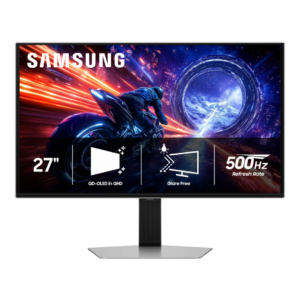
Samsung Odyssey OLED G6 G60SF

Samsung Odyssey OLED G6 G60SF

Overall score 4.3 / 5

Based on 27 scored reviews

vs
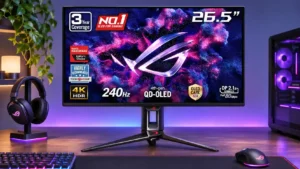
ASUS ROG Swift OLED PG27UCDM

ASUS ROG Swift OLED PG27UCDM

Overall score 4.4 / 5

Based on 15 scored reviews

How we score

Scorata scores summarize analyzed review evidence on a 1–5 scale; they are not laboratory measurements or a simple average of customer star ratings. Feature scores summarize the reviews covering that feature. The overall score averages feature scores within each review, then combines review averages. When both expert and customer evidence are available, those two groups receive equal weight. Products can have different review coverage, so small score gaps do not establish a winner.

Recommendations prioritize important features for the category, with a score of at least 3.5, a gap of at least 0.25 points and at least two supporting reviews per product. Features with widely varying scores or broad connectivity contexts are excluded from recommendations. These safeguards do not establish statistical significance.

Quick verdict

What each product is best for

The review evidence points to a tradeoff: design and aesthetics and panel type versus KVM switch performance and console gaming compatibility. Choose according to which strengths matter more to you; the overall score alone does not settle that choice.

Choose Samsung Odyssey OLED G6 G60SF for design and aesthetics and panel type.

Choose ASUS ROG Swift OLED PG27UCDM for KVM switch performance and console gaming compatibility.

Why these recommendations?

Samsung Odyssey OLED G6 G60SF

Where It Has the Edge

  • design and aesthetics is 4.8 vs 3.0. The slim silver chassis, restrained styling, and rear RGB ring give the G6 a polished, modern look. Its...
  • panel type is 5.0 vs 3.8. The QD-OLED panel is praised for combining rich color, deep blacks, instant response, and higher brightness than earlier...
  • reflection handling is 4.4 vs 3.7. The matte coating is highly effective at diffusing direct reflections and is especially useful near bright windows. The...

ASUS ROG Swift OLED PG27UCDM

Where It Has the Edge

  • KVM switch performance is 4.7 vs 2.3. An integrated KVM lets a keyboard and mouse move between a desktop and laptop without constant cable swapping....
  • console gaming compatibility is 4.4 vs 2.8. PS5 and Xbox support reaches 4K at 120Hz, with Dolby Vision providing an extra option on Xbox. Console...
  • DisplayPort connectivity is 4.6 vs 3.0. Full 80Gbps DisplayPort 2.1 can deliver uncompressed 4K at 240Hz with compatible hardware, bypassing DSC-related limitations. The visible...
Samsung Odyssey OLED G6 G60SF 4.3 overall score
ASUS ROG Swift OLED PG27UCDM 4.4 overall score

Compare features

Scores are out of 5. Missing scores mean missing review evidence, not a missing feature.

Scored on both products

Performance

KVM switch performance
Samsung Odyssey OLED G6 G60SF
2.3

There is no KVM switch, a recurring omission that makes the G6 less convenient for sharing peripherals between multiple computers.

ASUS ROG Swift OLED PG27UCDM
4.7

An integrated KVM lets a keyboard and mouse move between a desktop and laptop without constant cable swapping. It's one of the more practical extras.

DisplayPort connectivity
Samsung Odyssey OLED G6 G60SF
3.0

DisplayPort 1.4 with DSC can drive the full 1440p/500Hz experience and was considered functionally adequate. Still, several testers wanted DisplayPort 2.1 at this premium price.

ASUS ROG Swift OLED PG27UCDM
4.6

Full 80Gbps DisplayPort 2.1 can deliver uncompressed 4K at 240Hz with compatible hardware, bypassing DSC-related limitations. The visible difference from working DSC is usually small.

Picture-in-picture and picture-by-picture
Samsung Odyssey OLED G6 G60SF
3.0

Picture-in-picture is absent, but one tester considered that a minor limitation on a 27-inch display where split-screen use is less valuable.

ASUS ROG Swift OLED PG27UCDM
2.0

Picture-in-picture and picture-by-picture modes are available, but DSC restrictions reduce refresh and color options and require manual re-enabling afterward.

On-screen display usability
Samsung Odyssey OLED G6 G60SF
4.3

The joystick-driven OSD is generally fast, clear, and easy to navigate, with sensibly organized menus. Placement can be awkward, and some important HDR controls are buried deeper than beginners may expect.

ASUS ROG Swift OLED PG27UCDM
4.9

The joystick-controlled on-screen menus are responsive and easy to navigate. They also offer plenty of useful display adjustments.

Brightness
Samsung Odyssey OLED G6 G60SF
4.3

Brightness is notably stronger than earlier QD-OLED generations, with roughly 300-nit full-screen SDR and high HDR peaks. It still trails the brightest LCD and newer tandem OLED options in some bright scenes.

ASUS ROG Swift OLED PG27UCDM
3.9

Brightness works well in typical indoor conditions, especially with the right settings. It cannot sustain the luminance of a bright LCD, and large white areas may look subdued.

Contrast
Samsung Odyssey OLED G6 G60SF
4.7

OLED contrast is effectively infinite in controlled lighting, with excellent shadow separation and no blooming. The matte QD-OLED surface can reduce perceived contrast when strong ambient light raises black levels.

ASUS ROG Swift OLED PG27UCDM
5.0

Pixel-level light control produces outstanding scene depth and contrast, especially in darker rooms. Strong ambient light can diminish that striking effect.

Adaptive sync performance
Samsung Odyssey OLED G6 G60SF
4.3

Adaptive sync is usually smooth and tear-free across Nvidia and AMD GPUs, but one test found conspicuous VRR flicker in dark and mid-tone scenes. Samsung’s VRR Control can help, though it may add a little latency.

ASUS ROG Swift OLED PG27UCDM
4.5

Broad adaptive-sync support generally keeps frame delivery smooth across different graphics cards. Uneven frame rates can still trigger OLED flicker.

Overall picture quality
Samsung Odyssey OLED G6 G60SF
4.8

Picture quality is consistently praised for vibrant color, deep blacks, strong contrast, and crisp gaming presentation. The matte coating and 1440p pixel density introduce tradeoffs, but the overall image remains excellent.

ASUS ROG Swift OLED PG27UCDM
5.0

Fine details, vivid color, and inky blacks combine into outstanding image quality. The picture is most impressive with room lighting under control.

Color accuracy
Samsung Odyssey OLED G6 G60SF
4.5

Color accuracy is generally excellent, with strong measured results and good factory calibration. One outlet found the SDR defaults too warm and oversaturated, while other tests found only minor tuning was needed.

ASUS ROG Swift OLED PG27UCDM
4.6

Factory color is impressively accurate, particularly in the dedicated sRGB mode. Some HDR modes and the default wider gamut require more care for precision.

HDR performance
Samsung Odyssey OLED G6 G60SF
4.5

HDR is a major strength thanks to per-pixel lighting, deep blacks, wide color, and bright highlights. Peak brightness can approach 1,000 nits in small highlights, though bright-scene dimming and configuration quirks keep it from being universally class-leading.

ASUS ROG Swift OLED PG27UCDM
4.4

Rich blacks and intense small highlights give HDR games and movies real impact. Large bright scenes and the compromises between HDR modes keep it short of a flawless presentation.

Local dimming performance
Samsung Odyssey OLED G6 G60SF
5.0

Per-pixel OLED dimming gives precise control with minimal blooming and clean separation between bright highlights and dark objects.

ASUS ROG Swift OLED PG27UCDM
5.0

Per-pixel dimming allows fine control of bright objects against black backgrounds, avoiding the zone-by-zone compromises of typical LCDs.

Comfort and build

Design and aesthetics
Samsung Odyssey OLED G6 G60SF
4.8

The slim silver chassis, restrained styling, and rear RGB ring give the G6 a polished, modern look. Its design was repeatedly called sleek, classy, and more refined than many gaming-monitor rivals.

ASUS ROG Swift OLED PG27UCDM
3.0

ROG lighting and logo projection lend a bold gamer look, but the large three-legged stand and flashy flourishes divide opinion. Several would trade the styling for a simpler base.

Screen size
Samsung Odyssey OLED G6 G60SF
3.3

The 27-inch size is ideal for close-up competitive play and smaller desks, but it can feel modest for the price and lacks the cinematic scale of larger displays.

ASUS ROG Swift OLED PG27UCDM
3.9

The 27-inch format brings unusually high pixel density and suits closer desk viewing. Some people still prefer a 32-inch OLED for a roomier canvas or more immersive games.

Eye comfort features
Samsung Odyssey OLED G6 G60SF
4.0

Eye-comfort options include glare reduction and settings aimed at reducing fatigue, plus a color-vision accessibility mode. The matte surface is especially helpful when bright reflections would otherwise be distracting.

ASUS ROG Swift OLED PG27UCDM
3.5

Blue-light filtering and generally flicker-free operation help comfort, although some filters cannot be combined with Uniform Brightness mode.

Build quality
Samsung Odyssey OLED G6 G60SF
4.6

The metal-heavy chassis feels sturdy and flagship-grade, and several testers ranked its construction above competing 500Hz models. A few units showed flex around the rear port area.

ASUS ROG Swift OLED PG27UCDM
4.8

Materials and assembly feel solid and high-end, with the sturdy stand and metal details contributing to a premium impression.

Other features

Console gaming compatibility
Samsung Odyssey OLED G6 G60SF
2.8

Current consoles work with VRR and high-refresh gaming, but they cannot exploit the 500Hz ceiling. For console-first setups, the G6 was repeatedly viewed as overkill.

ASUS ROG Swift OLED PG27UCDM
4.4

PS5 and Xbox support reaches 4K at 120Hz, with Dolby Vision providing an extra option on Xbox. Console players cannot use the panel's full 240Hz rate.

Cable management
Samsung Odyssey OLED G6 G60SF
2.5

The large external power brick makes minimalist desk setups harder to keep tidy and complicates cable management.

ASUS ROG Swift OLED PG27UCDM
4.0

Running peripherals through the built-in USB hub reduces desk cable clutter and keeps the computer's ports freer.

Resolution
Samsung Odyssey OLED G6 G60SF
3.6

1440p is a sensible match for very high frame rates and looks crisp in games at 27 inches, but it is noticeably less dense than 4K. Buyers prioritizing fine text or maximum detail may find the resolution modest for the price.

ASUS ROG Swift OLED PG27UCDM
5.0

Packing 4K into a 27-inch OLED gives games, interface elements, and small text exceptional definition. The extra pixels are especially noticeable next to 1440p OLEDs.

Port selection
Samsung Odyssey OLED G6 G60SF
3.5

The core gaming ports are practical and easy to reach, with HDMI 2.1, DisplayPort, USB-A, and audio covered. Missing USB-C, KVM, and DisplayPort 2.1 keep the selection from feeling fully flagship-grade.

ASUS ROG Swift OLED PG27UCDM
4.8

DisplayPort 2.1, two HDMI 2.1 inputs, USB-C, and a USB hub give this compact display unusually broad connectivity. Its KVM adds everyday utility.

Sharpness
Samsung Odyssey OLED G6 G60SF
3.7

Gaming sharpness is generally good at 27-inch 1440p, but text and fine desktop detail lag behind 4K and same-resolution LCDs because of pixel density and QD-OLED’s subpixel layout.

ASUS ROG Swift OLED PG27UCDM
4.9

The exceptionally dense 4K panel gives the monitor some of the cleanest-looking text and game detail available in desktop OLEDs. Fine edges look superb.

Panel type
Samsung Odyssey OLED G6 G60SF
5.0

The QD-OLED panel is praised for combining rich color, deep blacks, instant response, and higher brightness than earlier 1440p OLED generations.

ASUS ROG Swift OLED PG27UCDM
3.8

QD-OLED delivers wonderfully deep blacks, vivid color, and fast pixel transitions. It also retains familiar limitations with ambient lighting and prolonged static content.

USB hub functionality
Samsung Odyssey OLED G6 G60SF
3.8

The two-port USB hub is useful for peripherals and hard-to-reach PCs, but it is a basic hub rather than a high-end docking solution.

ASUS ROG Swift OLED PG27UCDM
4.8

The built-in USB hub keeps keyboards and mice connected to the display and cuts down on cable runs to a desktop PC.

Burn-in protection
Samsung Odyssey OLED G6 G60SF
3.7

Dynamic cooling and automatic dimming help reduce OLED burn-in risk, but Samsung’s OLED-care controls are less customizable than some rivals.

ASUS ROG Swift OLED PG27UCDM
4.4

OLED Care features include pixel maintenance, logo protection, and a useful proximity sensor. They reduce wear during varied use but cannot make permanent burn-in impossible.

Reflection handling
Samsung Odyssey OLED G6 G60SF
4.4

The matte coating is highly effective at diffusing direct reflections and is especially useful near bright windows. The tradeoff is slightly reduced punch, occasional grain, and lifted QD-OLED blacks under strong ambient light.

ASUS ROG Swift OLED PG27UCDM
3.7

The glossy anti-reflective finish can handle ordinary indoor glare well, but direct lamps and windows remain troublesome. Opinions vary with lighting and where the screen sits.

PC gaming compatibility
Samsung Odyssey OLED G6 G60SF
4.4

The G6 is excellent with a powerful gaming PC, especially in esports titles that can reach several hundred frames per second. Midrange systems can leave much of the 500Hz capability unused.

ASUS ROG Swift OLED PG27UCDM
4.9

A high-end PC can make excellent use of the 4K/240Hz panel's sharpness and low latency. More modest graphics hardware will not always reach the top refresh rate.

Aspect ratio
Samsung Odyssey OLED G6 G60SF
4.5

The familiar 16:9 layout was described as an easy, comfortable transition from typical gaming monitors.

ASUS ROG Swift OLED PG27UCDM
4.0

Selectable 4:3 and simulated 24.5-inch views give competitive players more control over their preferred playing field.

Heat management
Samsung Odyssey OLED G6 G60SF
5.0

Samsung’s passive heat-pipe and graphite-based cooling is repeatedly praised for keeping the OLED panel under control without active fan noise. The thermal system also supports burn-in prevention and longevity.

ASUS ROG Swift OLED PG27UCDM
4.5

A custom heatsink enables effective passive cooling without relying on a fan, supporting a quiet desktop setup.

Overdrive tuning
Samsung Odyssey OLED G6 G60SF
5.0

OLED response remains consistent across refresh rates, so there is no need to retune overdrive as frame rate changes.

ASUS ROG Swift OLED PG27UCDM
4.5

OLED's consistent fast response eliminates the need to juggle LCD-style overdrive levels across refresh rates.

Premium feel
Samsung Odyssey OLED G6 G60SF
5.0

Metal construction, refined silver finishes, and a slim chassis give the G6 a consistently premium look and feel.

ASUS ROG Swift OLED PG27UCDM
4.5

The solid materials and sturdy construction feel premium, even if the aggressive exterior details are not universally appealing.

VESA mount compatibility
Samsung Odyssey OLED G6 G60SF
4.5

Standard 100x100 VESA support makes it easy to move the display onto a third-party arm or wall mount when the included stand is not ideal.

ASUS ROG Swift OLED PG27UCDM
4.0

Standard VESA mounting is available and helps free up desk space. ASUS's required adapter bracket adds a small installation step.

VRR compatibility
Samsung Odyssey OLED G6 G60SF
5.0

VRR support covers both AMD FreeSync Premium Pro and Nvidia G-Sync compatibility, giving broad GPU flexibility.

ASUS ROG Swift OLED PG27UCDM
4.5

Support for major PC and HDMI VRR formats makes the monitor flexible across devices and GPUs. Flicker with sudden frame-rate changes is the main caveat.

Refresh rate
Samsung Odyssey OLED G6 G60SF
4.4

The 500Hz refresh delivers extraordinary smoothness when games can feed it enough frames, and several testers noticed a meaningful jump over 240Hz or 360Hz. Others saw diminishing returns and questioned whether most players need it.

ASUS ROG Swift OLED PG27UCDM
4.8

At 240Hz, gameplay is exceptionally smooth without sacrificing 4K sharpness. Reaching that ceiling in demanding games takes a powerful PC.

Black levels
Samsung Odyssey OLED G6 G60SF
4.5

Deep, inky blacks are a major strength in darker rooms and games. Bright ambient light can lift QD-OLED blacks toward gray or purple, especially with the matte coating.

ASUS ROG Swift OLED PG27UCDM
4.9

Dark-room blacks look almost perfectly inky with no gray backlight haze. Direct lighting can make the QD-OLED panel appear grayish or purplish instead.

Gaming image presets
Samsung Odyssey OLED G6 G60SF
3.5

Samsung provides useful picture controls and flexible sRGB/HDR adjustment, but the preset selection is thinner than some competitors and certain advanced settings are not very explicit.

ASUS ROG Swift OLED PG27UCDM
3.8

Crosshairs, Shadow Boost, and other game tools offer meaningful flexibility, though veteran players may find some automated extras unnecessary.

Competitive gaming suitability
Samsung Odyssey OLED G6 G60SF
5.0

Competitive gaming is the G6’s clearest strength: 500Hz motion, near-instant pixel response, and very low lag make fast shooters exceptionally clear and responsive. The benefit is greatest when a powerful PC can push very high frame rates.

ASUS ROG Swift OLED PG27UCDM
4.6

The 240Hz OLED speed, minimal input lag, and compact view make fast shooters highly responsive. It remains a demanding choice for PCs trying to push 4K frames.

Overall satisfaction
Samsung Odyssey OLED G6 G60SF
4.4

Overall sentiment is strongly positive when the G6 is judged as a specialist high-end gaming monitor. The main reservations are price, limited all-round features, and whether a buyer can actually use 500Hz.

ASUS ROG Swift OLED PG27UCDM
4.7

The overall experience earns enthusiastic praise for a rare mix of 4K sharpness, 240Hz speed, and OLED imagery. Price, stand design, and OLED tradeoffs prevent a blanket recommendation.

Stand adjustability
Samsung Odyssey OLED G6 G60SF
4.8

The stand is one of the most consistent strengths, with height, tilt, swivel, and pivot adjustment plus a compact flat base. Movement is generally smooth and stable, though one tester found it somewhat stiff.

ASUS ROG Swift OLED PG27UCDM
4.5

Height, tilt, swivel, and portrait rotation offer a wide adjustment range. Most movements are smooth, though tilt can feel stiff.

Color gamut
Samsung Odyssey OLED G6 G60SF
4.8

QD-OLED delivers a very wide gamut with strong DCI-P3 and Adobe RGB coverage, giving games and creative work rich, saturated color. Out-of-box saturation can run hot until sRGB or color management is enabled.

ASUS ROG Swift OLED PG27UCDM
5.0

The broad DCI-P3 and Adobe RGB coverage supports rich game color and detailed creative visuals. Wide-gamut material looks especially vibrant.

Productivity versatility
Samsung Odyssey OLED G6 G60SF
3.9

The G6 can handle office and creative work well thanks to strong color and usable 1440p sharpness, but opinions are split for all-day productivity. Text fringing, burn-in risk, missing USB-C, and limited smart/software features make it less ideal as a one-monitor-for-everything setup.

ASUS ROG Swift OLED PG27UCDM
4.1

High-resolution text, excellent color, USB-C, and KVM make this more useful at work than many gaming displays. Heavy static desktop use remains a less comfortable long-term fit.

Input lag
Samsung Odyssey OLED G6 G60SF
5.0

Input lag is consistently described as effectively imperceptible or extremely low, helping the G6 feel immediate in reaction-heavy games.

ASUS ROG Swift OLED PG27UCDM
4.9

Input lag is very low, making games feel immediate and responsive. The monitor is particularly attractive for fast competitive play.

Ghosting control
Samsung Odyssey OLED G6 G60SF
5.0

Fast-moving objects show essentially no visible trailing or overshoot, one of the clearest advantages of the OLED response behavior.

ASUS ROG Swift OLED PG27UCDM
4.9

Fast-moving objects show little to no ghosting or overshoot. This is a major advantage over many LCD gaming monitors.

Built-in speakers
Samsung Odyssey OLED G6 G60SF
2.3

There are no built-in speakers, and testers considered that a missed convenience for buyers without room for separate audio.

ASUS ROG Swift OLED PG27UCDM
2.3

There are no integrated speakers. That absence is especially inconvenient when watching shows or using the screen without external audio.

Motion clarity
Samsung Odyssey OLED G6 G60SF
4.9

Motion clarity is the standout feature. At very high frame rates, fast objects and text stay exceptionally clear, with multiple testers describing the 500Hz presentation as among the best they have seen.

ASUS ROG Swift OLED PG27UCDM
5.0

Rapid motion stays remarkably distinct, with moving objects and fine interface details easier to follow. Clarity remains impressive at lower refresh rates too.

Response time
Samsung Odyssey OLED G6 G60SF
5.0

Pixel response is a unanimous strength, with OLED transitions described as exceptionally fast and effectively free of the sluggishness seen on LCDs.

ASUS ROG Swift OLED PG27UCDM
5.0

Near-instant OLED transitions keep action crisp from high refresh rates down to slower gameplay. Response performance is a clear strength.

Screen uniformity
Samsung Odyssey OLED G6 G60SF
5.0

The tested panel showed very even full-white and dark-gray fields with no dirty-screen effect, reinforcing QD-OLED’s strong uniformity.

ASUS ROG Swift OLED PG27UCDM
5.0

White and dark-gray fields look notably even, with little distracting dirty-screen effect on the tested panel.

Single-player cinematic gaming suitability
Samsung Odyssey OLED G6 G60SF
4.0

Single-player games still benefit from OLED blacks, color, HDR, and fluid motion, and several testers loved the cinematic image. The small flat 27-inch format and 500Hz price premium make it less compelling if slower cinematic games are the main use.

ASUS ROG Swift OLED PG27UCDM
4.0

Cinematic games look gorgeous thanks to deep blacks, highlights, and fine detail. A larger 32-inch screen can still feel more absorbing for single-player adventures.

Viewing angles
Samsung Odyssey OLED G6 G60SF
5.0

Viewing angles are excellent, with little visible image degradation from off-center positions.

ASUS ROG Swift OLED PG27UCDM
5.0

Wide viewing angles keep color and contrast consistent well off-center, making the image easy to appreciate from different positions.

Controls and connectivity

Software support
Samsung Odyssey OLED G6 G60SF
3.3

Firmware can be updated and Samsung offers some display-management tools, but desktop software control is less complete than several rivals. Buyers who frequently switch color or gaming settings may miss a fuller Windows app.

ASUS ROG Swift OLED PG27UCDM
4.5

DisplayWidget Center makes adjusting monitor settings from Windows straightforward. Software and firmware controls add convenience beyond the OSD.

Ownership and support

HDMI 2.1 support
Samsung Odyssey OLED G6 G60SF
4.0

The two full HDMI 2.1 inputs are a welcome part of the connectivity package and can support the monitor’s high-refresh gaming modes.

ASUS ROG Swift OLED PG27UCDM
4.6

The high-bandwidth HDMI 2.1 ports make modern PCs and consoles easy to connect. They're especially welcome alongside DisplayPort 2.1.

Value for money
Samsung Odyssey OLED G6 G60SF
2.7

Value is the G6’s biggest weakness: multiple outlets found it expensive versus similar 500Hz QD-OLED rivals or cheaper lower-refresh OLEDs. A few lower street prices improved the equation, so discounts matter a lot.

ASUS ROG Swift OLED PG27UCDM
2.2

Exceptional performance comes with a high price, and several similar OLEDs are cheaper or larger. The premium is easiest to justify when its particular extras matter.

Warranty and support service
Samsung Odyssey OLED G6 G60SF
4.3

The three-year burn-in warranty is a meaningful safety net and matches the stronger coverage offered by other premium 500Hz OLEDs.

ASUS ROG Swift OLED PG27UCDM
4.1

Three-year burn-in coverage is reassuring where the product's warranty terms confirm it. Coverage details should be checked for the region and SKU, and protection does not eliminate risk.

Evidence available for one product

Other features

Ease of use
Samsung Odyssey OLED G6 G60SFNo score yet
ASUS ROG Swift OLED PG27UCDM
4.7

The control joystick and logical menus make frequent adjustments quick and intuitive instead of cumbersome.

Backlight bleed control
Samsung Odyssey OLED G6 G60SF
5.0

OLED’s self-emissive pixels eliminate the backlight-bleed look seen on LCDs, producing pitch-black edges and dark scenes.

ASUS ROG Swift OLED PG27UCDMNo score yet
Blooming control
Samsung Odyssey OLED G6 G60SFNo score yet
ASUS ROG Swift OLED PG27UCDM
5.0

Individual OLED pixels eliminate the bright halos commonly seen around small highlights and subtitles on zone-lit LCD displays.

Curved screen immersion
Samsung Odyssey OLED G6 G60SF
2.0

The flat 27-inch format cannot match the wraparound immersion of a large curved display, making it less compelling for buyers prioritizing cinematic scale.

ASUS ROG Swift OLED PG27UCDMNo score yet
Desk footprint
Samsung Odyssey OLED G6 G60SFNo score yet
ASUS ROG Swift OLED PG27UCDM
2.7

The screen itself is a compact 27 inches, yet its deep, three-legged stand occupies a surprising amount of desk. A monitor arm may be worth considering.

ELMB strobing quality
Samsung Odyssey OLED G6 G60SFNo score yet
ASUS ROG Swift OLED PG27UCDM
3.5

ELMB improves perceived motion at 120Hz but halves brightness and disables HDR and VRR. It is helpful in particular games rather than a universal setting.

Firmware updateability
Samsung Odyssey OLED G6 G60SFNo score yet
ASUS ROG Swift OLED PG27UCDM
5.0

User-updateable firmware and automatic update support are welcome conveniences for keeping monitor controls current.

Image scaling
Samsung Odyssey OLED G6 G60SFNo score yet
ASUS ROG Swift OLED PG27UCDM
3.0

4K at 27 inches benefits from careful Windows or application scaling; small text and inconsistent software rendering can complicate otherwise crisp desktop use.

Included accessories
Samsung Odyssey OLED G6 G60SFNo score yet
ASUS ROG Swift OLED PG27UCDM
2.8

A certified high-bandwidth DisplayPort cable is included, but its roughly one-meter length can be restrictive for separated PC and monitor positions.

Integrated power supply
Samsung Odyssey OLED G6 G60SFNo score yet
ASUS ROG Swift OLED PG27UCDM
5.0

The integrated power supply eliminates a separate external brick, simplifying cabling and desk placement.

OLED motion blur reduction
Samsung Odyssey OLED G6 G60SFNo score yet
ASUS ROG Swift OLED PG27UCDM
4.5

OLED's extremely fast transitions deliver a major clarity advantage over LCD screens at comparable refresh rates, even without strobing.

Packaging presentation
Samsung Odyssey OLED G6 G60SFNo score yet
ASUS ROG Swift OLED PG27UCDM
4.5

Cardboard-based packaging avoids polystyrene, an environmentally preferable choice that stands out from typical monitor shipping material.

Power efficiency
Samsung Odyssey OLED G6 G60SFNo score yet
ASUS ROG Swift OLED PG27UCDM
2.5

OLED power consumption can exceed a comparable 4K LCD by a wide margin during bright full-screen content, despite modest use in mixed scenes.

Screen coating clarity
Samsung Odyssey OLED G6 G60SFNo score yet
ASUS ROG Swift OLED PG27UCDM
5.0

The semi-gloss finish preserves a notably clear and vivid image without the grain of some matte coatings. Bright reflections remain an unavoidable compromise.

SDR/HDR mode switching
Samsung Odyssey OLED G6 G60SFNo score yet
ASUS ROG Swift OLED PG27UCDM
1.5

Switching into Dolby Vision triggered repeated display blackouts when opening different programs, prompting a move back to standard HDR.

Sleep and wake behavior
Samsung Odyssey OLED G6 G60SFNo score yet
ASUS ROG Swift OLED PG27UCDM
4.7

The proximity sensor can blank the screen when you leave and restore it promptly when you return. That makes daily use simpler while reducing unnecessary OLED exposure.

Stand stability
Samsung Odyssey OLED G6 G60SFNo score yet
ASUS ROG Swift OLED PG27UCDM
4.8

The sturdy stand holds its position with little to no wobble, even during joystick adjustments.

Text fringing
Samsung Odyssey OLED G6 G60SFNo score yet
ASUS ROG Swift OLED PG27UCDM
4.7

At this pixel density, the colored fringes associated with older QD-OLED monitors become very hard to notice. A few users may still spot artifacts in certain text or window edges.

Ultrawide gaming experience
Samsung Odyssey OLED G6 G60SF
2.5

The 27-inch flat screen cannot deliver the scale or wraparound immersion of an ultrawide, so buyers focused on cinematic field of view have stronger alternatives.

ASUS ROG Swift OLED PG27UCDMNo score yet
USB-C power delivery
Samsung Odyssey OLED G6 G60SFNo score yet
ASUS ROG Swift OLED PG27UCDM
4.5

The 90W USB-C connection can carry a laptop's picture, data, and power together. Higher-demand laptops may still need their own charger.

VRR flicker
Samsung Odyssey OLED G6 G60SFNo score yet
ASUS ROG Swift OLED PG27UCDM
2.6

Changing frame rates can cause noticeable flicker, especially in dark games. Anti-flicker settings help in some tests but do not reliably remove the problem.

Performance

Automatic brightness limiting
Samsung Odyssey OLED G6 G60SFNo score yet
ASUS ROG Swift OLED PG27UCDM
3.4

Automatic brightness limiting can make desktop windows change luminance as content shifts. Uniform Brightness largely fixes the distraction but caps maximum output.

Black equalizer performance
Samsung Odyssey OLED G6 G60SFNo score yet
ASUS ROG Swift OLED PG27UCDM
4.5

Shadow Boost makes opponents hiding in dark areas easier to spot without demanding a separate software workaround.

Operating noise
Samsung Odyssey OLED G6 G60SFNo score yet
ASUS ROG Swift OLED PG27UCDM
5.0

Fanless operation keeps the monitor silent, avoiding a distraction found on some actively cooled displays.

Controls and connectivity

Color calibration controls
Samsung Odyssey OLED G6 G60SFNo score yet
ASUS ROG Swift OLED PG27UCDM
4.1

Accurate sRGB modes, gamma options, and HDR controls make fine-tuning flexible. The most accurate preset locks many settings, creating a convenience tradeoff.

Ownership and support

Dolby Vision support
Samsung Odyssey OLED G6 G60SFNo score yet
ASUS ROG Swift OLED PG27UCDM
4.1

Dolby Vision is a useful extra for compatible Xbox games and video, supplementing HDR10. One user found switching between programs disruptive enough to disable it.

Reliability over time
Samsung Odyssey OLED G6 G60SF
2.5

OLED remains vulnerable to permanent retention during long periods of static desktop use, so heavy all-day productivity carries more longevity risk than varied gaming and video use.

ASUS ROG Swift OLED PG27UCDMNo score yet
Setup ease
Samsung Odyssey OLED G6 G60SF
5.0

Assembly is consistently simple and tool-free, with stand pieces clipping or twisting securely into place.

ASUS ROG Swift OLED PG27UCDMNo score yet

Other Top Monitors to Consider

#2 MSI MPG 322UR QD-OLED X24
4.4

Best for exceptional 4K HDR, accurate color, fast 240Hz gaming, and strong work connectivity. Skip it if you need built-in speakers, ultrawide immersion, television-level HDR brightness, or a budget-friendly upgrade.

Pros: brightness, reflection handling

Cons: cable management

#3 MSI MPG 341CQR QD-OLED X36
4.4

Best for class-leading 360Hz ultrawide motion, spectacular HDR, deep blacks, and unusually strong work-and-play connectivity. Skip it if you want 4K-like text sharpness, a matte screen, or the best value...

Pros: overall satisfaction, sharpness

Cons: Resolution, cable management

#4 BenQ RD280UG
4.4

Choose the RD280UG for coding, trading, writing, or creative work that benefits from a tall, sharp 3:2 screen and strong eye-care features. Skip it for serious HDR, color-critical creation, esports,...

Pros: productivity versatility, aspect ratio

Cons: value for money, competitive gaming suitability

#5 InnoCN GA27S1Q
4.3

Best for fast 1440p OLED gaming, deep blacks, and a flexible stand at a bargain sale price. Skip it for bright rooms, USB-C/KVM productivity, or the reassurance of a three-year...

Pros: color gamut, overall picture quality

Cons: brightness, HDR performance