Best for PTSD portrayal
The Liberation
5.0 attribute score
Highest scored product for this attribute based on supporting review evidence.

Highest scored product for this attribute based on supporting review evidence.
Balances the attribute score, supporting reviews, and overall product strength.
Has the broadest review evidence for this attribute.
Strongest overall product among items with scored evidence for this attribute.

Overall: 4.0/5
Coon convincingly communicates panic, depression and overwhelming memories that make Rita vulnerable to promises of healing.
Pros: acting performance, lead performance
Cons: writing quality, Narrative structure

Overall: 4.6/5
War trauma shapes the protagonist’s behavior and his fear of Godzilla in ways reviewers find compelling. Recovery gives the story a more hopeful destination than its devastating setup suggests.
Pros: genre satisfaction, action sequence quality
Cons: realism, plot twists

Overall: 4.7/5
Ho-seok’s withdrawal, shame, and eventual release make the consequences of the violent strike deeply felt. His trauma is explored through layered behavior rather than reduced to a single explanatory moment.
Pros: class commentary, character development
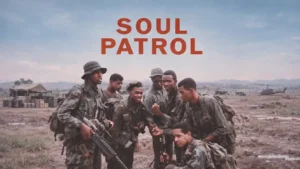
Overall: 4.5/5
The film vividly conveys how war continues in veterans’ memories and relationships decades after combat. Some dramatized images are criticized as unnecessarily literal, but the testimony is often devastating.
Pros: Historical preservation, historical reenactments
Cons: Documentary scope, political perspective balance

Overall: 4.3/5
Sidney’s trauma is treated as something worth understanding rather than a weakness to dismiss. That perspective strengthens the film’s critique of the community around her.
Pros: Meta-horror satire, suspense
Cons: Slasher kill execution, romance quality

Overall: 4.5/5
Lou’s trauma feels physically and emotionally credible at its best, especially through Holbrook’s jittery, exhausted performance. The arc is effective but not always seen as groundbreaking.
Pros: theme depth, emotional impact
Cons: screenplay quality, pacing

Overall: 4.1/5
The relentless pursuit offers a resonant way to visualize trauma that other people cannot directly see. The interpretation emphasizes its persistence after the initial violation.
Pros: cinematography, score quality
Cons: world-building, pacing

Overall: 4.4/5
Sally’s final laughter suggests lasting trauma rather than uncomplicated victory. Escaping the killers does not feel like a full recovery.
Pros: genre satisfaction, scares
Cons: character development, entertainment value

Overall: 3.0/5
War trauma and survivor’s guilt are central to the film’s emotional appeal. Some find the depiction sensitive and affecting; others say it reduces psychological suffering to familiar dramatic shorthand.
Pros: lead performance, Vocal characterization
Cons: Biographical coverage, emotional impact

Overall: 3.1/5
The actors can convincingly convey the shock, fear, and anguish of combat. Some find that portrayal powerful, while others think the film stops at visible suffering without exploring its deeper...
Pros: action sequence quality, acting performance
Cons: character development, message quality

Overall: 2.7/5
The portrayal of wartime trauma divides opinion: some find a thoughtful, understandable human motive beneath the chase. Others feel the silly action, cheerful disposition, and manipulative sentiment trivialize a serious...
Pros: stunt choreography, lead performance
Cons: action sequence quality, entertainment value

Overall: 3.2/5
The son’s traumatic missing years are repeatedly judged underexplored. Their limited connection to the AI story weakens the explanation for his transformation.
Pros: lead performance, acting performance
Cons: AI portrayal, emotional impact

Overall: 3.3/5
The brief PTSD reference gestures at a potentially interesting personal burden without meaningfully developing it.
Pros: entertainment value, pacing
Cons: ending satisfaction, screenplay quality