Best for Energy efficiency
Cosori Iconic
5.0 attribute score
Highest scored product for this attribute based on supporting review evidence.

Highest scored product for this attribute based on supporting review evidence.
Balances the attribute score, supporting reviews, and overall product strength.
Has the broadest review evidence for this attribute.
Strongest overall product among items with scored evidence for this attribute.
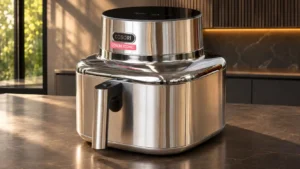
Overall: 4.3/5
Short cooking cycles and the small chamber reduce energy use relative to heating a full-size oven.
Pros: appearance, ease of cleaning
Cons: Finish resistance to smudges, value for money
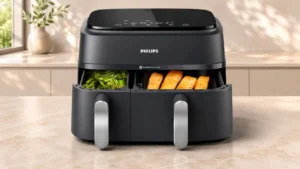
Overall: 3.9/5
Cooking a whole meal in one cycle instead of two can reduce energy use compared with running an oven or repeated batches.
Pros: basket design, basket capacity
Cons: footprint size, Finish resistance to smudges
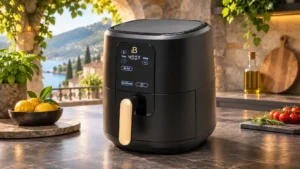
Overall: 4.0/5
Small-batch cooking is described as using less electricity than heating a conventional oven, helped by shorter cooking cycles.
Pros: appearance, overall satisfaction
Cons: footprint size, display readability
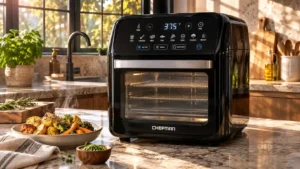
Overall: 3.6/5
One favorable account credits the smaller heated cavity and short warm-up for using less energy than a full conventional oven on modest meals.
Pros: basket capacity, cooking versatility
Cons: ease of cleaning, footprint size
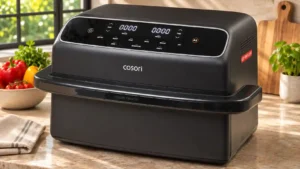
Overall: 3.5/5
Using only one divided zone can avoid heating the other side, although no measured electricity-cost comparison is established.
Pros: basket design, basket capacity
Cons: footprint size, ease of cleaning
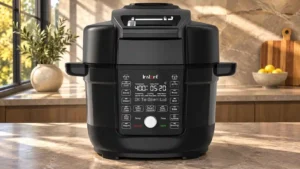
Overall: 3.4/5
Pressure cooking large cuts of meat can save time and energy compared with running an oven for hours.
Pros: Air-fryer hood handling, cooking versatility
Cons: ease of cleaning, Storage convenience
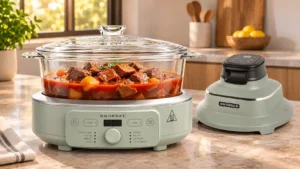
Overall: 3.9/5
A concise pros-and-cons assessment singles out energy efficiency as an advantage, although it gives no measured electricity consumption.
Pros: cooking versatility, materials quality
Cons: Temperature adjustment precision, ease of use
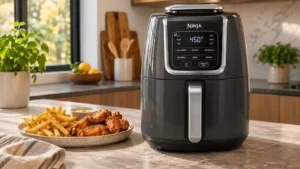
Overall: 4.2/5
Fast, compact cooking can use less energy than heating a full electric oven for the same meal.
Pros: overall satisfaction, crisping ability
Cons: basket capacity, Cooking without shaking or flipping
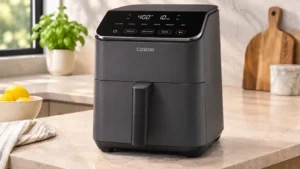
Overall: 4.0/5
The small chamber and reduced need to preheat or open the drawer can save energy relative to a large oven. The savings vary by recipe and batch.
Pros: overall satisfaction, even cooking
Cons: value for money, footprint size
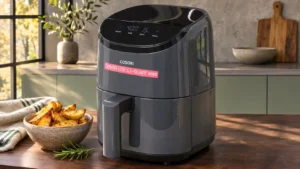
Overall: 4.0/5
Its small heating system and quick single-serving routine can use less energy than switching on a full-size oven.
Pros: controls, footprint size
Cons: basket capacity, cooking speed
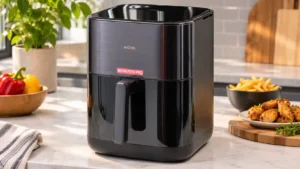
Overall: 4.3/5
Short warmup and smaller cooking volume are appreciated for reducing energy use compared with a conventional oven.
Pros: overall satisfaction, air frying performance
Cons: dishwasher-safe parts, Crisper plate fit and removal
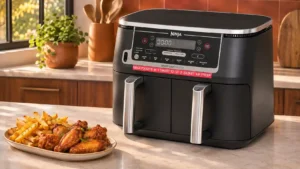
Overall: 4.0/5
Faster small-appliance cooking can save electricity compared with firing up a large oven, especially for routine dinners.
Pros: Dual-zone cooking synchronization, basket capacity
Cons: footprint size, basket design
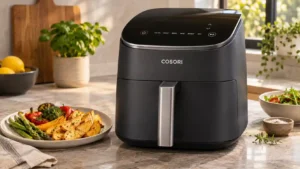
Overall: 4.6/5
The efficient motor and quicker small-batch cooking can reduce reliance on a large oven, although real savings depend on the meal.
Pros: crisping ability, cooking speed
Cons: Finish resistance to smudges, Shake reminder
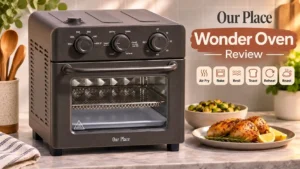
Overall: 3.9/5
Small-portion cooking can avoid heating a full-size oven, and some energy tests found relatively low consumption. The savings depend on what and how much is cooked.
Pros: overall satisfaction, appearance
Cons: value for money, timer function
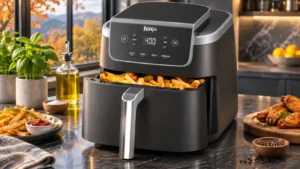
Overall: 3.9/5
Quick, small-batch cooking can use considerably less energy than heating a full-size oven. The appliance is most efficient when making a modest meal rather than operating in multiple crowded batches.
Pros: basket capacity, overall satisfaction
Cons: noise level, temperature range
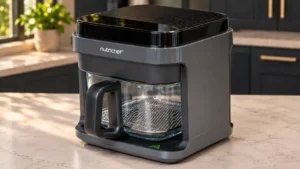
Overall: 4.1/5
Quick heating compared with an oven and automatic pausing during bowl removal are cited as energy-saving conveniences.
Pros: overall satisfaction, visibility while cooking
Cons: Basket weight and handling, cooking speed
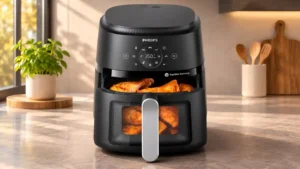
Overall: 3.6/5
Heating a small chamber instead of a conventional oven can save energy for everyday meals. The benefit is less certain versus a smaller fryer for a single portion.
Pros: overall satisfaction, visibility while cooking
Cons: Basket cooking surface area, Cooking without shaking or flipping
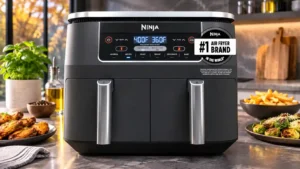
Overall: 4.1/5
Running multiple dishes at once can save cooking time and energy compared with separate sessions.
Pros: basket design, Dual-zone cooking synchronization
Cons: footprint size, noise level
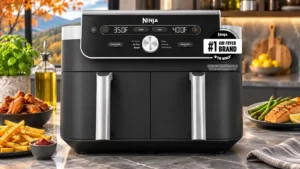
Overall: 3.9/5
Using the appliance in place of a full oven is described as an efficient tradeoff for daily meals. Exact household savings aren't established, but avoiding a large oven's warmup is...
Pros: overall satisfaction, ease of cleaning
Cons: footprint size, basket design
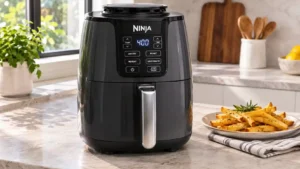
Overall: 4.0/5
Small batches avoid heating an entire oven, and owners value the modest electricity needed for short cooking sessions.
Pros: overall satisfaction, ease of cleaning
Cons: basket capacity, basket design
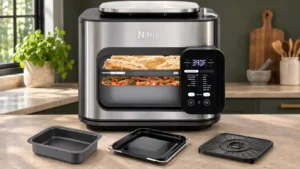
Overall: 3.7/5
Heating a small cavity reportedly saves utility costs. It uses less power than a traditional oven but holds less.
Pros: cooking versatility, overall satisfaction
Cons: footprint size, Cooking-time estimate predictability
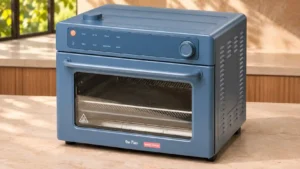
Overall: 4.3/5
Cooking in the smaller cavity can avoid heating a full-size oven for everyday meals.
Pros: cooking versatility, controls
Cons: footprint size, ease of cleaning
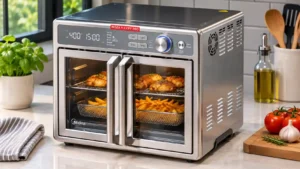
Overall: 3.9/5
Using this countertop oven instead of heating a full-size oven is viewed as an efficient option for everyday meals.
Pros: basket capacity, cooking versatility
Cons: footprint size, Fan speed flexibility
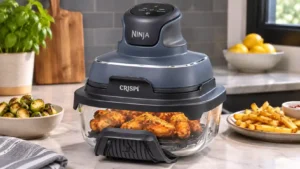
Overall: 3.5/5
Running costs can be modest for small portions, with measured electricity use supporting its efficiency for shorter cooks.
Pros: ease of cleaning, food texture quality
Cons: cooking speed, Temperature adjustment precision
Overall: 4.0/5
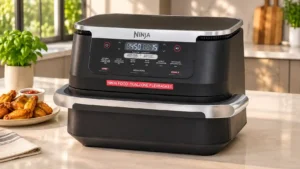
Cooking a meal without heating a full-size oven can reduce wasted heat in the kitchen, and one user preferred it over turning on the larger oven.
Pros: basket design, basket capacity
Cons: footprint size, handle comfort
Overall: 4.4/5
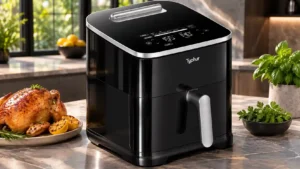
Stopping a cook when the meat reaches its target temperature may save a small amount of electricity compared with padding a timed cook, though the benefit is modest.
Pros: Meat thermometer convenience, basket capacity
Cons: footprint size, Setup simplicity

Overall: 4.2/5
Power use is not uniformly impressive: one measurement was reasonable, while another found substantial electricity consumption for the relatively modest quart capacity.
Pros: basket capacity, overall satisfaction
Cons: footprint size, value for money
Overall: 3.2/5
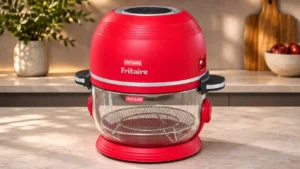
Lower measured short-cycle energy use is tempered by failure to reach the target and heat escaping from the exterior.
Pros: Self-cleaning effectiveness, visibility while cooking
Cons: ease of cleaning, even cooking
Overall: 3.3/5
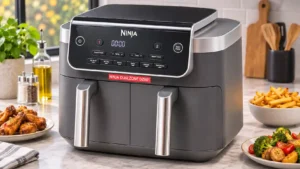
The continued airflow reported when a drawer is removed creates avoidable energy use.
Pros: Dual-zone cooking synchronization, Match Cook settings copying
Cons: basket capacity, footprint size