Best for cable storage
Jackery Explorer 240D
5.0 feature score
Highest scored product for this feature based on supporting review evidence.

Highest scored product for this feature based on supporting review evidence.
Balances feature score, supporting reviews, and overall product strength.
Has the broadest review evidence for this feature.
Strongest overall product among items with scored evidence for this feature.
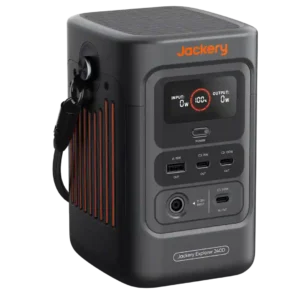
The detachable 140W USB-C cable doubling as the carry handle is the most consistently praised design feature. It removes one loose cable from the packing list and is hard to...
Pros: power output, rated output
Cons: AC outlet count, repairability
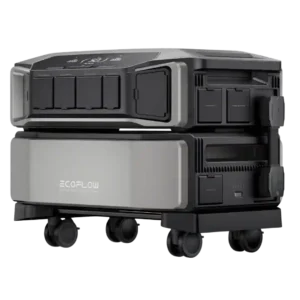
Cable organization receives unusually strong praise, with labeled rear connections and flat stacking cables helping keep larger installations tidy.
Pros: power quality, simultaneous device support
Cons: battery percentage accuracy, firmware updates
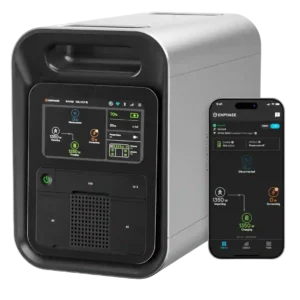
The included semi-rigid case gives the charging cables a practical, organized place to live.
Pros: rated output, output stability
Cons: runtime at full load, RV outlet
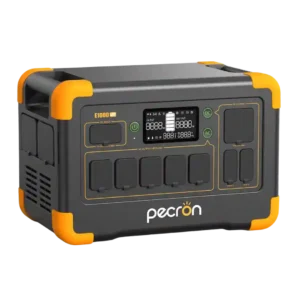
The included drawstring cable bag is a simple but useful touch for keeping the charging leads together.
Pros: inverter quality, LiFePO4 battery
Cons: idle noise, built-in light
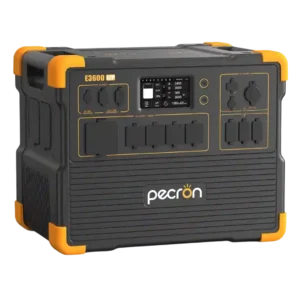
The included pouch and trolley bags keep the large cable set organized and easier to transport.
Pros: power output, rated output
Cons: output stability, voltage regulation
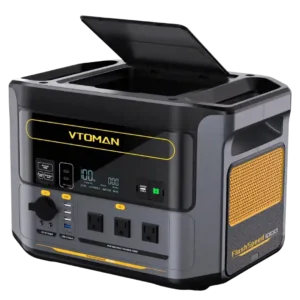
The top compartment is a standout convenience, keeping charging leads and small accessories with the station instead of in a separate bag.
Pros: inverter quality, power quality
Cons: Wi-Fi connectivity, weather resistance
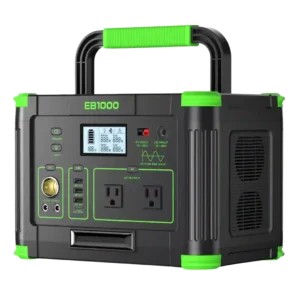
The included zippered cable pouch is sturdy and useful, though internal cable storage would be even more convenient.
Pros: rated output, output stability
Cons: battery expandability, startup reliability
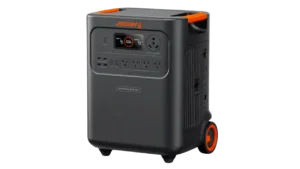
The solar carrying case’s dedicated cable pocket is a useful storage touch that keeps the charging lead organized.
Pros: output stability, voltage regulation
Cons: DC output, 12-volt outlet
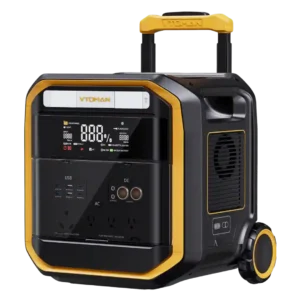
A compartment under the top lid keeps the heavy-duty AC charging cable with the unit instead of loose in a vehicle or garage.
Pros: power output, surge capacity
Cons: specification accuracy, peak output
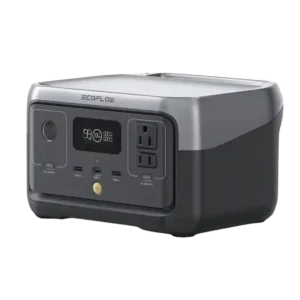
The supplied AC cord includes a tie, but there is no dedicated onboard compartment for cables.
Pros: surge capacity, output stability
Cons: dual-input charging, whole-home integration
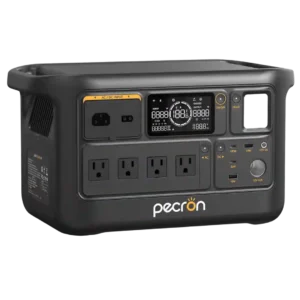
Cable organization is inconsistent: one setup included a handy zippered bag, while another reviewer specifically missed the bag supplied with older Pecron units.
Pros: rated output, peak output
Cons: startup reliability, whole-home integration
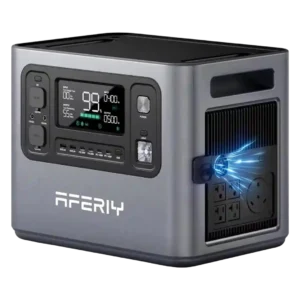
Unlike a predecessor, the P280 lacks an onboard cable compartment; the omission is noticeable but not a major drawback.
Pros: rated output, peak output
Cons: app connectivity, voltage regulation
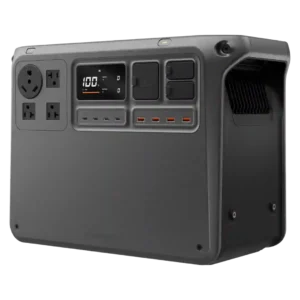
There is no integrated cable storage, so proprietary cables and adapters must be organized separately.
Pros: rated output, peak output
Cons: startup reliability, full-load noise
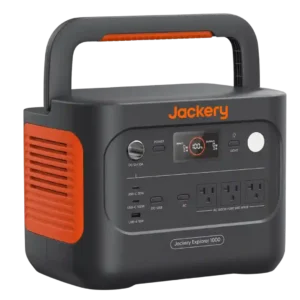
The removable solar cable has no dedicated storage spot, creating an easy-to-lose accessory problem.
Pros: rated output, peak output
Cons: standby power loss, specification accuracy
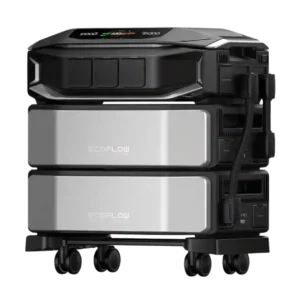
The mandatory solar isolator is awkward to keep organized because it lacks a simple hook or attachment point, forcing one reviewer to improvise a way to secure it.
Pros: output stability, voltage regulation
Cons: solar cable compatibility, UPS functionality
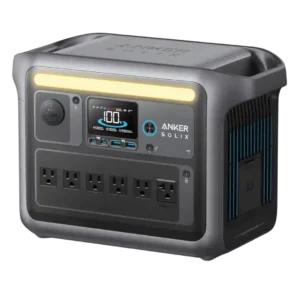
There is no built-in compartment for the thick charging cords, so owners often strap them to a handle or store them separately.
Pros: power output, rated output
Cons: dual-input charging, cable storage